PFLAG Director Discusses Catholic Roots

From New Ways Ministry Blog:

Jody Huckaby, the Executive Director of PFLAG (Parents, Family, and Friends of Lesbians and Gays), is profiled in The Advocate, the national LGBT news magazine.

A native of the heavily Catholic state of Louisiana, Huckaby’s profile begins with a familiar story:

“Jody M. Huckaby grew up Catholic, went to Catholic schools and was raised by devout Catholic parents in Eunice.


“So when Huckaby, 47, told his parents while he was in college that he is gay, it was “tough” to do, he recalls.

“ ‘It’s very hard when your religion tells you something is wrong but then you are talking about your child’” Huckaby said recently.

“Still, his parents, who were both raised in Church Point, eventually accepted Huckaby for who he is.

“ ‘They started out rejecting it. Then they moved to tolerance and then went to acceptance and finally they celebrated it,’ Huckaby said.

“The personal journey Huckaby and his parents went through was one of the big reasons Huckaby took a job more than seven years ago as executive director of Parents, Families and Friends of Lesbians and Gays National, also known as PFLAG National.

“PFLAG is a family and straight ally organization that helps to advance equality for lesbians, gays, bisexuals and transgender individuals through support, education and advocacy.”

The article notes that PFLAG is celebrating its 40th anniversary this year.  Begun in 1972, the organization now has over 350  chapters across the country.  Huckaby will be visiting one of the newest chapters in Baton Rouge, the capital of his native state, as this local group celebrates their first anniversary:

“Huckaby said he is excited to speak in Baton Rouge next month not only because of his family ties to Louisiana — he has a sister living in the capital city who is a Catholic nun — but because of the population growth the city has experienced since Hurricane Katrina struck Louisiana in 2005.

“The Baton Rouge chapter president, Carol Frazier, said the organization has achieved steady attendance at its monthly meetings at the Unitarian Church on Goodwood Boulevard.

“ ‘We have between 25 and 35 attendees each month. I think that’s good compared to other chapters that are only a year old. We do see new people each month,’ Frazier said.

“The Baton Rouge meetings usually feature a guest speaker as well as breakout sessions enabling small groups of members to talk about “whatever comes up,” Frazier said.

“ ‘The parents meet in their own group. They don’t always feel comfortable with the younger people,’ Frazier said.

“Varied reactions, feelings and emotions frequently arise in those smaller sessions, Frazier said, ranging from tears and laughter to silence, she said.

“ ‘You can see an interesting growth in people. I remember a mom who came and she didn’t say a word. She didn’t accept her child’s news. Now she speaks freely and is very accepting,’ Frazier said.”

Huckaby offers advice based on his own family’s experience:

“ ‘You can’t preach. People will just walk away. A big message we have is you do not have to throw out your faith to be accepting and loving,’ Huckaby said.

“Although Huckaby and his parents had no experiences with PFLAG when he confided back in college that he is gay, his mother’s turning point to acceptance and understanding of her son came from another, more traditional source.

“Huckaby said his mother read the ‘Dear Abby’ column in the Eunice News religiously throughout her life.

“One day, she read a letter in the column from the mother of a lesbian who asked how she was supposed to deal with the news.

“ ‘The advice was, you still need to love your child just like you did the day before. The second piece of advice was to go find PFLAG and get more information,’ Huckaby said.”

At New Ways Ministry, which is celebrating its 35th anniversary this year, we have witnessed the good work of PFLAG for most of its history.  Although not a religious organization, PFLAG’s simple example of listening, solidarity, and support is a model for the way ministry to parents of LGBT people should flourish.

Fortunate Families, a national network of Catholic parents with LGBT sons and daughters, provides just this type of ministry from a Catholic perspective, in the form of their Listening Parents network:  parents who have been through the experience of their child’s coming out who are available to listen to and be supportive of parents who are just learning such news. (The founders of Fortunate Families, Mary Ellen and Casey Lopata, have contributed two blog posts to Bondings 2.0 on family ministry.  You can access those here and here.)

New Ways Ministry salutes PFLAG on their 40th anniversary and prays in thanksgiving for all they have done to make the world a better place for LGBT people!  We wish them every success in the future!

–Francis DeBernardo, New Ways Ministry

Catholic Biden: “Who do you love?”

From New Ways Ministry Blog:

Vice President Joe Biden’s statement in support of marriage rights for lesbian and gay couples on NBC’s “Meet the Press” yesterday offered one of the simplest and most practical criteria for defining who a person should be allowed to marry: “Who do you love?”

Not surprising that such support comes from the first Catholic Vice President, since it so precisely reflects the views of at least 74% of American Catholics (according to a PRRI poll) who are in favor of marriage rights for same-gender couples.

A good news summary of Biden’s statements can be read by clicking here, or you can watch a video clip of the interview with Biden:

New Ways Ministry is delighted with Vice President Biden’s remarks.  He reflects the thoughts of millions of American Catholics on marriage equality, and it is great to have such a prominent Catholic lay person be the spokesperson of the laity’s views on this matter, which differ significantly from those of the Catholic hierarchy, whose voice is usually the only Catholic one heard. Biden’s comments may not be the fullest statement of support one could have hoped for from the Obama administration, but they certainly move the discussion one giant leap forward.

The vice president’s wife, Dr. Jill Biden, has long been an advocate for LGBT equality, and we are delighted that these two Catholics are helping to spread the message of equality and justice which comes from our faith experience which promotes the dignity of all human beings.

Interestingly, Biden’s question, “Who do you love?” echoes the title of an article written three decades ago by New Ways Ministry’s co-founder, Sister Jeannine Gramick:  “With Whom Have I Fallen In Love?”  The article, published in a Catholic periodical, focused on how people can determine their sexual orientation.

How does the Catholic veep’s views reflect the the views of President Obama?  Opinion is divided.

Political analyst Josh Marshall, editor of TalkingPointsMemo.com, thinks it might be a foretaste of what is to come:

“. . . I’m curious whether today’s remarks by Joe Biden on marriage equality are another example of Biden’s off-the-cuff indiscipline or something more like the White House trying to moon walk the President’s position on the issue, i.e., nudge and ease the president’s position forward while seeming to walk it back, so we’ll wake up one day and it will simply be different without ever being able to point to a day when it changed.

“Needless to say, we all know at this point that President Obama supports gay marriage but thinks the political tides aren’t quite safe enough to come out and say so. Lots of presidents telegraph this kind of equivocation but I have seen few cases where it’s been done so out there in the open.”

Pam Spaulding, writer/editor of Pam’sHouseBlend.com, did not think the remarks were significant because she felt that he was only endorsing support for civil unions, not marriage:

“I guess you could see this as yet another attempt to placate the LGBT community (i.e. open the gAyTM), or a hint that the President is about to tip-toe out of the closet, perhaps after the election. I don’t hold my breath for such things. . . .

“Biden’s comments are interesting in that they represent the President’s exact view – that gay and lesbian couples deserve the same civil rights, save the whole bit about the word ‘marriage.’ Talk about threading the political needle.”

Joan Walsh, editor at large for Salon.com, asked some interesting questions of the situation:

“It seemed an important step for an administration that can’t seem to get the president all the way there. President Obama is going to have to come out for gay marriage one of these days – can anyone honestly believe he’s against it? — but having the Catholic Biden endorse it helps, too. The group Catholic Democrats immediately Tweeted the little known fact that Catholics are the most pro-gay marriage of all Christian groups. Yet the backwards politics of the U.S. Bishops means most people don’t know that, and thus view gay marriage as a no-fly zone during an election season when the  Catholic swing vote is particularly important. So Biden’s comment mattered.

“Then the Vice President’s office issued a clarification:

‘The Vice President was saying what the President has said previously – that committed and loving same-sex couples deserve the same rights and protections enjoyed by all Americans, and that we oppose any effort to rollback those rights.  That’s why we stopped defending the constitutionality of section 3 of the Defense of Marriage Act in legal challenges and support legislation to repeal it.  Beyond that, the Vice President was expressing that he too is evolving on the issue, after meeting so many committed couples and families in this country.’

” He too is evolving.’ Actually, it seemed as if Biden had finished evolving, and actually supported ‘men marrying men, and women marrying women.’  For a moment, I actually thought having Biden step out ahead of Obama was a deliberate, maybe even slightly cynical campaign move. But apparently the campaign isn’t ready to take that chance. Why would it be a problem to have the grandfatherly Irish Catholic VP a step ahead of the president on this one, anyway? I don’t know, but backtracking seems like a lose-lose to me.”

Let’s hope that the next steps will continue to be steps forward, as Biden’s original statement certainly was.

–Francis DeBernardo, New Ways Ministry

Religion And Sex

…it’s never simple. And when you add celibate men to the mix…. Well, you know.

An excellent analysis and commentary that everyone should read. From New Ways Ministry:

New Ways Ministry and many Catholic theologians, leaders, organizations, and individuals have long called on the church’s hierarchy to listen to the experiences of LGBT people as a way to develop doctrine and positions. The importance of consulting the scripture of experience–how God speaks through people’s lives–is nowhere more needed than in the development of doctrine about sexual relationships and expression.

The necessity of such consultation was brought home to me again when I read Jo McGowan’s article, “Simplifying Sex: What Some Priests Don’t Understand About Contraception,” in Commonweal magazine. Though writing specifically about the recent debate about insurance funding for contraception, McGowan’s piece rings true for hierarchical statements about sexuality generally.The thesis of her argument should be a mantra repeated by church leaders everywhere:

“Sex is never simple.”

McGowan’s article responds primarily to a New York Times article which contained an interview with a priest. She writes:

Icon for Wikimedia project´s LGBT portal (Port...

Icon for Wikimedia project´s LGBT portal (Portal:LGBT). (Photo credit: Wikipedia)

“. . .it is unsettling when men who may never have experienced sex feel qualified not just to speak about it but to pronounce on it with certainty. In an article in the New York Times (February 18), Fr. Roger Landry, a priest in my old diocese of Fall River, Massachusetts, is quoted as saying, ‘What happens in the use of contraception, rather than embracing us totally as God made the other, with the masculine capacity to become a dad, or the feminine capacity to become a mom, we reject that paternal and maternal leaning.’ ”

“Well, no, Fr. Landry, we don’t. We don’t reject it. We make a decision about it. We recognize that pregnancy is a possibility, and we decide whether this is the right time for us to have a baby. We acknowledge that we are more than just potential (or actual) parents. One of the surest signs of youth—in any profession—is an unswerving adherence to literal interpretations. New teachers cling to the curriculum, whether or not the class is getting it. Young doctors focus on the clear x-ray, unable to see the patient in front of them writhing in pain. Parish priests preach the letter of the law, while their parishioners refuse to follow rules created without reference to the reality they know. But the rules aren’t just unrealistic. They are often irrelevant, based on incorrect or incomplete information.”

McGowan’s analogy to the penchant that young doctors and young priests have for relying on outside, abstract information makes the point vividly. Sexuality is not something that can be described or discussed from an outsider’s perspective in abstract terms. Accurate information and perspectives on it must come from people’s lived experiences. I would like to add another analogy to her already excellent one: Not consulting people’s experience of sexuality in order to develop doctrine is like an atheist trying to describe and define spirituality and religion without consulting the people who practice faith. Both spirituality and sexuality are intensely personal experiences that can only be understood fully from the inside out.

McGowan illustrates this idea best when she refutes Fr. Landry’s ideas about pleasure in sex:

“Fr. Landry goes on to say, ‘Contraception…make[s] pleasure the point of the act, and any time pleasure becomes the point rather than the fruit of the act, the other person becomes the means to that end. And we’re actually going to hurt the people we love.’ At one level, this is insightful and nuanced. When he laments how frequently such objectification happens to women in sexual relationships, Fr. Landry sounds almost feminist. And he is right that a relationship that’s only about the pursuit of pleasure is demeaning and ultimately hurtful.

“He is wrong, though, to assume that using contraception automatically makes ‘pleasure the point of the act.’ This is how adolescents think. Teenagers dream of constantly available sex, uninhibited by any possibility of pregnancy. That priests would talk the same way about sex between a husband and wife who have chosen to use contraception reflects inexperience and adolescent projection.

“Adults understand that good sex, with or without contraception, goes deeper than pleasure. It is complex and demanding. And pleasure isn’t necessarily a part of it. Any human encounter requiring honesty and surrender has the potential for both revelation and pain. The communication, healing, and strengthening that good sex ensures is foundational to a marriage. Pure pleasure the point of the act? What is Fr. Landry talking about?”

McGowan shows here that an outsider’s perspective is actually a distorted perspective which focuses on one potential aspect of the sexual situation. Since sexuality is so much more than physical acts, an outsider can not understand the deeply emotional dimension that is involved in the physical activity of sex. To theorize about sexuality based only on physical acts is to look only at the evidence that is able to be seen, and not to take the perspective of faith, which St. Paul tells us involves the “evidence of things not seen” (Hebrews 11:1).

Sexual license is not McGowan’s goal; responsible sexuality is. She makes the important observation that strict adherence to abstract rules about sexuality can actually lead to irresponsible sex:

“But every human activity has the potential to become unbalanced. Having children mindlessly, year after year, as former generations of Catholics did, is just as harmful to the social good as the refusal to connect sex with pregnancy. Visit India, Fr. Landry. Talk with the women here who are treated purely as producers of sons.

“To defend contraception within marriage is not to defend sexual license. Married couples who have pledged a lifetime of commitment to each other and their families have the right and the duty to make their own decisions about contraception. The church’s role is to help them arrive at the decision that is right for their lives. It is not to dictate one-size-fits-all rules that have no foundation in practical experience.”

I don’t think that I’ve ever read a defense of consulting sexual practitioners for their experience which was as honestly and matter-of-factly stated as McGowan’s is. Clearly, the principles that she states here can be equally and easily applied to the experience of lesbian and gay people, as they are to heterosexual people.

–Francis DeBernardo, New Ways Ministry

“Day of Dialogue” From Focus On The Family is Sacred Discrimination

By Kathy Baldock

I have a hair-trigger sensitivity for the protection of gay, lesbian, bisexual and transgender (glbt) youth.  Even if an action is wrapped in heart-themed paper and tied with a Jesus-loves-you ribbon, when there is something rotten inside, I can smell it. There is something very rotten at the core of the Day of Dialogue event sponsored by the conservative Christian ministry Focus on the Family.

I raised my family on Biblical principles I learned from Dr. James Dobson at Focus; we rarely missed the radio-drama “Adventures in Oddessy.” I was a regular listener and donor.  And now, I do not trust Focus on the Family.  There, I said it.  I do not trust them. Their Day of Dialogue event is thinly disguised sacred discrimination of gay and transgender youth.

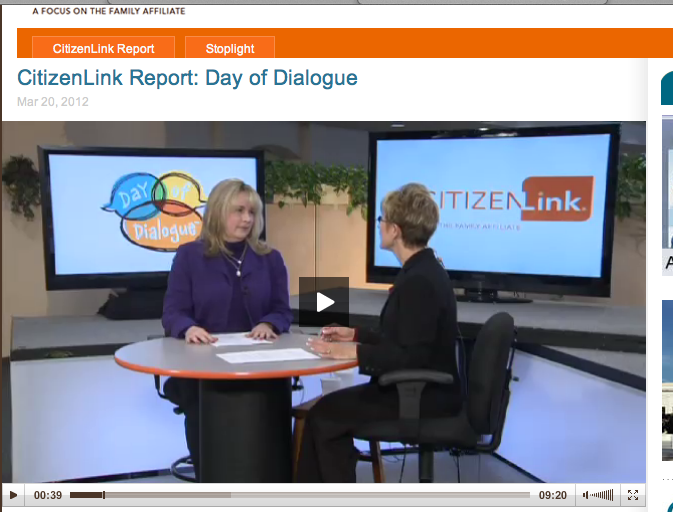
Day of Dialogue, scheduled for April 19, 2012, “encourage(s) student-initiated conversations about the fact that God cares about our lives, our relationships and our sexuality.”  I think it would be more honest to call it the “Seventh Annual Tell the Gay Kids They Need to Change for God to Love Them Day.”

Focus on the Family has a miserable record in successful and productive engagement with the glbt community.  They actively warn against the inclusion of protection for gender identity and sexual orientation for children.  In “Parents Beware” , published in CitizenLink (an affiliate of Focus on the Family), Day of Dialogue coordinator Candace Cushman warns of “red flags to watch for” in schools, such as;

  • School partnerships with outside advocacy groups that have names like “Safe Schools Alliance” or “Welcoming Schools.”
  • “Anti-bullying” polices that list special protections for “sexual orientation” or “gender identity.”

Currently, under federal law, religion, sex, country of origin, race and disabilities are protected classes; sexual orientation and gender identity are not.  The Safe Schools Information Act, Student Non-Discrimination Act and Elementary and Secondary Education Act renewal, which all include gender identity and sexual orientation designations, are scheduled to be voted on in the next Congress. Focus on the Family advises followers to not support their inclusion in these legislations.

In the “Guiding Principles” for Day of Dialogue, there is an anti-bullying statement, yet Focus  does not recognize the right for the 
protection of children under the classifications of gender identity and sexual orientation. (Be sure to watch “Bully” when it comes to your city and then consider “Why wouldn’t every Christian ministry actively support the federal protection of gay and transgender children?”)

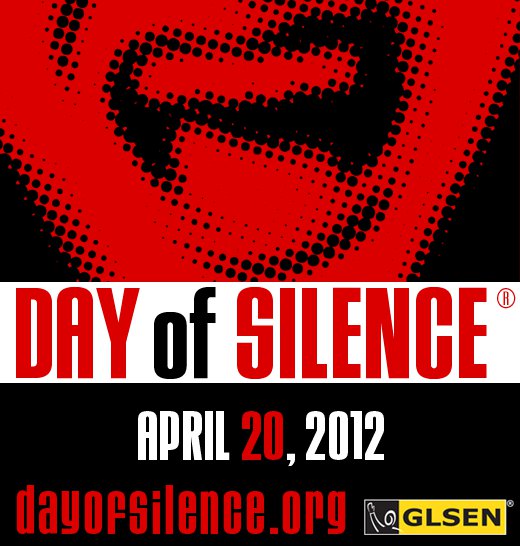
If this program were really focused on the message of God’s care and love for fellow students, why does it directly precede the Day of Silence? (Historically, it has been immediately following Day of Silence.)  Day of Silence, sponsored by the Gay, Lesbian Straight Education Network (GLSEN), began in 1996 to bring attention to anti-GLBT name calling, bullying and harassment in schools. Students and schools are encouraged to share the problem of anti-GLBT behaviors. Focus on the Family views the efforts of GLSEN as “promoting homosexuality to our kids.”  Day of Dialogue is unmistakably a reaction to Day of Silence; to promote it as anything less is to be quite disingenuous.

Read the rest here.

National Catholic Reporter Supports Bishops Call To Rethink Sexuality

From New Ways Ministry Blog
 

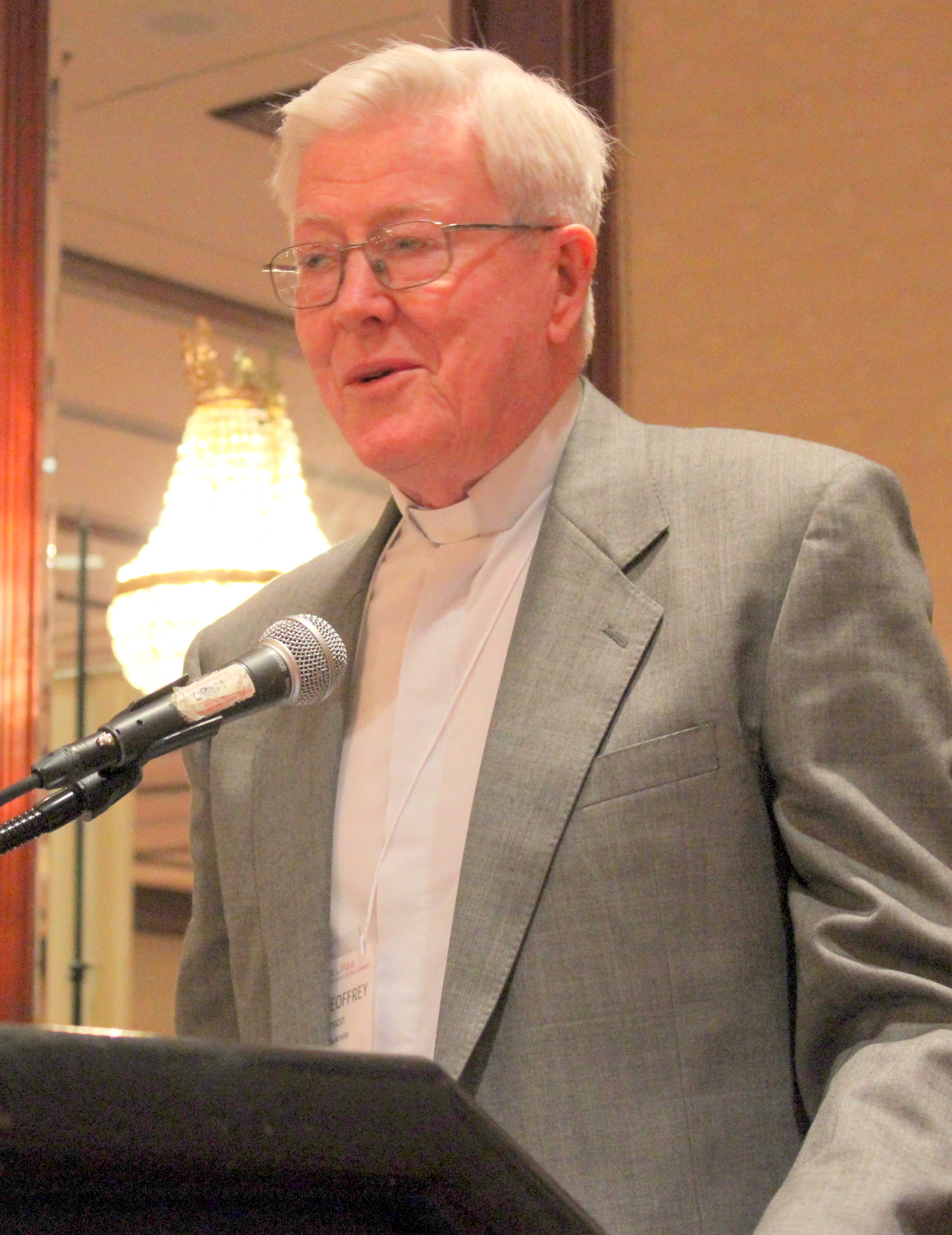
Bishop Robinson

New Ways Ministry’s Seventh National Symposium in Baltimore two weeks ago continues to make headlines.   The National Catholic Reporter (NCR) has editorialized in support of Bishop Geoffrey Robinson’s call to re-think the Catholic Church’s official teaching on sexuality, which he made during a talk at the Symposium.  An NCR columnist, Eugene Kennedy, the renowned psychologist and church observer, has also praised the Australian bishop’s proposal.

After summarizing Bishop Robinson’s main points (which can be read in the same newspaper’s article about the talk), the NCR editorial notes:

“Robinson is not the first to articulate the need for a responsible reexamination of sexual ethics, one that takes seriously the radical call to selfless love, but the addition of a bishop’s voice adds new dimension to the conversation. By rebuilding Christian morality in the area of sexuality in the way Robinson suggests, we will achieve a teaching that can better challenge the message about sexuality trumpeted by the dominant culture in television, music and advertising, a sexuality that idolizes self-gratification and that puts ‘me’ before ‘you.’ By placing the needs of the other first, our sexual ethic would reject sexual violence — physical and psychological, the idolatry of self-gratification, the objectification of people, and the trivializing of sex when it is separated from love.”

The NCR rightly points out that Robinson’s approach is not one of a wild-eyed radical:

“In the end, Robinson is making a profoundly traditional suggestion about sexuality, because what he proposes is rooted in genuine personal responsibility. He writes: ‘Many would object that what I have proposed would not give a clear and simple rule to people. But God never promised us that everything in the moral life would be clear and simple. Morality is not just about doing right things; it is also about struggling to know what is the right thing to do. … It is about taking a genuine personal responsibility for everything I do.’ ”

The tradition that Robinson is following is the tradition of Jesus in the Scriptures:

“Robinson’s take on sexuality — that it deserves deeper consideration than the narrow, rule-bound approach that has evolved in Christian circles — takes us to the heart of the radical approach Jesus took toward human relationships.”

NCR columnist Eugene Kennedy has also praised Bishop Robinson’s proposal.  In an essay entitled “Bishop Robinson and the redemption of eros,” Kennedy writes:

“Bishop Robinson’s purpose is, in fact, that set out by Pope John XXIII as his reason for convening Vatican II, “To make the human sojourn on earth less sad.”

“Indeed, in urging a much needed review of what and how the church teaches about human sexuality, Bishop Robinson draws on themes central to Vatican II. The first of these is found in placing the reality of the human person rather than the abstraction of natural law as the central reference point in church teachings and papal pronouncements about marriage and sexual activity.

“The second is found in the shift from an emphasis on objective acts to subjective intentions and dispositions in making judgments on the badness or goodness of how people behave. This rightfully emphasizes the impact that our actions or omissions have on other persons rather than on the ire that has idled within so many church leaders who have been so preoccupied with sin. . . .

“Robinson’s convictions on the need for a thorough examination of the church’s teaching on sexuality are significant in themselves but also because he has found a way to speak about this essential matter from within the church, even if in the mannered traditional way that dialogue moves, however slowly, toward a wider circle of prelates.”

After Bishop Robinson spoke at the Symposium, many people told me that they felt something new and remarkable had taken place. One person told me that it felt  like a new chapter had been opened in the church’s discussion on sexuality.  His talk offered not only hope, but a way forward that people felt was authentically human and authentically Catholic.His experience as the Australian Bishops’ Conference coordinator of pastoral responses to that nation’s sexual abuse crisis transformed his thinking on how Catholicism approached sexuality and how that approach can be improved.  As was evident from the style and content of his talk, Bishop Robinson had one three things that more bishops should emulate:  he opened his ears, his mind, and his heart.
 
–Francis DeBernardo, New Ways Ministry

Analysis: Why some people do not receive continuous HIV medical care

by Chris Morley

Only 42% of the people diagnosed with HIV in the USA receive continuous HIV medical care after their diagnosis (seeing their HIV doctor at least every six months), according the the first national study in the USA.

  • 28% had a gap of at least one year between HIV medical check ups
  • 31% let 7-12 months pass between their appointments.

Who are the people missing care some of the time and what are their reasons? What are the consequences and what might be done to reduce the harm?

Over 17,000 adults attending 12 clinics within the HIV Research Network across the country, were surveyed by the Perelman School of Medicine, Pennsylvania, who reported their findings in the online journal AIDS in March 2012. This summary is based on a report in Medical News Today.

Why continuous HIV care is better

  • People with HIV whose health is regularly monitored and treated are less likely to become sick
  • People receiving continuous treatment are far less infectious and this very significantly reduces the spread of HIV
  • Regular attendance cuts total health costs by preventing serious health problems from developing that require expensive hospital treatment.

So regular, frequent HIV care means better longer term health for the person with HIV, fewer new people becoming infected, and lowers HIV health costs.

Who’s more likely to attend regularly for HIV care?

  • Patients who begin treatment on Medicare, not private insurance
  • Older patients
  • Men infected through sex with men
  • White patients
  • Women
  • People with very low CD4 counts (or an AIDS diagnosis) on starting care.

Sometimes missing care

So we may assume that the people more likely to have gaps in their care (of over 6 months) will broadly be the mirror image:

  • People with private insurance
  • People without healthcare insurance
  • Younger people, including those infected by mother to baby transmission
  • People infected through Injecting Drug Use
  • Heterosexually infected people, most especially Heterosexual Men
  • African Americans, Hispanic people, Native Americans, other ethnic minorities and migrants

At risk of missing HIV care

The researchers themselves suggest that HIV healthcare providers should treat the following people as at risk of not attending as regularly as they should:

  • Symptomless people, who may think they are well enough to skip appointments
  • People with depression, anxiety, or with difficulties accepting their diagnosis, or with other mental health conditions
  • People using substances (alcohol, drugs)
  • People with practical difficulties in their lives: poverty or debts, long working hours or low wages, unable to take time off, poorly housed, with childcare responsibilities, with travel problems
  • People with other health conditions and disabilities
  • People who move home or district, especially if this is often
  • People who have changed doctors
  • People jailed, or otherwise institutionalised.

Future work

The study authors suggest standard criteria should be developed to decide the  appropriate gaps between appointments for people in different circumstances. Some people will need personalised care plans based on the stage of their HIV illness, and their particular social circumstances.

More studies are needed to pinpoint the times when some people are more likely to fail to appear for appointments, and to identify what works to ensure people do attend every time.

Using insurance records data may help track people through changing situations and help establish which are the patterns that lead to increased risk of missing continuous HIV medical care.

Other research and experience in other countries

With 68% of the people with HIV in this US study not attending for HIV check-ups and care at least once in every six months, the USA appears to have one of the worst national HIV care regular attendance records in the developed world. This is the first national USA study of HIV care attendance but other countries have been tracking HIV healthcare non-attendance for some years.

The USA can therefore benefit from using other countries’ experience to  help  understand better what is happening, and consider adopting solutions that have already been found to reduce the numbers missing HIV  appointments.

For example, in Northern France, 13% disappeared for at least 12 months immediately after their diagnosis, and over half of those returned after an average lapse of 19 months; but almost half of those returnees by then had a dangerously low CD4 count of under 200, and another one quarter returned and were then given an AIDS diagnosis.

3/4 of those who dropped out suffered serious health and life expectancy consequences. There was a more-than-fivefold increase in the chance of dying in the year after return, compared with people who had stayed in care.

Suggested ACTIONS for healthcare and clinical staff

  • Tell people, when giving the positive test result, that coming to ALL your appointments and taking treatment as recommended, keeps most people well, with a near normal life expectancy. That it is really important to come, even when you feel very well and have no symptoms.
  • AND the people who miss their appointments are five times more likely to die within the next 12 months than those who keep their appointments.
  • Do everything you can to obtain a wide range of ways to contact people, and permission to use all these, with discretion.
  • Send SMS text reminders a day or so before the appointment.
  • Quickly and rigorously follow up all people who don’t attend.
  • Strongly encourage people newly diagnosed to become an active user of a community HIV project as soon as possible. This is because contact with and seeing other people like themselves who are living well with HIV is immensely reassuring and supportive and also improves mental and physical well-being. It counters the  stigma and isolation of living with HIV. It provides a safe space to talk about HIV. The clinic’s messages will be  reinforced by what other people living with HIV and community volunteers and staff say. Clinic staff giving a positive diagnosis must understand that most people getting their HIV diagnosis will remember only fragments of the important information they are told by the clinic. The shock of diagnosis means many mishear and misinterpret the limited amount they do remember.

In London, UK, where free HIV treatment for all is provided through the National Health Service, a study at London’s King’s College Hospital found that 40% of the patients seen at least once between 1995 and 2005, were not seen at all during 2006. Crosschecks with the national anonymised HIV database held by the Health Protection Agency, found half (20%) were using another HIV clinic, a small number had died, but more than 1 in 5 (over 20%) of all their patients were completely missing from  HIV care throughout the snapshot year of 2006.

Compare that 20% missing with the 68% missing in the USA.

There are a wide range of studies from British and other countries’ HIV clinics using different measures, finding various levels of loss, a variety of common causes, and making a range of suggestions for action. A 20% attrition rate is about average.

Some hospitals are clearly better at retaining patients than others; some HIV clinics have many people with complex problems and needs; in the bigger cities where there is a choice of HIV treatment centres, there is some ‘churn’, people going to another hospital without telling the first, because they have moved or wanted a change.

There is a wealth of detailed information, exploration of the reasons people disappear, and suggestions for ways to reduce the loss of people from HIV care, in this detailed report of experiences in London and Manchester, UK

Lost to care: the mystery of the disappearing patients in HIV Treatment Update.

This is the most thorough resource available, incorporating lessons from a range of European studies. Reading and acting on the various findings is recommended.

Other useful papers 

Reaching Lost to Care Populations Clinical Infectious Diseases 2006, full text free online.

High rate of loss to clinical follow up among African HIV-infected patients attending a London clinic: a retrospective analysis of a clinical cohort. Journal of Int AIDS Soc. 2010, abstract.

Many Black, HIV-Infected Women in Mississippi Are Lost to Care After Giving Birth Interview with Aadai Rana MD The Body, 2008, with weblinks to two other resources 8

Differences and disadvantages in the USA

There are a number of reasons why it is more likely many people will miss HIV care appointments in the USA than in other countries. These help explain why only 42% of US people with HIV attend HIV clinic at least once every six months. This low rate of regular attendance means that HIV clinics in the USA must work very much harder to reduce the 68% of no shows.

  • US health care is often excellent but without doubt the most expensive in the world. Large numbers of people have no health insurance, or inadequate health insurance; there are problems accessing and with  inadequate funding for the public healthcare programs, Medicare and Medicaid.
  • HIV is an expensive healthcare condition to treat.
  • Co-infections and other co-morbidities are common, compounding treatment complexity, treatment adherence, and increasing health costs.
  • Distances to HIV treatment centres and travel difficulties may be considerable.
  • HIV stigma and discrimination seems particularly rife in many parts of the USA. There are no international data comparisons available yet, although the international HIV Stigma Index will help answer this need. Lambda Legal carried out a USA HIV stigma survey within US healthcare in 2009 and publish a factsheet detailing discrimination and stigma in HIV healthcare and elsewhere.

These and possibly other factors contribute significantly to the high rate of missed HIV appointments and loss to HIV care in the USA.

~Chris Morley is a community HIV policy and practice expert based in NW England. He researched and co-authored for the UK’s HIV Treatment Update: Lost to care: the mystery of the disappearing patients.

He’s worked on a wide range of English national and regional HIV policy and practice issues including

  • making free HIV treatment available to all migrants
  • ending the prosecution of people living with HIV for HIV transmission
  • promoting the use of HIV treatment as part of the HIV prevention toolkit
  • developing support for gay men living with HIV on using HIV treatment to prevent onward transmission
  • making gay men’s HIV prevention work friendly and relevant to gay men living with HIV
  • combating HIV stigma and discrimination
  • supporting teenagers and children living with HIV in the care system
  • readying adult HIV services for older teenagers to transfer
  • developing services for older people living with HIV

Guest Post: An Authentic, Catholic History Of Marriage

By Terence Weldon

With British bishops on the attack against proposals for gay marriage claiming that they are defending “traditional” marriage, it is important to remember that their representation of marriage history is misleading. When Mexican bishops made similar false claims about the history of marriage, I responded with a post on the history of marriage, as described by a specialist on the subject – a Catholic, Jesuit professor of history at a Catholic university.

Here follows that post, republished:

In Mexico,  Cardinal Norberto Rivera has attacked the Supreme Court ruling that upheld same sex marriage in Mexico City, calling it “evil”. It is not surprising that a Catholic bishop should oppose marriage equality, and while I sharply disagree with him, I must respect his right to express an opinion.  He also says it is wrong to go against Christian doctrine that recognizes only marriages between a man and a woman. Again, barring a quibble or two about the effect of disagreement in conscience, even as we disagree with this, it is clear that this is orthodox Catholic teaching.

However, in invoking Christ himself, he goes way too far.

He called same-sex unions “inherently immoral,” saying they “distort the nature of marriage raised by Christ to the dignity of a sacrament.”

This is sheer garbage.

I am not aware of any Gospel passage that endorses marriage as been between one man and one woman. Can any reader point to me one?  Christ most certainly did not raise marriage to the dignity of a sacrament – not even the institutional church did that, until the twelfth century, after half its history had passed. Exploring this history has proven fascinating.

Compare the first two accounts I found. This is Wikipedia:

…..first-century Christians placed less value on the family but rather saw celibacy and freedom from family ties as a preferable state. Paul had suggested that marriage be used only as a last resort by those Christians that found it too difficult to remain chaste.[2]

Augustine believed that marriage was a sacrament, because it was a symbol used by Paul to express Christ’s love of the Church. Despite this, for the Fathers of the Church with their profound hostility to sex, marriage could not be a true and valuable Christian vocation. Jerome wrote: “It is not disparaging wedlock to prefer virginity. No one can make a comparison between two things if one is good and the other evil” (Letter 22).Tertullian argued that marriage “consists essentially in fornication” (An Exhortation to Chastity“) Cyprian, Bishop of Carthage said that the first commandment given to men was to increase and multiply, but now that the earth was full there was no need to continue this process of multiplication. Augustine was clear that if everybody stopped marrying and having children that would be an admirable thing; it would mean that the Kingdom of God would return all the sooner and the world would come to an end.

This negative view of marriage was reflected in the lack of interest shown by the Church authorities. Although the Church quickly produced liturgies to celebrate Baptismand the Eucharist, no special ceremonial was devised to celebrate Christian marriage, nor was it considered important for couples to have their nuptials blessed by a priest. People could marry by mutual agreement in the presence of witnesses. This system, known as Spousals, persisted after the Reformation. At first the old Roman pagan rite was used by Christians, although modified superficially. The first detailed account of a Christian wedding in the West dates from the 9th century and was identical to the old nuptial service of Ancient Rome.[3]

There are obvious difficulties with relying on Wikipedia as a source – but it does at least provide us with references to substantiate its claims. Now look at the Catholic Encyclopedia:

That Christian marriage (i.e. marriage between baptizedpersons) is really a sacrament of the New Law in the strict sense of the word is for all Catholics an indubitable truth. According to the Council of Trent this dogmahas always been taught by the Church, and is thus defined in canon i, Sess. XXIV: “If any one shall say that matrimony is not truly and properly one of the Seven Sacraments of the Evangelical Law, instituted by Christ our Lord, but was invented in the Church by men, and does not confer grace, let him be anathema.”

This can do no more than quote the council of Trent, which claims that the sacramental view of marriage has “always”  been taught – totally disregarding the verdicts of church fathers such as Tertullian, quoted above. On marriage as on so much else, the Vatican likes to refer to a “constant and unchanging tradition”, or to claim that it has “always taught”. These claims are seldom supported by real evidence, and must be received with scepticism.

Then I found an impressive on-line history of marriage , in a lengthy outline by Stephen Schloesser, a Jesuit priest and professor of history, which he submitted to Massachusetts Senator Marian Walsh in 2004, during the turmoil in that state over gay marriage. Here are some extracts  – the introduction, and (mostly) just a summary of the main paragraph headings:

Maybe the most frustrating thing I have heard in the recent debate is this claim that has become a mantra: that we are in the process of changing some allegedly unchanging 3,000-year-old institution called “marriage.”Of course, the decision to grant marriage licenses would be a “change” in marriage practice – but“marriage,” whatever that is, is always in the process of being changed. To pretend that its alteration is somehow a rupture in what is otherwise a three-thousand year continuity is just silly.

It seems helpful to me to recall what traditional marriage is: it is a community’s legal arrangement in order to pass on property. In it, a male acquires (in the sense of owning and having sovereignty over) a female for the sake of reproducing other males who will then inherit property.

In Roman law, the authority of the paterfamilias over his wife and children was absolute, even to the point of death. (Even during the enlightenment), Catholic reactionaries opposed the idea of women and children having independent rights and insisted that puissance paternelle (the absolute power of the father) was rooted in nature.

In Judaism, polygyny is found throughout the Old Testament until the inter-testamental period.In general, a survey of traditional Old Testament marriage makes the reader very grateful that we are not bound to follow its precedents or precepts.

Early Christianity was really not into marriage. St Paul counseled his followers: “It is better not to marry.”Augustine (following St. Paul) counsel ed marriage as a remedy for concupiscence – i.e., satisfying male sexual desire in a non-sinful way.In general, during the early medieval Church, all sex is a problem, and all sex is equally a problem.

Marriage, both in the Roman and the early medieval periods, was the moment that marked the passing of the rights over a woman from her father to her husband. She wasn’t a person under the law.

Serial polygyny was regularly practiced by early medieval kings famous for their Christian piety. Their marital practices did not trouble the Church. Concubinage was also widely practiced among the European elite, and this practice was unproblematic, even in the eleventh century. Divorce was also completely unproblematic until the twelfth century.

In the twelfth century, the idea of marriage as a “sacrament” – i.e., as something fundamentally regulated by the Church – was established along with priestly celibacy and primogeniture.

The simultaneous appearance of these practices shows the way in which the preservation of property suddenly became an issue of great anxiety: celibacy prevented church property from passing on to priests’ wives and children; primogeniture insured that property remain intact as it passed on to only the eldest son; and Church surveillance of marriages made sure that an authority larger than, say, the most powerful warrior / aristocratic families on the block, was overseeing the passing on of dowries – e.g., Eleanor’s region of the Aquitaine. Women became the means of medieval corporate mergers: families consolidated power and property, both by means of dowries as well as by being the producers of male heirs.

Marriage as an “emotional unit” as opposed to an “economic unit” was largely an invention of the early nineteenth century. Bourgeois marriage was a classbound arrangement.

Conversely, for the males, prostitution is seen as an integral part of the new arrangement of marriage.

Divorce, finally legalized again in France in the 1880s, emancipated men but perhaps not women unless they had reserved some independent means. It too was part of the new emotional understanding of marriage, i.e., as something not arranged by parents but rather entered into partly because of emotional desires.

It is hardly coincidental: this is also the period during which the idea of “homosexuality” – and then, later, “heterosexuality” – was invented.

Catholic ideas about marriage and sexuality are in constant conversation with the wider society/culture’s evolving values and needs.

As late as the Code of Canon Law of 1917, the official position continued to be depressingly materialist: the purpose of marriage was considered to be “procreation,” while a secondary end was a “remedy for concupiscence.”

This genuinely two-millennia-old view changed on New Year’s Eve, 1930.(following the Lambeth Conference decision to approve contraception). The papal encyclical Casti Connubii introduced a fairly shocking innovation: one of marriage’s “second ends” was the “unity” between the spouses.The 19th-c. invention of marriage as an “emotional unit” in which two persons came together not merely to procreate but in order to form a sphere of emotional support – a thoroughly modern meaning of marriage – was accepted by the papacy.

On October 29, 1951 came a second important innovation in Catholic views. In one of the most insignificant settings possible – i.e., not an encyclical or synod but rather an address to Italian midwives –Pius XII suggested that couples, as long as they did not use “artificial” contraception, could arrive at a moral decision to be sexually active in a way that did not lead to procreation.

Between the years of approximately 1948 to 1963, the Catholic bishops of New England lobbied furiously against the legalization of contraception. John Ford, a Jesuit moral theologian who was the most aggressive proponent of the anticontraception stance (and taught in Weston, Mass.) admitted letter that the “natural law” argument had failed; if the point of “natural law” arguments was to convince any “rational person” (unlike, e.g., Scripture, which would convince only a religious believer), and if all these rational persons were rejecting the Catholic position, then what did that say about the law’s “natural” aspect? Eventually, the bishops abandoned this fight and made a distinction between public policy and personal religious practice.

To summarize: when one compares the 1917 Catholic view of marriage – “procreation” as a primary end, “a remedy for concupiscence” as a secondary end – with the 1969 view expressed in both the Vatican Council and encoded in canon law – “the community of the whole life” that includes both the “unbreakable compact between persons” as well as the “welfare of the children,” one can see that the change in Catholic doctrine and law has been nothing short of astonishing.

The full piece is the most useful outline of marriage history and the church I have come across.  I have selected here only the bits that refer specifically to the history of Christian marriage. There is much more on marriage in other cultures, and on the church and homosexuality. I strongly urge that you read it in full – or download or bookmark it for future reference, as I have done.

Follow Terence’s amazingly energetic and theologically responsible blog, Queering The Church. Amazing stuff.

Pride Foundation: Big Plans for Montana

By Caitlin Copple, Montana Regional Development Organizer, Pride Foundation

During new Executive Director Kris Hermanns’ inaugural visit to Montana, the state’s Leadership Action Team volunteers convened at a retreat center in Red Lodge January 28 to assess the first year of Pride Foundation’s regional expansion in Montana and to help set the course for 2012.

“The Montana retreat recognized, created and harnessed some of the most encouraging energy I’ve been a part of in a long time,” said volunteer and monthly donor Greg Smith of Bozeman. “There is a unity of purpose and vision among us that’s palpable, and we are absolutely committed to LGBTQ equality in Montana.”

Added volunteer and donor Mary Stranahan of Arlee: “It was a good whirlwind of networking and making connections across the state, and I am very glad to have met Kris.”

Among the highlights were the notable increase in the number of LGBTQ events around the state, feeling more connected as a statewide community, giving away more money than ever, and feeling like we are working to create a better world through social change.  Wishes from team members included the need for more political and legal change, more visibility to reach people outside the “choir” of progressive and LGBTQ activists, and to diversify in fundraising strategies.

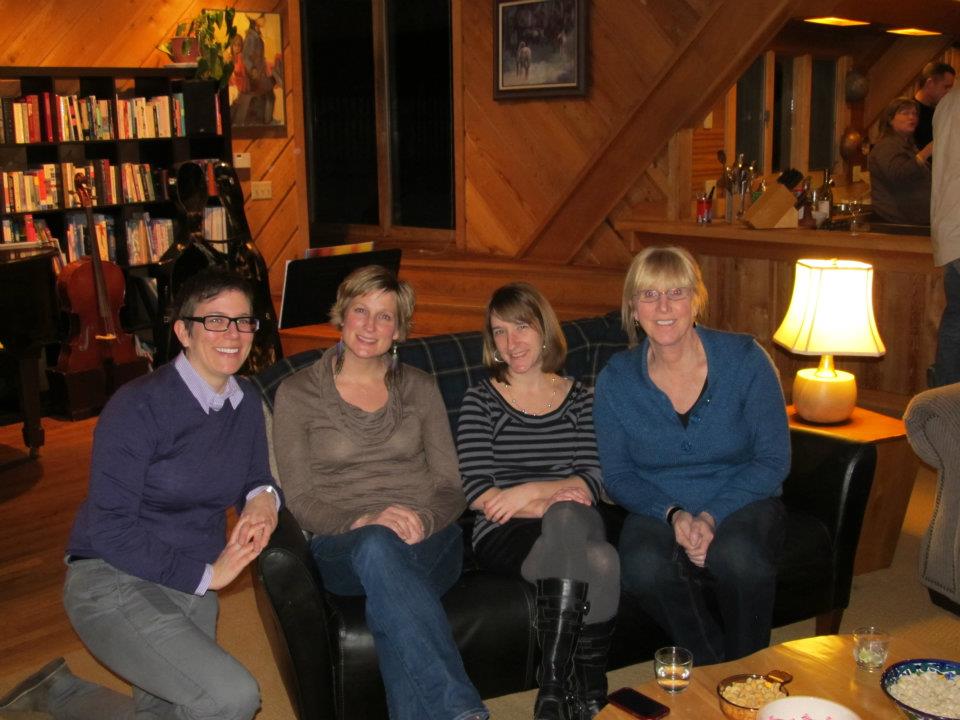
LAT Members with Pride Foundation's Amy White

The team, which functions much like a statewide board, decided to split into three subcommittees focusing on fundraising, visibility and communications, and leadership development.  The fundraising committee, co-chaired by Aaron Browning of Billings and Ginny Furshong of Helena, will focus on major donor and monthly giving development and donor retention, as well as connecting with Montana’s many “expats” who have left the state for either coast but remaining committed to social justice here.

The communications committee will develop Montana-specific “talking points” about the impact of Pride Foundation and its grantees in Montana, and work to present to businesses and service clubs.

The leadership development committee will focus on power-building by providing capacity building and technical assistance to grantee organizations and allies, as well as providing greater volunteer support to grantees, especially those focused on advocacy and education.

“Volunteering with and donating to Pride Foundation means being a part of something bigger than myself without losing my individual identity – or my voice,” explains LAT member and monthly donor Greg Smith of Bozeman. “In fact, Pride Foundation amplifies my voice because it is the vehicle for change in the Pacific Northwest for all LGBTQ persons and our allies, urbanand rural. Pride Foundation’s investment in my home state of Montana couldn’t be clearer- it’s professional, it’s consistent and it’s becoming stronger every day.”

Moving forward, the Leadership Action Team plans to meet quarterly in person and monthly in subcommittees.  If you have feedback or suggestions for how Pride Foundation can better serve your community, please contact Caitlin@pridefoundation.org or one of your local LAT members.

Tell your LGBT Children and Family You Love Them at…

By Kathy Baldock

aNotetoMyKid.com is a grassroots movement to publicly express love and support for the gay, lesbian, bisexual and transgender (glbt) people in our lives .aNotetoMyKid was created by Patrick Wallace and Michael Volpatt in 2011 as a space for the friends and families of the glbt people to share their unconditional love .

You can join in the love and encouragement-giving with a note, a photo or video. Send a letter or photo, or the upload address of your video on youtube, to co- creator Patrick Wallace atPatrick@anotetomykid.com.

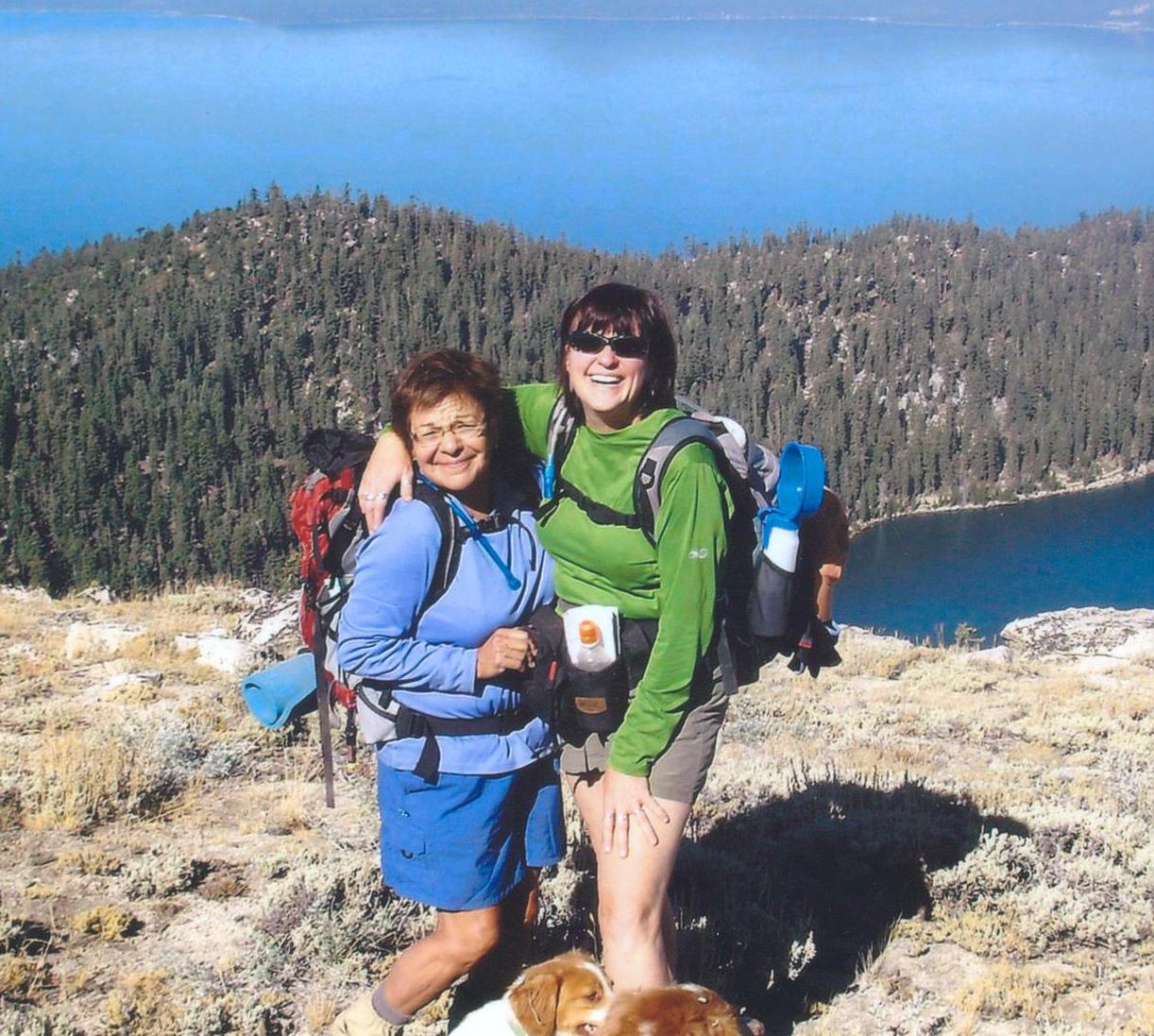
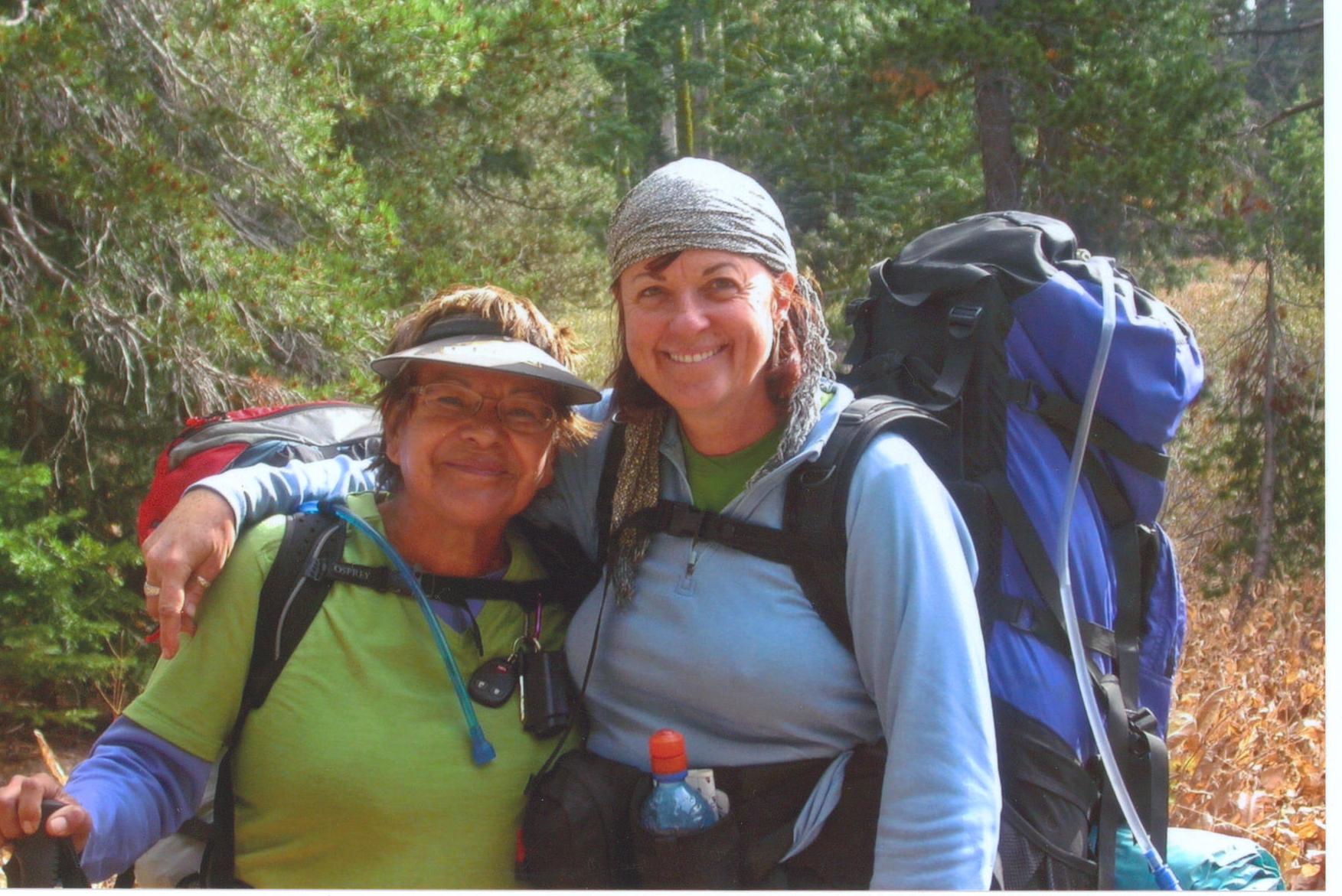
As part of the “Give a Gift of Love” campaign for the holiday at aNotetoMyKid , I submitted my video about my best friend, Netto Montoya. She is the person that God used to make me sensitive to, and eventually an advocate for the gay and trans community.

My home is at the edge of the Sierra Nevada Mountains in Nevada, a short drive from Lake Tahoe. With such close proximity to hiking trails, I have had a two-decade daily routine of hiking. It was on one of my daily walks in the fall of 2001, that I ran into Netto whom I’d seen occasionally on the trails. One day, I asked if she minded if I turned around and walked in her direction for a while.

And, Netto and I became hiking buddies.  The second time we hiked, I walked back to her truck and spotted a key ring with rainbow colored metal rings on it hanging from the rear view mirror of her truck.  “Hmmm”, I wondered, “is she gay?”

It never came up as a topic of discussion for almost a year.  I was conscious of the language she used : “partner” and other non-male-boyfriend terms, but I respected her privacy. My traditional Evangelical faith had caused ingrained beliefs about gay people and it took time for me to work through them.

We hiked hundreds of miles more in the coming years.  In openness and trust, I found a person who answered all my questions about lesbianism.  As dumb a question that you might imagine, I asked;  I knew nothing.  Never offended, nor secretive, Netto answered me.

I can still remember absolutely vividly, where we were on a trail when she told me she was going to a lesbian RV camp out and looked forward to it as the “only place where she felt safe”. “Safe?” I wondered, I always felt safe.  She said that society let her know she was the “lowest of the low” being a woman, a Native American and a lesbian. “Even God doesn’t love me,” she said.

It actually physically hurt that my friend would be viewed and treated in this manner. Everything stopped inside me as I considered how she must feel living in a world that was loving, accepting and comfortable to me.  In that moment, on that patch of dirt, a shift happened. I got a glimpse into the pain caused by “my side” towards “her side”. Right there,  God flipped a switch in me of compassion towards the gay community.  And, God used Netto Montoya to accomplish it.

And there’s more- click here.

STUDENT NON DISCRIMINATION ACT NEEDED TO PROTECT GLBT YOUTH FROM BULLYING

Kathy Baldock, www.canyonwalkerconnections.com

Casey, sixteen and gay, was being bullied by two students at his high school in Ohio. His youth pastor, a friend of mine, helped to secure a restraining order to protect him, but the principal downgraded the severity with a weaker solution.  He let Cody come to the office five minutes before classes ended and stay until five minutes after they started; Casey would then be safe from bullying in the hall-passing time.  One of Casey’s bullies was still in class with him.  Did this principal create a safe learning environment and protect Casey from abuse?  Why did it even get this far?  Why was there no policy in place to protect this child from bullying due to his sexual orientation or even his perceived sexual orientation?

No gay, lesbian, bisexual or transgender (glbt) child in public schools in the United States is federally protected from bullying and harassment for their sexual orientation or gender identity. Shocked?  This is true.  No Child Left Behind (2001), soon to be re-authorized after ten years in the updated Elementary and Secondary Education Re-Authorization 2011 (ESEA), made it out of committee in October 2011 without the bipartisan support it needed to include protection for glbt students.   Currently, students are protected from bullying for: race, sex, religion, disabilities and national origin, but not sexual orientation and gender identity.

When the ESEA is brought to the floor of the Senate in either December or January, there is a push to attach the Student Non-Discrimination Act HR 4350 (SNDA) to it. SNDA includes comprehensive federal prohibitions against discrimination in public schools based on actual or perceived sexual orientation or gender identity.  It would forbid schools with public funding to discriminate against glbt students or ignore harassing behaviors.

The bill was re-introduced, having not been added in committee in ESEA, by Sen. Al Franken (D-MN) and Rep. Jared Polis (D-CO). (watch the video, grab a tissue.)  Co-sponsored by 34 senators, it needs the approval of 60 senators to attach it to the ESEA before going to the House for a vote before it becomes law.

“Is it needed?” you may ask.  Only 13 states have laws protecting glbt students from harassment at school; this is not a surprising statistic when you also realize that 15 states do not even include sexual orientation and gender identity on the “hate crimes” list; in 29 states you can still be fired for being gay; and in 34 states you can be fired for being trans.

Come on, it is really necessary to pass another law?  Lots of kids are bullied in school; that is “just the way it is.”  Research shows highly rejected glbt youth were at a very high risk for health and mental problems when they become young adults.  Highly rejected glbt youth were:

  • More than 8 times as likely to attempt suicide
  • Nearly 6 times as likely to report high levels of depression
  • More than 3 times as likely to use illegal drugs and
  • More than 3 times as likely to be at high risk for HIV and sexually transmitted diseases *

Knowing that the primary socializing institutions for children and youth are families, schools and faith communities, should we not try to make those places safer for children?  This is not just a “family issue” forglbt youth.  Many of them are not even out in their own families.  As mysterious as that may seem, the biggest loss a child fears is family rejection so many will delay coming out to their own parents.  Churches are wellknown sources of anti-gay rhetoric, leaving many children thinking they have only one protected place: school.

Now is the time to voice to your senators and representative  that it is their duty as public servants to serve the most vulnerable of their constituents: glbt children.  Tell them to get on record now in support of the Senate bill and the version that comes to the House.  Any senator or representative that votes against the protection of vulnerable children should not hold that position of trust.

I am a Mom too, with two straight, adult children.  I am a straight, Evangelical Christian compelled by my faith to stand for justice and against oppression.  The argument of some conservative family groups and lobbies against this bill is the fear that this bill will “victimize people of faith by turning religiously-based, anti-gay comments into ‘thought crimes’ ” (Rep. John Kline R-MN).  This is fear-based rhetoric.  Anti-discrimination laws punish actions, not opinions or beliefs.

Who should care and act on this now:

  • Parents of glbt children.  There are over 350 chapters of Parents and Friends of Gays and Lesbians (PFLAG) with over 200,000 members nationwide.  Be the advocates you already are and tell your families and friends to insist on the addition of the SNDA in the ESEA.
  • Educators who see the crises and have no guidelines under which to operate when they witness bullying of glbt students.  School boards will take seriously the loss of federal funding should they not enforce the law.
  • Members of the glbt community know the damage many of them suffered for being gay or perceived as gay.
  • Christians are to take seriously the mandates of our faith to fight injustice and stand against oppression (oh, and toss in a good dose of helping the poor) Isaiah 58. A Christian who would consider blocking the protection of a child needs to consider deeply the examples of Jesus.
  • Any parent that understands the difficulty of peer bullying in schools.  Consider that the children that may not be yours suffer it more profoundly; look at those stats again for rejection of glbt youth.  Teach your children well.
  • Conservative family groups need to hold to their own missions—protecting families which include glbt youth.  The irony of Family Research Council ignoring family research and producing policies directly impacting the health and mental wellness of glbt youth is glaring.  Focus on the Family really does need to focus on families and help families with glbt youth.  Concerned Women for America should be concerned about the children of women in America.  Excluding glbt children from the mission statements of those organizations shows severe bias which places religious beliefs over a higher calling of caring for the families and children that even the names of their organizations imply.
  • Any person with even a modicum of wisdom that understands that all children desire the comforts of love, acceptance and security. Healthy children grow into healthy adults and build healthy societies.

Bottom line: who should care that the Student Non-Discrimination Act (SNDA) be voted into law as part of the Elementary and Secondary Education Re-Authorization Act (ESEA)?  All of us. Partisan politics drives me crazy.  When I see a vote that goes right down party lines, I know the public servants are voting to maintain power and money balances and have succumb to party/special interest groups pressure.  Voting for the protection of children is not a partisan issue.  Every public servant in this country should be protecting the least of these.

And what has become of Casey? Along with his youth pastor, PFLAG stepped in to protect this child. The school administration knows they are being watched and are more cautious. This is what ESEA will do for all children and in all schools; it will strengthen the federal law to include the protection glbt students against bullying.  And, after five years of blocking a Gay Student  Alliance (GSA), Casey’s school now has one and he is the president. He is safer.

Apply pressure and make your voice heard now.  There are 90 million children in this country under 18 years of age, including approximately 4.5 million that are glbt.  Speak up for their safety and insist that the non-inclusion of SNDA at the committee level be corrected when ESEA comes to Senate vote in December or January.  Insist and speak up for Casey and other glbt students.

RECAP:

Contact your senators and representatives and tell them that it is essential that the SNDA (HR 4350) become part of ESEA when it comes for vote in the Senate in December or January.  It will expand the protection from bullying based on: religion, sex, national origin and disabilities to include protection for sexual orientation and gender identity for glbt students. And stay on them, especially the Republicans who may be resistant to approve it. And big kudos to Al Franken, thank him too. 


*Family Acceptance Project, Dr. Caitlin Ryan, “Supportive Families, Healthy Children: Helping Families with Lesbian, Gay, Bisexual & Transgender Children” (2009)