“Be Your Best Self”

Greg squared

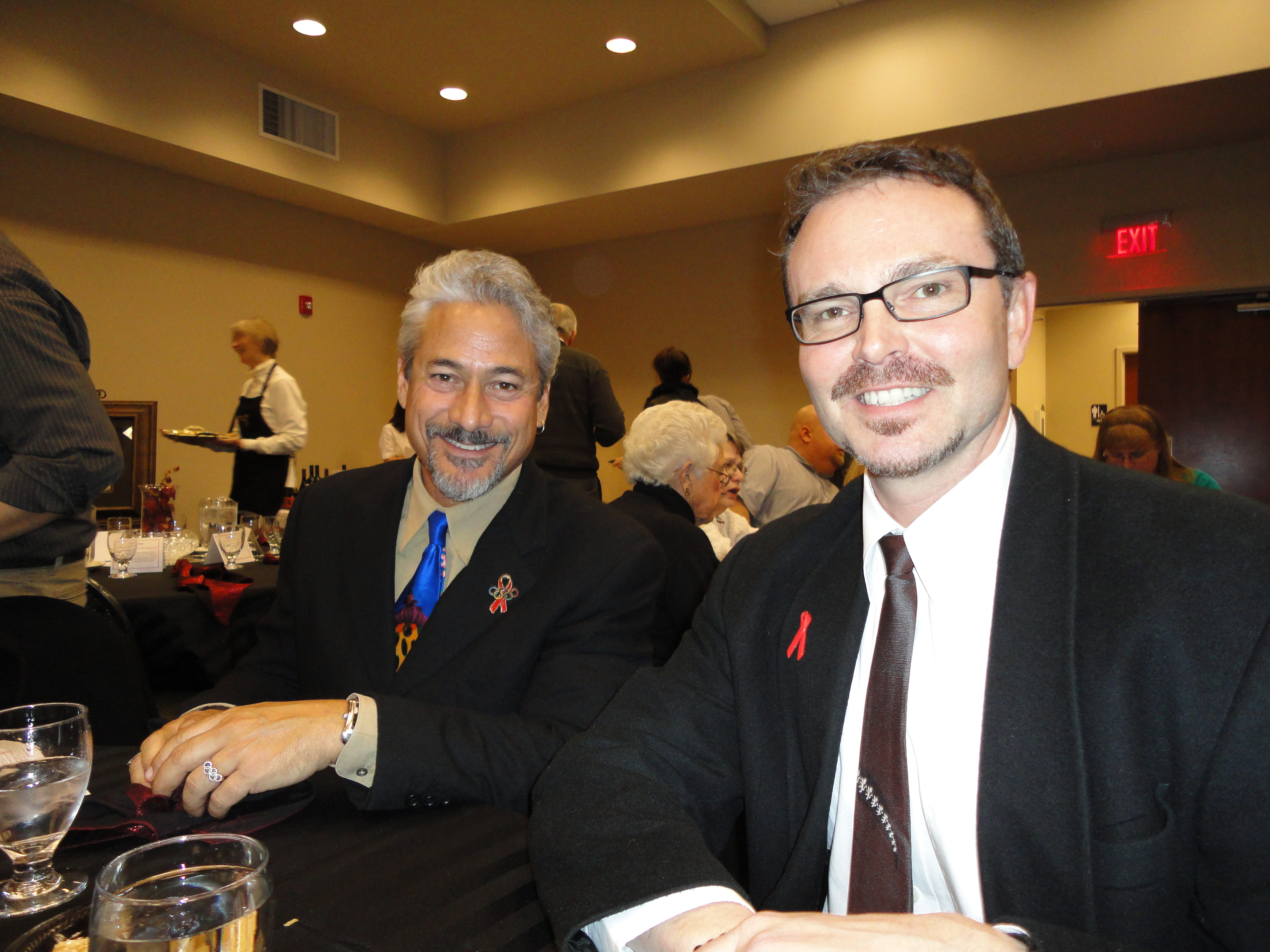
The Yellowstone AIDS Project fundraiser last night was great. The auction items were cool; the people were great; Greg Louganis recounted his path from 3 year-old dancer to Olympic champion to humanitarian and coach. Loved being part of it all to help raise money for a very worthy cause.

This was my favorite quote of the evening:

“Never underestimate your ability to make someone else’s life better- even if you never know it. Just be your best self- it can change the world.”

I’ve gotten to know this guy a bit, and I am happy to say, he’s the real deal. His heart is large, his desire to make the world better is real, and his kindness and generosity made me (humbly) glad to be able to spend some time with him- and share the experience of my friend with the people here in Montana.

They got to know a man who worked hard to achieve his goals with such determination and drive that made me wonder if he was human. That wonder was quelled by the warmth and kindness he showed to me and my friends- and the humor, dedication and insight he shared during his presentation. His openness about being HIV-positive and gay and, (gasp), Californian, were inspiring. The casual comfort with which he presented himself and his life reminded me to not take myself too seriously- even though I’m not at all in his league.

Maybe that’s what everyone else who shared that night was thinking- and I guess that just proves my point.

Thanks, Greg- mission accomplished.

Oh, and thanks for eating my tuna sandwiches….

Yellowstone AIDS Project Event Tonight

Just left Greg Louganis at his hotel after a great visit, now off for a brief nap before tonight’s event.
Ken made it- the roads were fine, and we’re looking forward to a great evening!

Tonight. 6pm, Wyngate Ballroom- just off Zoo Avenue. Tickets available at the door!

My Homily, World AIDS Day, 2010

(This is the text of the homily I gave at the interfaith World AIDS Day service at Grace United Methodist Church in Billings last night. The scripture readings were from Isaiah 43 and psalm 22)
I remember when World AIDS Day was different than it is now.

I remember when we gathered in the darkness with candles and listened to words and music that were designed to comfort- but we all knew that comfort was a luxury we couldn’t afford. We were terrified.

We remembered the dead. We hugged the living, and the very sick. We held the hands of people who couldn’t tell their own families that they had lost or were going to lose the most important person in their life. We cried.

Our grief and fear were the engines that drove us back then. We were sick of burying our friends. We were tired of trying to defend the ways we struggled to love. We were working hard to be responsible- to make safe sex cool. We fought to get programs and found organizations that would take care of the often very simple needs that the government couldn’t- or wouldn’t. And the fear- some of you can remember can’t you? It was an entity that lived in our midst, a specter of doom that we couldn’t shake.

Because the work seemed to be so overwhelming and the fear, shame and hopelessness we fought was exhausting, we needed our sorrowful mothers, our indignant sisters and our caring brothers, fathers and friends to carry us.  And carry us they did- often at great risk to their personal livelihoods and professional credibility.

There are people still doing this work because they remember the pain, remember the fear, and remember the exhaustion echoed in the psalm we heard tonight:

“My God, my God, why have you forsaken me?”

We remember. Especially tonight, we remember. We remember that we never want to see it again.

That is the purpose of memory. The pain of those memories has become our strength.

This is our Seder, I daresay our Holocaust.

Only, in this we are not bound together by race, by religion, by nation or even by faith. I think we are bound together by our naked humanity, our compassion, our memory and our hope.

Isaiah gives voice to the hope we share- and not in grand or exalted words, in very simple words actually.

“Do not fear. I have called you by name. You are precious in my sight.  I love you.”

Much like Isaiah, John Donne’s meditations on life, death and salvation in what have come to be known as the Holy Sonnets, show the majesty and humility in the ordinary. And like Isaiah, he works to remind us of a perspective that relies on the struggle of faith.

His familiar lines echo in our world today, where we can instantly see war and famine and suffering- even from opposite places on the globe- places that we have no context for, places that we can only imagine, spurred by the small glimpse on our television or computer screens. The question he asks more than 400 years ago, is still relevant today- Why do we fear?

Death, be not proud, though some have called thee

Mighty and dreadful, for thou are not so;

For those whom thou think’st thou dost overthrow

Die not, poor Death, nor yet canst thou kill me.

From rest and sleep, which but thy pictures be,

Much pleasure; then from thee much more must flow,

And soonest our best men with thee do go,

Rest of their bones, and soul’s delivery.

Thou’art slave to fate, chance, kings, and desperate men,

And dost with poison, war, and sickness dwell,

And poppy’or charms can make us sleep as well

And better than thy stroke; why swell’st thou then?

One short sleep past, we wake eternally,

And death shall be no more, Death, thou shalt die.

Death has only the power we give it. Now life, that’s the true power here. And the life that lives not only for itself, but also for the greater good. Or, as Donne would say, for the greater God.

This is the movement from the psalmist to Isaiah- despair gives way to the reality of God’s infinite love, protection and mercy.

The psalmist gives voice to the doubts and grief brought on by suffering.

Isaiah gives voice to the promise of love, of life, of joy brought on by seeing life as precious, and seeing our own perception as limited.

In short, these two proclamations give us the breadth of human experience. It would be easy to reflect on the pain, the suffering, the agony and the fear. But I think that what we need right now is to celebrate the spirit of life, of courage, of hope.

I think that’s what brings us here tonight.

We are here because we all believe that coming together lessens our pain, strengthens our resolve and renews our courage. We know that HIV is still infecting Montanans- too many. They are often young, they are Native American, and women. Many are not being tested because of the fear, the stigma and still more fear.

We are here because we need the habit of coming together. We need to be each other’s memory. We need to remember that we are not alone. To remind one another when we forget. To comfort one another when we are sad, to celebrate with one another when there is joy. To gather strength in the face of difficulty. To counter ignorance and fear with the truth and with compassion.

To be here now. To show up.

Woody Allen said “80 percent of success is showing up.” I think he had something there.

As a therapist, sometimes the only thing I can do for someone is to show up. To be there with them. To quietly see them for who they are- a precious person who may be lost in the confusion of pain and fear. And who won’t always be lost. Especially if they have someone to join them on the journey out.

It’s not about solving a problem or fixing anything.

It’s about being present and being awake.

My being present involves something a little different than it used to. HIV lives with me. It is a guest in my house. It is the guest I never openly invited, but nonetheless it sits in my living room, it gets into my refrigerator, hogs the bathroom and often makes me just want to go to bed and stay there.

When I was first told I had this “intruder” in my house, I felt strange. Somewhere between elation and anger. I really can’t be more specific. I do remember thinking I had to slow down. I had to stop and sit down and wrap my head around this.

I had to decide what to do. And for me, this was serious. This was the decision that was going to shape the rest of my life. I had to decide how I was going to treat this uninvited guest.

For me there were only two options: I could either hate it, or I could love it.

If I hated it, I would live my life as an angry man, always disappointed, always suffering, always asking “why me?”, never seeing truth, beauty or kindness. I would be causing most of my own suffering.

If I loved it, I would be free.

It was that simple.

And, really, what was not to love? This is my reality. Truth is love. Hate is suffering. And HIV is my reality. The sooner I make friends with it, the sooner I find out what it has to teach me, the sooner my own salvation becomes obvious. This is simply a virus, doing its job. It is not a moral judgment, or a sign of anything but reality.

It is often simply a microscopic sign of the reality that human beings will do almost anything to be loved.

So, I love my little guest. I accept my reality. To be honest, I’m grateful for him. (I’m not being sexist, it’s just easier to think of the virus as him, somehow) Without this home invader, I think it would have taken me a lot longer to wake up. I would have had a longer, more painful road to deeper awareness. I wouldn’t have so easily seen the love that surrounds me every day. I wouldn’t have been able to put up with all of the harsh judgments that people with HIV have to put up with.

I guess I see my role as very simple: I’m here to teach some people how to love better. If they can overcome their prejudice and love me, the gay, HIV+ former priest- they can love anybody!

And I get to learn how to love better in return.

I think there are three great reasons to gather here tonight: To remember, to be present with one another, and to choose love instead of hate. That’s the lesson.

But you get to decide how to love- that’s the human prerogative in all this. You get to decide how to use your gifts, how to stand up to ignorance, how to offer your heart in the face of anger and hatred.

From the psalmist to Isaiah, to John Donne to you and me here in this place the lesson is being passed down.

“Death, be not proud” because, Death, you are not the greatest thing there is.

The God who loves me is always here, even if, like the psalmist, I have my doubts. God is the one saying “I have called you by name, you are mine. I love you and the world is not big enough to contain that love.”

If we listen closely, we can hear the words of God in our own hearts: “Always choose love, even when it’s hard. I promise you will never regret it.”

Tonight, let’s vow to pay attention to that voice.

Choose love.

Even when it’s hard.
Im not writing a World AIDS Day column this year

I’m not.

I wrote a column last year, and I think it’s still completely relevant- with only a few updates of statistics, world aids day(1).jpggeographic and demographic trends.

I’m not going to talk about the rash of new HIV infections among young men, nor am I going to write about my suspicion that 8 years of Bush era abstinence-only education is probably fueling this epidemic among our youth and twenty-somethings.

I’m not going to discuss the massive saturation of HIV in gay/bi men in this country. How we are not working to support each other in getting tested and getting into care and reducing the amount of the virus that can possibly be spread.

I’m not going to harp about the same old shit that gets ignored every year. About how HIV is crippling our communities, draining our resources, affecting our self-esteem and still causing death.

I’m not.

Instead I’m going to concentrate on a few good things that I think may have been overlooked.

I am grateful for the way the women saved us back in the eighties and nineties by stepping up as activists, caregivers and friends. I’m grateful for my lesbian and transgendered sisters/brothers who bravely stood in the face of obstinate refusal by the government to take meaningful action. They still inspire me.

I’m grateful for the medications that have stemmed the flood of funerals that carried away so many lovely human beings. I’m grateful for the drug side-effects that are still better for me than an early death. I’m grateful for the way that my illness has allowed me to prioritize my life, helping me put aside pride, fear and shame to live as honestly and with as much integrity as I can muster. HIV, ironically, has made me look at my life and create it more closely in the image of my true values.

I’m not writing the normal column this year. Instead, I’m going to put on a red ribbon and go to an AIDS Day service. I’m going to gather with other people and remember that we still have work to do. I’m going to remember some very painful moments-and some very beautiful ones. I’m going to bring to mind some people that I haven’t thought about all year and breathe a prayer of thanks for their place in my life. I’m going to hold the hand of a stranger, I’m going to light a candle and sing my gratitude and resolve to whoever it is that is listening.

And as I leave, I’m going to resolve to work harder this year to make life easier for people with HIV and to work harder so people won’t get HIV.

And I know I won’t be alone. That beats any column I could write.


World AIDS Day: A Need To Remember

Because I think it’s still relevant, I’m reprinting (with a few updates) my column for World AIDS Day from last year. I may just continue to do so as long as it still makes sense….


Remember when World AIDS Day used to be important?

I do.

I remember December 1st as a day when people gathered in terror and grief with candles and tears listening to words that couldn’t begin to touch the pain and anger and sadness.

I remember when it was a time for all kinds of people to gather together, people that probably wouldn’t be in the same room for any other reason. At World AIDS Day services in the early Nineties, I remember seeing queer activists, quietly closeted gay men and women, Episcopal and Catholic priests, Native American leaders, Protestant ministers, atheists, nuns and agnostics. I saw elected officials, Republicans and Democrats, wheelchair-bound elderly, parents, children, nurses, doctors, cowboys, lawyers, accountants, little old ladies and, once, a rodeo clown. All coming together, all looking for comfort and hope and compassion among others who could maybe understand.

We don’t really do that now. And maybe it’s okay that we don’t.
Maybe it’s good that the terror I remember so vividly on the faces of  friends and complete strangers is no longer there. Maybe it’s good that people aren’t dying so fast and so painfully, isolated and afraid. Maybe it’s good that we’re not so traumatized by fear and grief and anger.

Maybe.

Is terror a good thing? Is a painful death beneficial? Is emotional trauma something to be longed for?

No. But I have to say, those scenes of suffering and bravery certainly helped capture the zeitgeist of the Eighties and Nineties. It helped keep AIDS in our collective consciousness. Drama and fear and compassion fueled activism and grassroots movements and the formation of community-based organizations. AIDS was overwhelmingly real. It was dramatic. It went to the Oscars, the Emmys, the Grammys and the Tonys. And it won. More than once.

So I’m not sure if it’s a good thing that HIV isn’t such a drama queen anymore. Not to say that I want people to suffer needlessly. I don’t. I just happen to think we’re not paying attention because it’s no longer hip, sexy, avant-garde and noble to do so. I think that our short attention spans need to be constantly reminded. And, there’s really not a lot of spectacular theatrics to grab our attention today. Well, not compared to the past.

But, trust me, it’s still there. There are some rather dramatic facts to consider:

  • People are still being infected. In the U.S. there are over fifty thousand new diagnoses a year. The CDC estimates that one in five persons with HIV doesn’t know it. That means they may not be protecting their sexual partners out of ignorance. That means more HIV.
  • Gay men, and/or Men who have Sex with Men (MSM) account for more than half of all new infections each year, and MSM is the only risk group in the country whose infections are increasing. MSM account for nearly half of all persons living with HIV in the United States today. Nearly half. And those are just the ones we know about. That means that for all the talk we hear about “AIDS is not a gay disease,” it is. That means sexually active MSM are having sex with HIV+ partners statistically more often than any other members of the general population- and being infected. HIV significantly and dramatically lives in the bodies of gay men.
  • HIV strains the budget of every state in the Union. So much so, that states have cut or are considering cuts in funding to drug assistance programs and other HIV support and prevention services. These services keep people alive at a cost of hundreds of millions of dollars a year. More money is needed with every new infection. That money comes out of your taxes.
  • People are still dying. Yes, the drugs help, and people with HIV are living longer lives, but the drugs don’t always work, and HIV mutates. Our immune systems are under a great deal of strain and one serious opportunistic infection can kill. I lost a friend just this year.
  • It’s not over. Families are still being traumatized and our community is being hurt by this epidemic. Here in Montana, with its relatively miniscule gay population, new members joined my HIV+ support group this year,  most are gay men in their twenties- kids, really. All facing a lifetime radically different than they had hoped for.

And those are just some of the many points to consider.

Is it good that people are no longer dying and suffering in such huge numbers? Yes.
Is it good that we no longer gather in great numbers, sharing strong emotions, standing hopefully resolute in the face of pain and suffering and memory? I don’t think so.

Personally, I need to remember these facts and these people, because they’re part of my history, my community, my country and my world. I need to be reminded that my compassion, my voice and my heart are all still relevant. I need to be reminded that I’m not alone, I need to remind others of the same thing. And I think doing it once a year is the least I can do.

That’s why I’ll be going to a World AIDS Day service this year. That’s why I’ll be wearing a red ribbon, holding a candle in the dark, listening to words of grief, bravery and encouragement. To remember, to remind, to regroup.

Because I still think it’s important.

Outta Town

I’ll be at the Rock Creek Lodge in Red Lodge (not this one) for the MT Community Planning Group (CPG) meeting through Saturday. So, things may be slow here.

Peace.

Gene Research Finds Important Clue In Long-Term HIV Survivors

H I V

There are human beings who live with HIV- some for decades, without ever having had a symptom.

Not one. The Boston Globe:

For decades, they lived a mystery: Why were they able to survive with the AIDS virus, free of symptoms and the need for potent drugs, while so many others with the same germ turned deathly ill?

Their innate ability to keep HIV infections in check intrigued researchers, who suspected these people, known as “controllers,’’ might carry clues to designing effective vaccines after nearly 30 years of frustration.

Now, an international team of researchers, led by specialists in Boston, has cracked these HIV survivors’ genetic code, sifting through almost 1.4 million pieces of DNA to discover five amino acids that separate the small cadre of controllers from the vast majority who must take medication or face death.

This is the kind of research that could actually go somewhere. The full article here.

Voting For HIV

I am a member of NAPWA, the National Association of People With AIDS/HIV.  As a member, I receive their monthly email newsletter, which has a lot of information regarding HIV, tips for self-care, advocacy and political activism. Frank Oldham, the President and CEO had a column this month that really put some things in perspective for me.

It’s been a pretty interesting election year. NAPWA, as a 501(c)(3) charitable corporation, is not permitted to support or oppose individual candidates or political parties, so we can’t name names – but we can share our general observation that some of this year’s candidates would be pretty grand entertainment if there weren’t a real chance they might get elected.

It’s also been one of the nastiest campaign seasons in recent memory, and a lot of us just want it to end and go away. Here are some reasons to get to the polls and vote anyway.

· Defend the Health Care Reform Act.

Imagine a world where insurance companies can’t ask about preexisting conditions and use our answers to deny us coverage or cover us differently! We’ll have to wait until 2014 for full implementation of that, but it’s in the new law, and candidates who will defend the law against attempts to repeal it outright or amend it out of existence deserve our support. So do incumbent candidates who knew they were risking their seats but voted for the bill anyway; they took a big risk for us.

· The next Congress will – or won’t – fund implementation of the National HIV/AIDS Strategy.

The Obama Administration’s National HIV/AIDS Strategy (NHAS) seeks to reduce the number of new HIV infections, increase access to care and optimize health outcomes, and reduce HIV-related health disparities. All of which is very good news for people living with HIV. It doesn’t mean much, though, if Congressional funding priorities are being set by folks who think anyone who doesn’t look like them is not the “real America.” Simply by being HIV-positive, we don’t look like them. We don’t want a Congress full of elected representatives chanting, “We shouldn’t be spending money on NHAS, ‘they’ wouldn’t have HIV if ‘they’ hadn’t been doing bad things.”

· The next Congress will set the agenda for young people’s HIV-awareness and prevention education.

We’ve seen the lack of results from abstinence-only curricula. Even the current Congress is gradually moving from ideology-driven abstinence-only approaches to evidence-based, frank sex education, and it is saving the lives of our young people. We don’t want to go back.

· There are critical HIV funding needs right now.

State AIDS Drugs Assistance Programs (ADAPs) are in crisis because of the recession which started in 2008. Programs for HIV-positive people with multiple medical or life issues – homelessness, addiction, mental illness – are also finding funds harder and harder to come by. Find out where your candidates stand on HIV services, and vote for those who support funding for them.

The votes of people living with HIV/AIDS are needed now more than ever before! As the leader of NAPWA and an African-American gay man living with AIDS, I know that so much progress and the fruits of hard-fought battles for our health care, protecting Ryan White Care Act services, and our rights as American citizens are at risk right now!

So let’s be sure to know our candidates and choose well. Next issue (November 5), we’ll look at the election results. Win or lose, we’ll all feel better if we did our research and voted our values.

More HIV News…

There have a been a lot of breaking HIV stories this past week, here are a couple more.

The first is another breakthrough: scientists discover a protein that destroys HIV.

The second was a little tough for me to take, but discovery can only lead to a furthering of understanding, right?

Apparently HIV can hide in the brain, relatively unaffected by medical treatment. This just brings to light the necessity of understanding that just because viral levels are low in the bloodstream, which is where viral loads are measured, they aren’t necessarily low everywhere else in the body. And we know that HIV is a destructive virus- it hurts the places in which it lives. This may push research into medication/treatment that addresses the blood/brain barrier.

In the meantime, will we see measuring spinal fluid viral loads as routine in our future?

Old Drugs, New HIV Treatment?

From Science Daily:

Researchers at the University of Minnesota Academic Health Center have identified two drugs, that, when combined, may serve as an effective treatment for HIV. The two drugs, decitabine and gemcitabine — both FDA approved and currently used in pre-cancer and cancer therapy — were found to eliminate HIV infection in the mouse model by causing the virus to mutate itself to death — an outcome researchers dubbed “lethal mutagenesis.”

This is a landmark finding in HIV research because it is the first time this novel approach has been used to attack the deadly virus without causing toxic side effects. Because decitabine and gemcitabine are already FDA approved, researchers believe that if their research is effective in large animal models, it will be much easier to expedite the development of the drugs for human use.

This is significant because taking on the treatment (and possible cure) of HIV with an existing drug that companies are (probably) already making money on after already spending money on research is a no-brainer. Researching new HIV meds is prohibitively expensive.

You can bet your ass if this is a significant treatment for HIV, they’re going to make money. And money is what drives this thing.

Read the full story here.