 |
|||||||
|
Category Archives: Montana


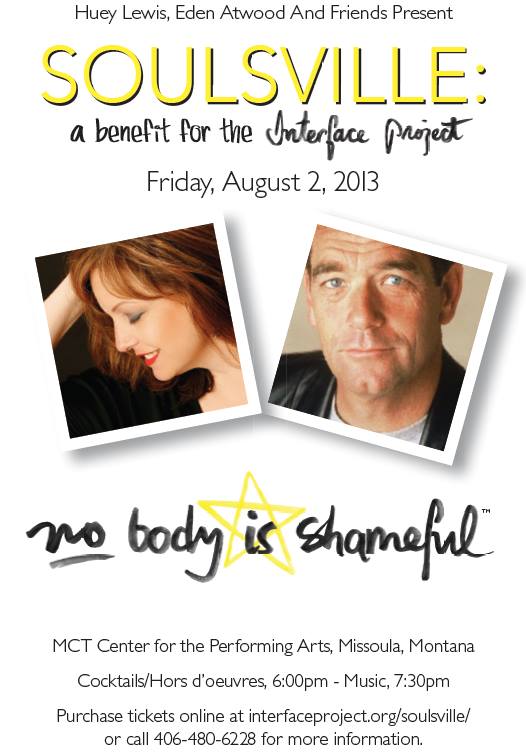
Tonight! Eden Atwood, Huey Lewis And Friends Present: Soulsville!
I hope to see you there!
Click below for link to tickets….
Letting Harmony Find You

Harmony California (Photo credit: Wikipedia)
From my sermon at the Unitarian Universalist Fellowship of Billings yesterday:
I love the word “harmony”.
Besides being just a musical term, it also describes being in balance.
Sometimes it takes some time to find that balance- I’d like to tell you a little bit about the time it’s taken me….
I was born in Butte and raised in Twin Bridges. My Dad was a rancher, my mom stayed home with me and my brother and sister. From an early age, I knew I was different. I really couldn’t have put my finger on it when I was young, but I seemed to be more sensitive than other boys my age, more compassionate about things that could hurt.
In fact, I actively avoided rough games and play. I liked to read- and I read constantly- often about far away places, places that I might be able to go to when I was older- where people might understand me.
It’s hard to find harmony when your insides are saying one thing- and the world is telling you its opposite. But I did find it sometimes.
When I was alone- in my room or in the woods.
When I was reading a great book.
When I was in the quiet of my church.
In fact, church was probably my salvation. I grew up Catholic, and I loved all of the rituals and music of our little church. I loved that the priest took an interest in me, didn’t think I was weird, encouraged me in reading and study and conversation. I felt the harmony.
But then, around twelve or thirteen, something happened.
I realized that the difference I felt wasn’t just about the way I saw and felt the world, it was about how I felt and saw other people.
I learned that other boys my age wanted to chse girls and that other girls my age wanted to chase boys- not that they’d know what to do when they caught them- but that wasn’t what I wanted.
It was confusing. I had crushes on older boys. Felt myself looking at my classmates in the shower during gym. And it terrified me, because I knew it was bad. I knew that I was one of those people that were really monsters, freaks. Teachers said so- kids said so- the church said so. “Queer” was evil. We played smear the queer at recess. It never went well for the “Queer”. The word “Fag” was a term of derision worse than “Nazi”, or “Communist”.
And that’s what I knew I was.
A Queer. A Faggot. And it was bad.
That’s when I lost the harmony.
It was important for my survival 35 years ago- as it sadly still is for kids today- that I not be detected. That I not be singled out. I had to hide.
So I did. I no longer trusted the goodness of my nature. My desires were to be obliterated out of necessity. It wasn’t safe.
I pretty much hid my sexuality in high school and college- with brief moments of harmony when I found others like me, but mostly, I was just working hard to keep myself from being fully seen. And that culminated in my becoming a priest.
And not just any priest. I went to seminary in Rome. I knew people in the Vatican. I found other gay men who were following the same path I was and we supported each other.
Over the years, I’ve noticed that of all the people in seminary with me, the ones that later got into some kind of trouble were the ones who were in denial about their sexuality- the ones without any support.
Harmony actually found me again for a while.
I loved the work, I loved the people. But it got tiring.
I got tired of not being seen for the real me. I got depressed because the official church position on my particular sexuality was that we were all “fundamentally disordered”. It’s hard to believe in an institution that discards as irrelevant your particular, strong and direct experience. It’s hard to maintain day after day the lie.
I tried everything.
I worked harder. I got a dog. I bought a truck. Nothing helped. Finally, I got counseling.
What took me so long?
Denial can be a very high and thick wall- especially if you lay each brick in desperation, in fear for your very life. I had denied my experience. I was hiding from harmony- only I didn’t know it at the time.
What brought me out was something ordinary.
I fell in love. Hard.
I heard the notes of harmony again. Sometimes- when I just let myself be loved by this man- it was more like a symphony.
I came to realize that my experience hadn’t conflicted with my faith at all- it just conflicted with the interpretation of that faith by others. In one sense, LGBT people aren’t asked by their churches to inform the faith- they’re asked to stand outside and accept the information given by others- some of whom are hiding behind their own self-built walls of shame and denial.
I also realized that I hadn’t allowed myself the common dignity of reflecting honestly on my life before making promises to a church that would never accept me as the man I really was.
Ironically, I had preached “the truth will set you free” a million times- but it never sank in until I was freed to be myself. To have compassion for myself. To create a space of understanding in myself.
As a therapist, I know the biggest breakthroughs often come from uncovering the lies that we tell ourselves. “What’s the lie?
But it has to be done with compassion.
I spent years dealing with the fallout of my denial. That initial relationship didn’t last. I spent time doing drugs, having meaningless sex, until I had spiritual breakthrough just weeks before I was diagnosed with HIV.
I’m not sure if we have the time for me to into it here, but here’s what I walked away with: “Nothing can go wrong” (You can read about it here)
Nothing.
In my best moments, I believe this.
In my worst moments, I forget this and struggle to make the world make sense by bending it to my will.
The complete opposite of what I should be doing.
You see, there’s nothing more important than the recognition of reality. Loving what is- not what should or could be- loving what is. Right here, right now.
It doesn’t mean we have to stay in it forever, we just have to let the total reality of the present moment sink in if we want to have fulfilling and satisfying lives.
And yes- sometimes pain is a part of the present reality.
But it’s always temporary.
Notice I said “pain”, not “suffering”. Suffering is almost always optional.
Here’s my definition of suffering: “Suffering. Noun. Remembering past pain in a way that traumatizes; imagining future pain in a way that traumatizes; creating stories about pain that doesn’t exist- either from the past or future. Creating or re-creating unnecessary pain.”
What do you think of that?
I’ve come to understand that it’s not about making things happen, it’s about allowing things to happen- and finding my place in them.
It’s not about bending the world to my will, its about truly looking at the world and knowing that I have a place in it- even if it’s not immediately evident.
It’s about feeling loved. By everything. There’s music there….
How do you do that?
Practice. And by listening for it.
How do musicians get the feel of harmonizing? Practice. And by realizing they won’t get it right every time. By not needing it to be perfect. You have to stop and listen.
Because nothing can go wrong.
Today, I have a man that loves me more than anything else in the world. I believe that. And I love him the same way. We have a house and dogs and a very satisfying life together. I work with LGBT people, helping them to be happy. I work with HIV+ people, helping them to be happy and healthy. I’m doing things that satisfy me.
Some have said “You’ve overcome so much to get where you are today- how did you do it?”
“Yeah, overcoming your own sense of self-importance and shame and denial is a bitch- but we all have to do it eventually. On earth or in heaven, I guess.”
It’s not the circumstances- it’s how you see them.
I believe prayer is trying to see with God’s eyes, not vice-versa. That’s the only way it makes sense. Why would I pray for anything but to see the truth?
Well, maybe to hear the music…. 🙂
We all know the tune- and I believe that we all have the power to discover the harmony. I believe that sooner or later, the harmony will find us- especially if we slow down, quiet ourselves and wait for it.
And that music is so beautiful and rich.
May harmony find you.
Amen.
MSU Sexual Assault Reported
From the MSU Email alert system: MSU Timely Warning: Sexual Intercourse without Consent

A sexual assault awareness poster. (Photo credit: Official U.S. Navy Imagery)
On July 24, 2013 at approximately 4:15 p.m. the Montana State University
Police Department responded to a report of sexual intercourse without
consent which occurred at an unknown residence, possibly near campus. The
victim reported partying with new acquaintances and that alcohol and
marijuana had been consumed. The victim reported that she became
incapacitated and woke at approximately 2:00 p.m. to the perpetrator
sexually assaulting her. The perpetrator was described as a white male,
approximately 5’6” to 6’ in height, weighing approximately 220 to 240
pounds with short “buzz cut” blonde hair. The perpetrator was also
described as having a goatee and brown eyes. This incident is currently
under investigation.If anyone has information related to this incident, please contact the MSU
Police Department immediately at 994-2121. For anonymous reporting, email
correspondence may be sent to MSU Police at: switness@montana.edu
The MSU Police Department reminds all students, faculty, staff, and campus
visitors to use caution when consuming alcoholic beverages and/or present
in areas where intoxicating substances are being used. Furthermore, it is
recommended that individuals not accept open drinks from strangers or in
large group environments. Always exercise caution when in the company of
new acquaintances at social gatherings.
The MSU Police Department offers crime prevention presentations and
provides escorts which are available on campus 24 hours a day for any
student, faculty, staff or visitor.
This Timely Warning message was sent via the MSU ALERT E-MAIL system to
all students, faculty and staff at MSU Bozeman. All students, faculty, and
staff are automatically enrolled in the MSU ALERT E-MAIL system.
Proud Parents Of LGBT Kids Needed!
Greetings,
My mother (Deb Eckheart) and I are starting an exciting new project entitled Pride Parents. These will be short Q&A style videos where we recruit parents who have LGBT kids (ranging in age from youth to adults) to share their stories and impart wisdom from a parent’s perspective regarding lessons learned around making a safe and inclusive environment for a child to explore their identities (including, but not limited to, sexual orientation and gender expression). This video idea came about through conversations my mother and I had around how the coming out process doesn’t only apply to LGBT people, but also to their family and friends who have the inner journey of coming to terms with their loved one’s newfound identity as well as the parent’s own path toward acceptance – wherever that may be on the spectrum.
Although there are some LGBT organizations present in larger Montana communities throughout the state, we would like to produce a video that could help raise awareness about creating a safe and inclusive environment for the LGBT youth while providing a bridge to accessing parental support (through PFLAG, PRIDE, etc.). Through a video format (to be posted on YouTube), we hope to target an audience of families who are unsure but want to be supportive of their child’s sexual orientation or gender identity by addressing the following: advice on how to make it safe for their child to come out, how parents can receive their own support during this process, and how to be an ally for their child. Ideally, this would become a pilot project that could spur additional videos, much like the It Gets Better Project, where families can create their own videos, sharing personal stories and lessons learned to create an online wealth of support and knowledge for parents of LGBT youth. At this time, we would like to promote the initial video as a representation of Montana parents only, but with possible opportunities in other states.
So this is where you come in. If you are interested in sharing your perspective on film or have any questions about the project, please contact Deb Eckheart or Alyx Steadman for more information and the list of Q&A prompts. Remember, your experience doesn’t have to be perfect. The importance of this video is to share real stories about overcoming the challenges for parents of LGBT youth, so the more honest you are with your perspective, the more enlightening it will be for other struggling parents coming to terms with their child’s newfound identities.
Thank you for your willingness to consider working with us on this project. We look forward to hearing from you by Sunday, August 4th.
Warmly,
Alyx Steadman alyxsteadman@msn.com 406.369.5221
Deb Eckheart doyourdreams@hotmail.com 406.360.6796
Related articles
- A Letter to Parents of LGBT Youth (joeyrusso.wordpress.com)
- Adam Lambert Calls On Parents To Support Their LGBT Children (ontopmag.com)
- 7 Truths LGBT Kids Need to Hear from Homeschooling Parents (shazza91321.wordpress.com)
Justice For Trayvon
As I stood on the Higgins Avenue Bridge Monday afternoon with friends and allies in the social justice movement in support of Trayvon Martin, I was horrified at the blatantly racist reactions from the passersby. My hope was that in participating in this demonstration on Monday, I would find some outlet for all the feelings the Zimmerman not-guilty verdict evoked in me as a young black man in America. I was heartened by the turnout for the event, and was moved that as a person of color I was not again forced to represent the whole of my race, but instead was supported by some wonderful allies who organized the event due to their own deeply felt feelings of injustice. During my participation in in the demonstration we received what in my activism in Missoula was a record number of negative responses to our presence and signs on the Higgins Bridge. We had people giving us the thumbs down, the middle finger, folks yelling racist tirades out their windows, etc. I had stood on that bridge for Choice, Healthcare, Marriage Equality, Peace, and many other issues, and never had I been so negatively received.
I had started my day on Monday lying in bed reading various news outlets and blogs discuss the emotional and moral responses to the verdict in the Zimmerman trial. Several of the “facts” surrounding the case I felt were totally irrelevant to this case. So I purposefully avoided any discussions of Trayvon’s past actions, Zimmerman’s level of security, whether or not people were going to riot in response to the ruling, and instead focused on the things I felt were important. How were black people being portrayed in the media? Was the victim of the crime being blamed for his murder? What did society see as an acceptable reason for killing a 17 year old child? I am an organizer for social justice, and have worked my entire career focusing on LGBT rights, racial justice, and women’s rights. This made my focus in this case not surprising…
After hours of anger, frustration, and fear in response to a constant slew of blatant racism disguised as social commentary, I found the outlet for my feelings. Some friends had decided to hold the demonstration in Missoula on the Higgins Bridge. As I prepared for this action, I found that I was having trouble expressing in a sound bite my complex thoughts. More disturbing was my trouble in finding a connection that I felt would resonate with people isolated from the case, thousands of miles away. I felt little distance from this case, as I was profiled, harassed, and threatened as a young black man living all over the country. I had spent several years of my life in FL, and had experienced much of the racism that exists there. But how was I to truncate these feelings and experiences that had created the late twenties black man that I was today? How was I to communicate the urgency and overwhelming despair that had caused me to cry in my kitchen only hours before? Was I allowed to reference explicitly my blackness? Would the mostly white population of Missoula resonate with me if I did?
In organizing we teach that when things get complicated, break them down to the most simple and identifiable elements. You can’t write a dissertation on a piece of foamcore board, even if your message is really important. So I landed on one of the familiar images of a black hoodie, “Justice 4 Trayvon,” and Black Skin + Black Hoodie Does not Equal Criminal. I did not want to attack Zimmerman, hash out the details of the case, or blame any of the players in the trial for a miscarriage of justice. I just wanted to express that I did not feel that the case ultimately ended in placing any responsibility with someone who had for whatever reason ended the life of a child, and that the constant attacks on the clothes that he was wearing, the language that he used, his alleged past indiscretions should all be irrelevant to the ending of his short life by a man who used bad judgment when he willfully exited his car with a firearm after following a child ultimately shooting him.
Many people around the country did not understand why so many of us saw race as an issue in this case. They didn’t understand why in this post-racial America, we need concern ourselves with the race of the perpetrator or the victim. The “unbiased facts” of the events of the evening should reveal the truth without any messy discussion of race relations. The only problem was that for many people of color, the case screamed racial motivation. Even before allegations of Zimmerman’s statements that night, or his passed activity on social networking sites; the narrative was familiar to us. Why? Because we live it all the time.
When I was young, a neighborhood friend of mine asked me to go to a Walgreens with him. He was an overweight white kid from a middle class background, and I a mixed skinny kid from a somewhat lower socioeconomic status. We had lived only a few blocks from each other for years in Rockford,IL. At the time the city’s population was around a quarter of a million people, and there was a definite race problem. I said sure, and we entered the Walgreens. As soon as we entered he said he had to go to the bathroom, and asked me to meet him in the toy aisle. As I walked toward the toy aisle I was immediately followed by the store clerk. I perused the toys, and then went to the candy aisle to grab a few packs of my favorite grape double bubble. My friend was already in the candy aisle, so once I had gathered my purchases, we went to the checkout line, the clerk eyeballing me the whole way. I paid for my gum, after turning out my pockets at the clerk’s request. My friend, who was standing next to me, said he had decided not to get anything, so after my purchase we left. When we got back home, my friend emptied his pockets to reveal his five finger discount purchases. He had liberated toys, cigarettes, and various kinds of his favorite candy. I was horrified, and asked him why he thought it was ok to steal. He replied that he had seen a dateline news episode on racial profiling, and wanted to see if it worked. Obviously it had. This is only one of my experiences with profiling. Since that day early on in my childhood in IL, I would be profiled by many more store clerks, I would be dismissed as stupid by teachers who were entrusted with my education, I would be assumed the assailant and not the victim when I called the police to ensure my safety, accused of stealing property by white friends when things went missing in their homes, ad nauseam.
I was a mouthy skinny black kid, fearless, and “entirely too smart for my britches” as my grandmother used to say. I really could have been Trayvon walking in a community, of mostly white people, with some “creepy ass cracker” following me. If I had been confronted by him, I would likely have responded with indignation at the attack on my basic human dignity, and the continued entitlement of those white people who assume that because I am black I somehow do not belong in the same places they do. And had I felt that my person was in danger, I likely would have fought back.
What saved me in my youth was that I was taught to expect racism, to trust the police but to always have witnesses, and to speak as eloquently as possible when interfacing with white people in authority so that they could identify with me. Growing up with mostly white relatives, I had watched them have positive experiences with the police, and get what they needed from government institutions. My uncles were all firefighters, and I learned early on to trust uniforms. When I was little my grandmother made me memorize the family telephone numbers, and she even sewed an old film canister into my coat to make sure that I would always have them with me. Had I been walking on a FL street I likely would have hung up with my friend, and dialed the police. Told them that there was a creepy dude following me. I might have even asked the dude what he was doing, and if I could help him find anything before I called the police.
What was different for me is that I grew up straddling two worlds. I know that for many black children, the narrative taught to them is not that the police are your friend. For many of them this is bolstered by profiling, harassment, and other barriers to justice. I remember the differences in narratives when I would visit my father’s family who is black, and hear all of the injustice and harassment they had experienced as a part of their daily lives. We did not want to see racism in this case, we couldn’t help but see it.
Malcolm Gladwell wrote a book some years ago called Blink, and as a student of Political Science, I was subject to pieces of it for years of my college education. In the book, much is made of Harvard’s Implicit Association Test, and for some it is quite the lightning rod. Some point to it to prove that Institutionalized Racism exists, and is alive and well. For this discussion, the important part of this test is that those that hold these associations like black = bad are not consciously aware of this. It is important to note that this test does not claim to measure a person’s beliefs, only the associations they make about certain groups of people. Any class in the social sciences will likely have some reference to sexism, homophobia, transphobia, and racism. And without fail there will be students in the class who will deny the current existence of the bias, and state that in this day and age that we are beyond all that, and that “X” special interest group is just hypersensitive to their particular issue. For many, these biases are invisible. They are unaware of why having a jury of primarily white females who have been socialized in this country to fear black males might return a not guilty verdict when the defendant is a white male seen as the legitimate authority figure. And they are obliviously unconcerned as to why.
For many black Americans this case represented a great deal. It represented an opportunity to validate the existence of black people in society. It served as an indictment of profiling and harassment of black bodies. It served as a catalyst for discussion and change in our society about black people’s access to justice.
And when we heard the verdict, many of us felt disappointment, rage, frustration, all centered in our collective memories of oppression.
I found myself deeply saddened by the responses of my fellow Missoulians who I have lived alongside for close to seven years. I felt compelled to write something to express all the emotions and experiences that informed my participation in that demonstration. My dissertation that would not fit on foamcore board.
Many of us hope that the result of this case, and all the media attention it garnered will lead to momentum in our continued struggle to battle erasure, oppression, and lack of access to agency and justice for people of color. I hope that my fellow Missoulians and the greater Montana community will join me in engaging with empathy to ensure that we all can share this great state that we love.
Sincerely, John Blake
Student and Community Activist
John is a biracial, Montana transplant, twenty something, social change activist, agitator, and student.
Related articles
- The Unintended Racism of Juror B37 (theflannaganreport.wordpress.com)
- Late to the Party (mynameismarcy.wordpress.com)
- Zimmerman Framed. (annaraccoon.com)
- George Zimmerman Wasn’t on Trial – – We Were (frontpagemag.com)
MT Board of Regents approves adding sexual orientation, gender identity to non-discrimination policy
The Montana Board of Regents unanimously approved the addition of sexual orientation and gender identity to the Montana University System’s non-discrimination policy.
The policy change will affect all campuses within the MUS and provide protection to staff, faculty, and students, according to a press release on Monday.
Clayton Christian, the MT Commissioner of Higher Education, said, “That is our hope that we send the right message that they are welcome and embraced and part of our overall state community, one that certainly has open doors and welcoming doors for the Montana University System.”
Related articles
- Murkowski Votes With Democrats to Advance Bill Forcing Private Employers in 33 States to Hire Homosexual Applicants (ENDA) (joemiller.us)
- US Senate committee approves LGBT employment law (jurist.org)
- Ban on LGBT workplace discrimination finally heads to full Senate (rawstory.com)
Missoula Registry Passes
Dear Greg,
Thanks so much for your support of the registry. I’m happy to report that it passed unanimously last night at Council. Your email made a big difference. I’ll be in touch with how you can register once we solidify the timeline with the Clerk’s office…hopefully we’ll be up and running Aug. 1.
Best, Caitlin
More here: http://www.kpax.com/mobile/news/missoula-council-passes-domestic-partnership-resolution/
Related articles
- Why the Missoula Registry Matters (dgsmith.org)
- Missoula considers registry that would help same-sex partners (billingsgazette.com)
Why the Missoula Registry Matters
by Caitlin Copple
Tonight, Missoula’s City Council will vote to establish a domestic partnership registry open to same-sex couples across the Treasure State. But let’s be honest, domestic partnership registry doesn’t sound very sexy. It doesn’t carry as much weight as full marriage equality, or even civil unions at the state level. So why even do it?
Let me be clear: No one should settle for mere city-level domestic partnership recognition. I’m certainly not going to. That’s why I hope you will join me in continuing to support these great organizations working on non-discrimination ordinances in Montana cities (www.mhrn.org, www.forwardmontana.org, http://www.fairisfairmontana.org) as well as statewide relationship recognition through the newly refiled Donaldson v. Montana case (www.aclumontana.org).
So if full marriage equality and non-discrimination is what LGBT Montanans and our allies really want, why bother with this little domestic partnership registry in Missoula? Does it even matter? Yep, and here’s why:
- It’s called an LGBT movement for a reason. We can and should be moving forward at every level of our democracy until LGBT Montanans are treated equally under the law and our families are valued and respected in our culture – From Missoula to Miles City. Incremental and inadequate as a registry may seem, it is an important step on the path to full equality.
- It sends a message to the State of Montana that cities will do everything they can for LGBT residents despite discriminatory laws. Municipal domestic partnership registries are proven to pave the way for more meaningful statewide change. We’ve seen this in the 58 other cities across 23 states, many which lacked any relationship recognition prior to the establishment of a local registry. You know how Minnesota defeated a ballot initiative to ban same-sex marriage last fall, and how their legislature just passed marriage equality this session? Well, before any of that happened, Rochester and Minneapolis were leading the way by recognizing all families at the city level. This is not a coincidence.
- Municipal domestic partnership registries help same-sex partners get health insurance coverage, as well as better treatment from first responders and hospitals. It’s not a replacement for statewide mandates or getting an advanced medical directive (Click here to make sure you have all your bases covered: http://www.hrc.org/resources/entry/protecting-your-visitation-decision-making-rights). However, Cathryn Oakley, director of the Municipal Equality Index project at HRC (her aunt lives in Billings – love that!) has provided me with countless examples of how this is happening in cities with registries across the country. The wallet card offers proof for employers that want to do the right thing despite bad state law, and something that emergency and hospital personnel can point to in your time of need.
Here’s a link to the text of the Missoula resolution that will govern how the registry operates: http://missoula.siretechnologies.com/sirepub/cache/2/najfwbk13nw4n5achjhsqw54/7845907152013011316448.PDF. It’s open to all Montana couples. Let the council know you support this effort by emailing us at council@ci.missoula.mt.us.
Remember, this registry is completely voluntary, and it is public information under state law, so if it’s not for you, don’t sign up. Coming out is always a risk, and as LGBT people, we make the decision every day about how out we want to be at work, at school, to our families and our faith communities. This is one more way that couples who want to can come out as domestic partners, and get at least some of the recognition and dignity they deserve, at least at the city level. It’s not perfect, but it’s a start. Together, by advocating at every level of our democracy, we can bring equality to all Montanans and our families.
Related articles
- Gay rights advocates look to city-level changes in Montana (ravallirepublic.com)
- Missoula considers registry that would help same-sex partners (billingsgazette.com)
Montana Congressional Delegation Statements About DOMA, Prop 8
In stark contrast, here are the statements issued by Montana’s Congressional delegation in light of the historic DOMA and Prop 8 rulings today:

Gay Rights in America (Photo credit: Poldavo (Alex))
Daines “I am disappointed by the Supreme Court’s ruling today. Marriage, as the union of one man and one woman, matters for our children, and I remain a strong believer in defending the family.
While I do not agree with the Court’s ruling concerning the application of federal benefits, I am encouraged that the Court did not rule against states’ rights, ensuring that the voice of the people, not a ruling from a court, is the driving force behind marriage laws in Montana and the other states.”
Tester: “The Supreme Court today made the right decision. The federal government has no place telling Americans who they can love and who they can marry.”
Tester affirmed his support for same-sex marriage earlier this year, saying “how Montanans define a family should be their business and their business alone.”
Baucus: “Today is a proud day in American history when we can say to all Montanans, Americans and their children: your love and your family are just as good as everyone else’s under the law. For too long, same-sex couples and their children have been denied more than 1,000 federal rights and obligations that married couples enjoy. That was wrong. In the United States of America, no one should be treated as a second class citizen simply because of who they choose to love.
I believe each of us has a moral obligation to leave this place in better shape than we found it, and today’s decision puts our country on the right side of history. Now it’s time to pass the Employment Non-Discrimination Act and guarantee all Montanans the same opportunity to succeed in the workplace.”
 From Eternity To Here