“Unacceptable Levels” Tonight at The Emerson

Women’s Voices for the Earth is proud to host the Montana premier of “Unacceptable Levels,” on Wednesday, June 26th at the Emerson Theater in Bozeman. Doors open at 7:00pm; Program begins at 7:30pm. Admission is free.

Evening Details.

This evening screening will host families, educators, small business owners, and community leaders alike in premiering one of the most innovative and exposing documentaries ever made on the role of chemicals in our modern-­‐day lives. Following the film will be a short panel discussion, in which WVE is honored to host the filmmaker, Ed Brown (Los Angeles); WVE Executive Director, Erin Switalski (Missoula); Richard Eidlin, of the American Sustainability Business Council (Denver); and business and individual community representatives from Bozeman.

About the Film.

Unacceptable Levels is an innovative documentary that opens a dialog about the effects of chemicals in everyday products on the environment and on our bodies. The film dissects the lack of regulatory oversight of industrial chemicals in consumer goods — from cosmetics to household cleaning products to industrial farming — and inspires consumers to push for changes that protect us all.

Shot and edited almost entirely by independent filmmaker, Ed Brown, it is the result of three years of arduous travel and research. “I made this movie because I couldn’t ignore the effects of chemicals on my family. I had to find out more,” said Ed Brown. The interplay of facts and personal history is central to the success of Unacceptable Levels as a film and an educational tool, combining the weight of expert interviewees with the universality of family.

Unacceptable Levels comes at a time when growing awareness of chemicals on human and environmental health has met a stronger call for safer products and regulatory legislative efforts. Montana is a leader in this movement, with two of our own senators co-­‐sponsoring the Safe Chemicals Act: a bill reintroduced to the Senate this spring to patch gaping regulatory holes in the only existing chemical legislation, Toxic Substances Control Act (TSCA).

About Women’s Voices for the Earth.

Based in Missoula, Montana, Women’s Voices for the Earth (WVE) is a national organization that works to eliminate toxic chemicals that harm women’s health by changing consumer behaviors, corporate practices and government policies. WVE is proud to call Montana home, where recently we secured co-­‐ sponsorship from our two Senators – Tester and Baucus – for the Safe Chemicals Act that passed it through the Senate Sub-­‐Committee last year, effectively taking the first step to amend toxic substances legislation in over 50 years.


Interchange Schedule!

With a lineup that’s sure to rock, Interchange brings human dignity center stage to Bozeman, Montana. Here’s the fantastic schedule:

Interchange_FB_event

Wednesday, June 26th:

  • Women’s Voices for The Earth Presents “Unacceptable Levels”- Emerson Cultural Center 7:30pm, free

Thursday, June 27th:

  • Interchange Pre-Party 10pm-1am, BAR IX

Friday, June 28th:

  • Interchange Summit 5pm
  • Cocktails and Jazz (Leigh Lounge, MSU) 6:30-8pm
  • Electra Sexton’s Summer Meltdown! (MSU Ballroom) 8-10pm
  • Zebra Afterparty with the B-Side Players- $6 at the door
  • Konfadense at Plonk! -free entry

Saturday, June 29th

  • Interchange Parade (Main Street) 11am-Noon
  • Rally and festival at the Bozeman Public Library 12:15pm
  • “Racism & Human Trafficking” Library Community Room, 1:15pm
  • “Scripture & Science & Sex- Oh, My!”, Library Community Room 2:45pm
  • Interchange Festival- featuring Chiddy Bang and SOL, Lindley Park 5-10pm
  • Official After-Party featuring Ana Sia & Anavox, Zebra $12 at the door
  • Ampathy at Plonk!- free entry

Sunday June 30th

  • Kiki Garden Party- Soroptomist Park (catered by the Nova Cafe!) 9:30-11am

HIV testing will also be available throughout the weekend, provided by AIDS Outreach and Yellowstone AIDS Project. For more info, just click the Interchange logo above…. It’s gonna be awesome!

Montana-based nonprofit to host film + discussion June 26 at the Emerson

By Caitlin Copple

From nearby mine tailings to the products we use every day on our skin, Montanans are part of an uncontrolled chemical experiment on our bodies.  An award-winning documentary film is partnering with a national nonprofit to bring the story of the chemical burden all people carry to Bozeman.

“Unacceptable Levels” will show at 7:30 p.m. on Wednesday, June 26, at the Emerson Theater, located at 111 S. Grand in Bozeman. This event is free and will include a post-film panel discussion. Panelists include Erin Switalski of Women’s Voices for the Earth, Richard Eidlin of the American Sustainable Business Council, and two special guests from the Bozeman area. The idea from the film came from Brown’s experience with his wife as they struggled to become parents.

“I was drinking a glass of water one night at a restaurant where I was working,” Brown said. “There was one thing about it I noticed right away. We’re supposed to drink eight glasses of water a day, but this thing smelled and tasted like a swimming pool. I thought, ‘How could this possibly be okay?’ Then I read that there are ‘acceptable levels’ of chlorine and other contaminants in water. I forgot about it until my wife had her second miscarriage, and that’s when my mind went back to that glass of water. I started thinking, what could conceivably be in that?”

According to Women’s Voices for the Earth, the national organization hosting the event, the average person carries some 200 chemicals in his or her body on any given day. Those chemicals can include hormone disruptors, allergens, and cancer-causing chemicals – and we’re exposed to them from some surprising sources. Women and small children are disproportionately affected by toxic chemical exposure, explains Erin Switalski, executive director of Women’s Voices for the Earth. Switalski will be sharing ways people can avoid these scary chemicals, as well as become involved in convincing the government and corporate conglomerates to eliminate them in household products.

“Unacceptable Levels” examines the results of the chemical revolution of the 1940s through the eyes a father seeking to understand the world in which he and his wife are raising their children. Through interviews with the top minds in the fields of science, advocacy, and law, Brown presents us with the story of how the chemical revolution brought us to where we are, and of where, if we’re not vigilant, it may take us. Learn more at www.unacceptablelevels.com.

Women’s Voices for the Earth is a national organization that works to eliminate toxic chemicals that harm women’s health by changing consumer behaviors, corporate practices and government policies. To learn more, visit www.womensvoices.org.


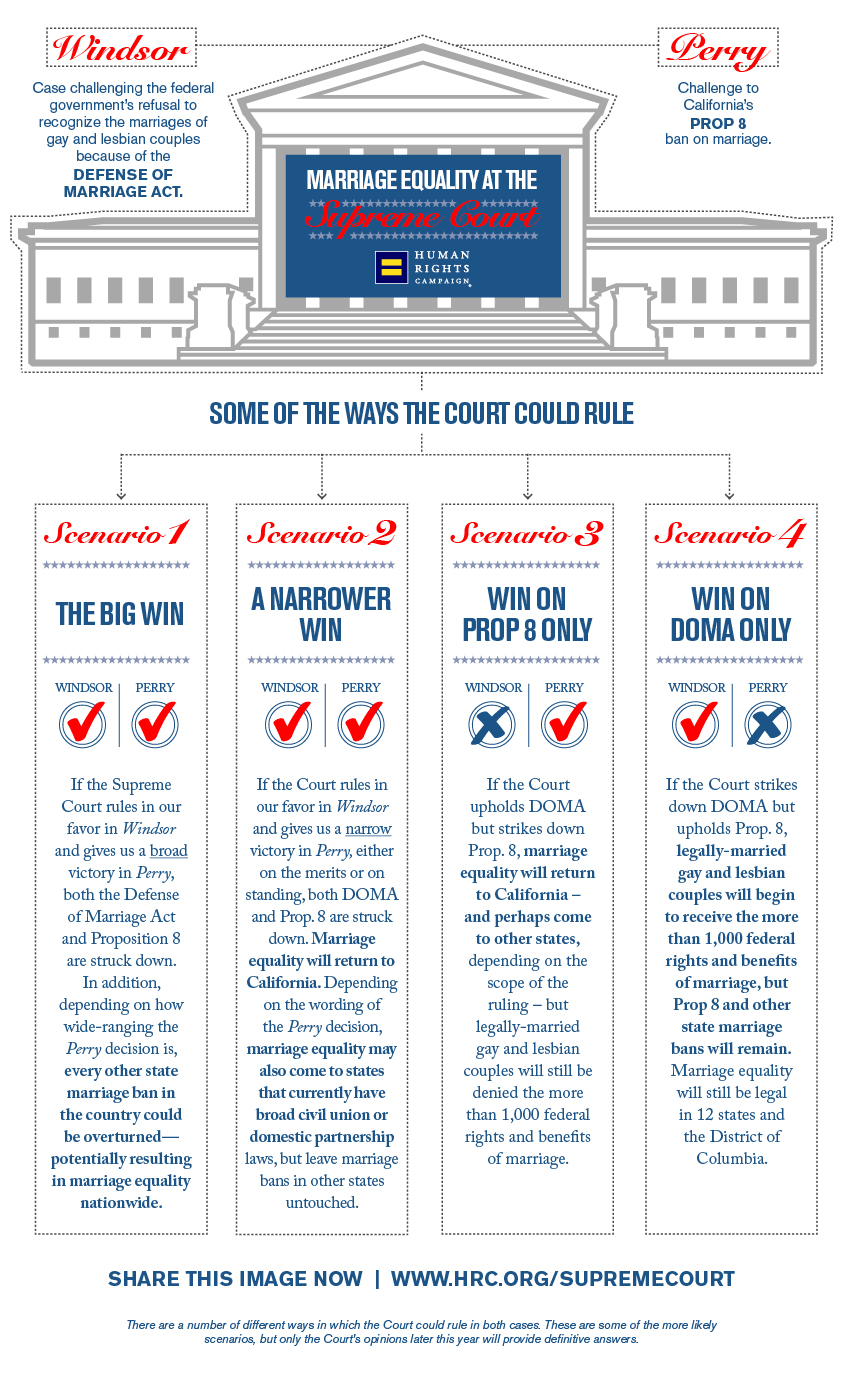
Infographic- Supreme Court Decision

click to embiggen

click to embiggen

Tonight: Montana PBS to Air Inlaws & Outlaws!

Some good news for Montana- Inlaws and Outlaws will be screened on Montana PBS tonight.

inlawsFrom the director, Drew Emery:

Montana friends!
Set your DVRs for Sunday night 6/9 10:30 pm: your local PBS station is airing our marriage documentary Inlaws & Outlaws — along with our story update: Just Marriage.

If you believe in love… and equality, please do pass on the word to friends & family!

Drew was in Montana last year, sharing the film with audiences in Helena and Bozeman. It’s an opportunity to see what love looks like up close.

Grab your peeps and watch this- it’s amazing.

Work Full-time For LGBTQ Montanans!

ImageProxy.mvc

If your dream is to work full-time helping to support and develop Montana’s LGBTQ community (and to receive excellent pay and benefits doing so), Pride Foundation has an opening for a full-time Regional Development Organizer (RDO).

This position, previously held by Caitlin Copple, will close soon, so I’d encourage anyone who’s been hesitating to apply ASAP.

The position description is here.

WELCOMING ME HOME

It was my pleasure to sit behind retired Methodist Pastor, Lyle Hamilton in the basement of St. Paul’s United Methodist Church in Helena, Montana for an All Church Conference to discuss a proposed Reconciling Congregation statement.  The Conference Superintendent led the meeting and asked the fifty or so assembled to speak what was on their heart.  And a few did.

UMC Logo

UMC Logo (Photo credit: RoyJr)

The meeting, however, was anti-climatic.  Their was a strong sense that the statement of inclusion and affirmation of groups of people who have formerly felt shunned and excluded was merely a reflection of the already imbedded character of St. Paul’s anyway.  In fact, a few people described how they had heard comments over the previous year of meetings, discussion and classes leading up to this moment to the effect of “duh-uh!  Don’t we have that already?”

Yet, there was also a sense of importance, of critical mass, of mission, purpose and rightness of call.  My friends, John and Vicky Wieda, had painstakingly spearheaded the effort in that vain with deliberateness.  So yes, when it came time to reach consensus as a congregation there was little to detract from an outcome which seemed certain.  St. Paul’s would become a Reconciling Congregation.

So, why do it?  I mean, why all the fuss if St Paul’s, with its open minds, hearts and doors, has already established inclusiveness as part of its character?  Isn’t it really much ado about nothing?

Pastor Lyle gives a clue about the answer in this post on his Facebook page:

Late yesterday afternoon, at an all church conference, St. Paul’s UMC in Helena officially became a Reconciling Ministries Congregation by a consensus vote. We have now publically declared ourselves to, in fact, be what the community of Helena and most of our congregation has long felt is both our calling and our reality: “All truly means all,” and everyone has a place in this community of faith.

Our incarnated statement, that is imbedded in our soul, is as follows: “St. Paul’s United Methodist Church welcomes all people of any age, gender, color, ethnicity, sexual orientation, gender identity, economic status, or disability into the full life and membership of this congregation.”

May God bless us, every one . . . as we move forward with grace and compassion toward all!

The oft repeated statement over the months of examining this issue that “All truly means all,”which, as Lyle says, is “imbedded in our soul,” is not just a statement.  It is in many ways transcendent, like a lighthouse beacon shining through the storms and rough seas of understanding and reconciliation between who we are and what we believe, between what we believe and the world around us, between the world around us and the one within where Jesus calls with open arms and his profound and unconditional offer of love.

To proclaim that “All are welcome here,” and mean it,  is to shine the light of Jesus’s love through all the violence and hateful rhetoric in the world around us for those, like me, who else would have no place to go for the communal understanding, practice and experience of that love.  I would have no congregation, no church.  For some, perhaps, it is possible to live as a Christian without church.  For me, from the day I walked into St. Paul’s almost seven years ago in my first week of gender transition on “Welcome Home Sunday” to this moment,  it is not.

Christianity is a communal practice.  God speaks to me in many ways, some far, far away from books and buildings.  But God also speaks to me through other people – through you.  And I can find few better places to hear God speak and feel God’s presence than in the company of other Christian believers – through congregation and communal worship.  Thus, as a Christian transwoman, it is vital for me to have a Christian community to call home.

Last night I was reminded, as I spoke what was on my heart, of the day I became a member of St. Paul’s.  It was my birthday and the whole congregation sang Happy Birthday.  I stood there, dumbfounded, with a tear in my eye and my flesh all goosey.  I knew then, as publicly affirmed by this Reconciling Statement that I have my congregation and my church.  Thank you St. Paul’s for welcoming me home.

Bozeman Area Community Foundation Searching For A Director

This map shows the incorporated and unincorpor...


A chance to do some good in the Bozeman Area:


A job description for the Foundation Manager is below. Those interested to apply should submit a cover letter, resume and three references to info@bozemanfoundation.org. Electronic submissions only. The Foundation will begin reviewing applications June 15th, and the position will remain open until filled.


Click here for more info: BACF_FdtnMgr_Position_FINAL


Diversity Series In Hamilton

This is big news for the Bitterroot- and I’m proud to be part of it. Click for larger version

ImageProxy.mvc

Review: The Miseducation Of Cameron Post

My friend Camille Griep recommended Emily Danforth‘s book, The Miseducation of Cameron Post to me recently. I really had very little idea what it was going to be about, other than something about a teenager. In Montana.

meMiseducation is ostensibly a story about a young teen exploring her sexuality in a conservative, evangelical community where homosexuality is viewed as a sin – and in the aftermath of her parents’ death. And that story is definitely in there. What I was not prepared for was the love letter to Montana. The language is beautiful and lyrical and I felt that landscape in a way I don’t think I ever have in a book. Here’s a taste from the first page:

Miles City had been cooking in the high nineties for days, and it was only the end of June, hot even for eastern Montana. It was the kind of heat where a breeze feels like someone’s venting a dryer out over the town, whipping dust and making the cottonseeds from the big cottonwoods float across a wide blue sky and collect in soft tufts on neighborhood lawns. Irene and I called it summer snow, and sometimes we’d squint into the dry glare and try to catch cotton on our tongues.

I am fascinated by the intersection of sexuality and religion, so it will come as no surprise that I ate up the portion of the book where Cameron gets sent off to a residential ex-gay program. I loved how she described the effect of the program, like dust and lint that just sticks to a gummy hand over time and how hard it is to wash it off.

The longer I stayed at Promise, the more all the stuff they were throwing at me, at us, started to stick, just like to those sticky hands, in little bits, at first, random pieces, no big deal. For instance, maybe I’d be in bed during lights out and I’d start to think about Coley and kissing Coley, and doing more with Coley, or Lindsey, or whomever, Michelle Pfeiffer. But then I might hear Lydia’s voice saying, “You have to fight these sinful impulses: fight, it’s not supposed to be easy to fight sin,” and I might totally ignore it, or even laugh to myself about what an idiot she was, but there it would be in her voice, in my head, where it hadn’t been before. And it was other stuff too, these bits and pieces of doctrine, of scripture, of life lessons here and there, until more and more of them were coated on, along for the ride, and I didn’t consistently question where they had come from, or why they were there, but I did start to feel kind of weighed down by them.

I hope you will be as taken with the landscape of Montana and the map that Cameron draws in her explorations as I was.

Jill Seidenstein is a queer femme writer, yogini, swimmer and traveler. You can’t read her scribblings yet, but you can get a taste of what she’s thinking about at www.slowbloom.com/blog.

Related articles