“Day of Dialogue” From Focus On The Family is Sacred Discrimination

By Kathy Baldock

I have a hair-trigger sensitivity for the protection of gay, lesbian, bisexual and transgender (glbt) youth.  Even if an action is wrapped in heart-themed paper and tied with a Jesus-loves-you ribbon, when there is something rotten inside, I can smell it. There is something very rotten at the core of the Day of Dialogue event sponsored by the conservative Christian ministry Focus on the Family.

I raised my family on Biblical principles I learned from Dr. James Dobson at Focus; we rarely missed the radio-drama “Adventures in Oddessy.” I was a regular listener and donor.  And now, I do not trust Focus on the Family.  There, I said it.  I do not trust them. Their Day of Dialogue event is thinly disguised sacred discrimination of gay and transgender youth.

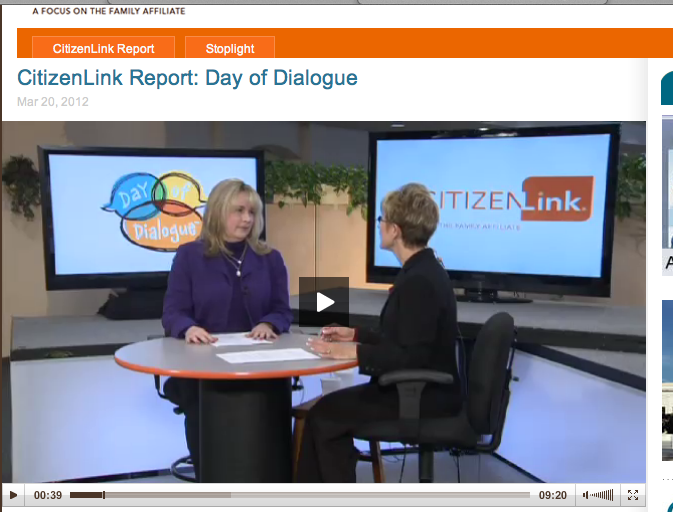
Day of Dialogue, scheduled for April 19, 2012, “encourage(s) student-initiated conversations about the fact that God cares about our lives, our relationships and our sexuality.”  I think it would be more honest to call it the “Seventh Annual Tell the Gay Kids They Need to Change for God to Love Them Day.”

Focus on the Family has a miserable record in successful and productive engagement with the glbt community.  They actively warn against the inclusion of protection for gender identity and sexual orientation for children.  In “Parents Beware” , published in CitizenLink (an affiliate of Focus on the Family), Day of Dialogue coordinator Candace Cushman warns of “red flags to watch for” in schools, such as;

  • School partnerships with outside advocacy groups that have names like “Safe Schools Alliance” or “Welcoming Schools.”
  • “Anti-bullying” polices that list special protections for “sexual orientation” or “gender identity.”

Currently, under federal law, religion, sex, country of origin, race and disabilities are protected classes; sexual orientation and gender identity are not.  The Safe Schools Information Act, Student Non-Discrimination Act and Elementary and Secondary Education Act renewal, which all include gender identity and sexual orientation designations, are scheduled to be voted on in the next Congress. Focus on the Family advises followers to not support their inclusion in these legislations.

In the “Guiding Principles” for Day of Dialogue, there is an anti-bullying statement, yet Focus  does not recognize the right for the 
protection of children under the classifications of gender identity and sexual orientation. (Be sure to watch “Bully” when it comes to your city and then consider “Why wouldn’t every Christian ministry actively support the federal protection of gay and transgender children?”)

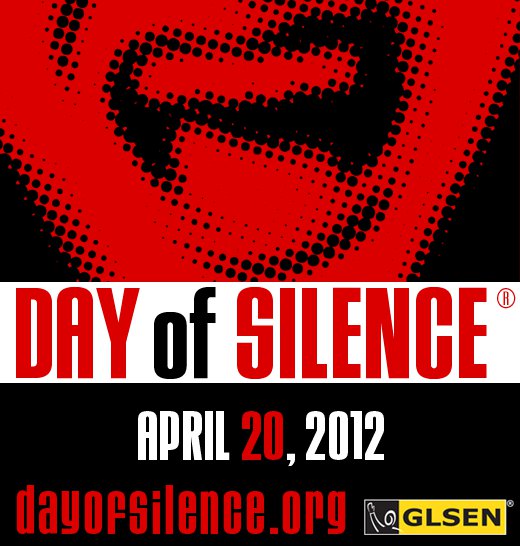
If this program were really focused on the message of God’s care and love for fellow students, why does it directly precede the Day of Silence? (Historically, it has been immediately following Day of Silence.)  Day of Silence, sponsored by the Gay, Lesbian Straight Education Network (GLSEN), began in 1996 to bring attention to anti-GLBT name calling, bullying and harassment in schools. Students and schools are encouraged to share the problem of anti-GLBT behaviors. Focus on the Family views the efforts of GLSEN as “promoting homosexuality to our kids.”  Day of Dialogue is unmistakably a reaction to Day of Silence; to promote it as anything less is to be quite disingenuous.

Read the rest here.

U.S. Episcopal Presiding Bishop On Gay Clergy and Contraception

From Queering The Church:


In the Catholic Church, US bishops have been in a froth over health care funding for contraception – even though the overwhelming majority of ordinary Catholics have been practising birth control for decades. In the UK and Australia as well as the US, Catholic bishops are mobilizing against marriage equality – even though most Catholics support it. Just a handful of Catholic bishops are grudgingly acknowledging that there could be value in alternative legal recognition for same –  sex partnerships, while most Catholics just do not see these relationships as even a matter of morality at all.

In the Anglican / Episcopal church, where governance is more democratic and leadership is more in touch with their members, things are different. The English church has a formal working group engaged in studying the issues around human sexuality, which has just announced the appointment of expert advisers to assist its work, and the US Episcopal Church is even further ahead. There, says the presiding bishop, “it’s a done deal”

NEW YORK — The movement toward legalizing same-sex marriage and the acceptance of gay people as clergy and lay members of religious groups is “a done deal” that represents “phenomenal” progress, the top figure in the Episcopal Church told The Huffington Post during a recent visit to its newsroom.

In an hour-long conversation with HuffPost staffers, the Most Rev. Katharine Jefferts Schori, presiding bishop of the Episcopal Church, touched upon subjects that ranged from her views on how to interpret scripture and challenges that face the church as its demographics change to debates over contraception and the relationship between religion and science. Read more of this post


Montana Family Foundation Candidate Survey

…is completely polarizing and just as completely predictable. As a public service, I wanted to put the whole shebang out on the internets. Now I’ll probably get letters protesting the word “shebang”.

Sigh.

Here’s the cover letter:

On behalf of all of us at Montana Family Foundation, let me congratulate you on your decision to run for public office. As a former state representative, I understand the sacrifices you are making during the campaign, and those that you will make throughout your term if you are fortunate enough to be elected (re-elected).

Montana Family Foundation is a non-profit, research, education, and advocacy organization, working to support, protect and strengthen Montana families.

In an effort to better educate your constituents on your positions related to family issues, we have enclosed our 2012 candidate survey. The results of this survey will be published in whole or in part on our web site (www.montanavoterguide.com), and in our printed voter guide, which will be distributed to roughly 150,000 Montana households.

*Please note: If you choose not to fill out the enclosed survey, we may determine your position on a given question using voting records, public statements you’ve made, your responses on other voter guides, or your party’s platform. If your position differs from that of your party on a given issue, we hope you will use this questionnaire to make that clear.

Please fill out the survey and return it in the enclosed envelope. The survey must be postmarked no later than Friday, March 23 to be included in our 2012 primary election voter guide. remember it must be signed to be valid.

Once again thank you for your time, and your commitment to the people of Montana.

Respectfully,
Jeff Laszloffy President/CEO

And the survey (reprinted in its entirety except for some basic identifying candidate stuff):

Please circle the response that most accurately reflects your position on the following issues. (SS=Strongly Support; S=Support; U=Undecided; O=Oppose; SO=Strongly Oppose)
  1. Public schools in Montana are: Over Funded Adequately Funded Under Funded
  2. Students should be allowed to recite the phrase “One Nation Under God” when saying the Pledge of Allegiance. SS S U O SO
  3. Parental choice should be expanded through tax credits to allow children to attend any school of their choice. SS S U O SO
  4. Montana should allow public charter schools. SS S U O SO
  5. Parents should be allowed to home school their children without additional state regulation. SS S U O SO
  6. Education – Sex education in public schools, should be based on “abstinence until marriage”. SS S U O SO
  7. Health – “Domestic partners” (i.e., cohabiting homosexual and heterosexual couples) should receive the same health care and employment benefits as married couples. SS S U O SO
  8. Health – Pharmacists should be forced to dispense birth control that works after fertilization (“Emergency Contraception”) even if it violates their conscience or religious beliefs. SS S U O SO
  9. Health – Anyone causing the injury or death of an unborn child (other than a doctor performing an abortion) should be subject to the same criminal penalties as they would be if the child were already born. SS S U O S
  10. Abortion – Abortion should be prohibited in all circumstances SS S U O SO
  11.  Abortion – Abortion should be prohibited, except in cases of rape, incest, or when the life of the mother is in danger. SS S U O SO
  12. In your opinion, are environmental regulations in Montana: Too Stringent About Right Not Stringent Enough
  13. Homosexuals should be allowed to adopt children. SS S U O SO
  14. Anti-discrimination laws should be expanded to protect sexual orientation in the same way that race, creed, nationality, religion, and color are protected.
  15. Income Taxes in Montana are: Too High About Right Too Low
  16. Property Taxes in Montana are: Too High About Right Too Low
  17. Corporate Taxes in Montana are: Too High About right Too Low18. Your view on the statement: The 2nd Amendment to the U.S. Constitution allows all citizens to own firearms for self protection. SS S U O SO
  18. Physician-assisted suicide should be legal in Montana. SS S U O SO
  19. Global warming is a problem requiring increased regulation. SS S U O SO

Date
Candidate Signature
Surveys are invalid if not signed
Please mail original to:
Montana Family Foundation P.O. Box 485 Laurel, MT. 59044

406-628-1141 http://www.montanafamily.org http://www.montanavoterguide.com

SURVEY DEADLINE IS FRIDAY, MARCH 23, 2012

Missoula Sips For Pride Foundation!

If you’re looking for something to do Saturday evening, look no further!

Missoula Sips for Pride Foundation
Saturday, March 31 – 5:00-9:00 PM
Celebrate spring with Missoula’s LGBTQ and allied
community with a wine tasting and friend-raiser
hosted by Ten Spoon Winery!

Please RSVP by Thursday, March 29th

To RSVP or should you have any questions, please contact Caitlin Copple at 406-546-7017 or caitlin@pridefoundation.org

Sullivan: “The Hierarchy Versus The Future”

In one of the most concise analyses I’ve read on the issues created and faced by the Roman Catholic Church, Andrew Sullivan offers some articulate insight:

Stained glass at St John the Baptist's Anglica...

Image via Wikipedia

Here in America, we see a Catholic hierarchy all but joining forces with the Republican party to insist on their right to control what is offered as healthcare to their employees in religiously-affiliated schools and hospitals and public services. In Britain, we see a furious campaign to prevent gay couples from having civil marriage licenses, a reform backed by the Conservative prime minister, and both opposition parties. And for much of the moment, this will be what the Church presents to the world: an attempt to control the medical care for women in its employ and its determination to keep homosexuals out of the word “marriage” and, thereby, “family.”

There is a spiritual and religious cost to this. And I do not mean that the Church should always “keep up with the times.” There are moments when a Church’s role is precisely to abandon the contemporary world in order to uphold what it takes to be eternal truths. But the narrowness of the current crusades – against a pill used by 98 percent of Catholic women, whose consciences are their own, and against people of a different sexual orientation that the Church acknowledges is unchosen – damages Christianity in the culture, and, in my view, misses the forest for the trees.

Christianity is not about the control of others; it is about the liberation Christ brings to each of us, and how we can learn to trust that incarnated love in escaping our daily failures, sins, weakness, cruelties – in order to bring love into being in the world.

Exactly what I’ve been saying (although not as eloquently). The alignment with a particular party is dangerous precisely because politics and religion are partners of convenience, not of allegiance or ideology. Those shift much more often than does dogma.

Andrew further quotes Fr Ceirion Gilbert, a Welsh priest who sums up the situation in The Tablet thus:

As a priest who deals daily with young people, teachers and catechists, I fear that yet again the Catholic Church is aligning herself with the wrong side, portraying herself as the “defender” of a position and an interpretation of society and humanity at odds with that of younger generations and almost incomprehensible to them in its rigidity and – to use an admittedly “loaded” term, bigotry.

Is it possible, also taking into account Bishop Robinson’s public comments last week, that some people are actually getting it?  When will the bishops get it?

The church is going to have a tough row to hoe if it believes it can play offense on sexuality while simultaneously playing defense on clerical sexual misconduct and abuse. That kind of ridiculousness is what is seriously undermining her credibility today.

Read Fr Gilbert’s full essay here. It’s fantastic. 

GLAAD Announces ‘Commentator Accountability Project’ To Expose Anti-LGBT Voices

From AmericaBlog:

English: Gay & Lesbian Alliance Against Defama...

Image via Wikipedia

Sick of seeing the homophobes spewing their hate on tv? Most of us are. And, we wonder why so many media outlets are willing to give them face time. GLAAD is launching a project to make sure the media knows exactly who they are dealing with:

The GLAAD Commentator Accountability Project (CAP) aims to put critical information about frequent anti-gay interviewees into the hands of newsrooms, editors, hosts and reporters. Journalists or producers who are on deadline often don’t have the time to dig into the histories of a commentator. Audiences need to be aware that when they’re not talking to the mainstream media, these voices are comparing the LGBT people to Nazi Germany, predicting that equal treatment of LGBT people will lead to the total collapse of society, and even making accusations of satanic influence.

The Commentator Accountability Project is bringing all of these statements to light, while calling attention to the sentiments behind them. We will show that the commentators who are most often asked to opine on issues like marriage equality or non-discrimination protections do not accurately represent the “other side” of those issues. They represent nothing but extreme animus towards the entire LGBT community.

Have you seen these anti-LGBT voices in your local media? Let GLAAD know today.

It’s an excellent idea- and local human rights organizations are encouraged to participate. Any Montana candidates? Send them to me through the comments- I won’t publish them unless you give me permission.

The Pope Chooses War, I Choose Self Defense

Yesterday Pope Benedict XVI spoke to a group of bishops on their ad limina visit- and with all the topics available to him (hunger, poverty, abuse of women, social injustice, racial inequalities, nuclear threat, stewardship of resources, etc), he chose to speak to them about the necessity of battling the “powerful political and cultural currents seeking to alter the legal definition of marriage….The church’s conscientious effort to resist this pressure calls for a reasoned defense of marriage as a natural institution,” which is “rooted in the complementarity of the sexes and oriented to procreation,” he said.

“Sexual differences cannot be dismissed as irrelevant to the definition of marriage,” the pope said.

Defending traditional marriage is not simply a matter of church teaching, he said; it is a matter of “justice, since it entails safeguarding the good of the entire human community and the rights of parents and children alike.”

Whenever I hear a leader speak the word “Safeguard”, I pay attention. It is a word used by institutions and governments to promote the protection and defense of something fundamental to it. It is not a passive word. It says to me that the Pope is ready to fight for his narrow theological/historical position on sexuality and marriage. Something he believes is fundamental to Christian faith- even though marriage is curiously absent from the Nicene Creed (325-381 ad)- which most Christian churches profess as containing the essential, fundamental elements of Christian belief today.

He did not choose dialog or express interest in hearing about the experiences of thousands (millions?) of LGBTQ catholics and their families. He did not choose to understand, he chose to condemn.

In other words, he openly advocated war.

It’s a culture war, it’s a war of ideologies. It is, in fact, if you count all the open and affirming Christian churches that  welcome LGBT persons and their partners and children into their congregations, a war of christian theology. But it’s a war nonetheless.

I believe it to be totally unnecessary- and I also believe it conflicts with the very theology the catholic church espouses.

“War” is defined thusly: “a state of armed conflict between different nations or states or different groups within a nation or state”. “Armed conflict” is an important term to notice here. I think it can also mean non-physical weapons- weapons of ideology or theology, for example. But I would be naive not to think that some of the faithful out there may hear in these words a clarion call to harm LGBT persons and their families. I would also submit that the Pope’s words have already harmed them by creating ‘enemies of the church” out of persons and families who have nothing more important in mind than following their hearts and minds- and souls. And, if you recall your history, enemies of the church have not fared so well.

And in that case, the Pope needs to take a closer look at his own catechism.

If someone attacks me and threatens my life or my way of life, according to the Catechism of The Catholic Church, I have the right to defend myself.

 2264 Love toward oneself remains a fundamental principle of morality. Therefore it is legitimate to insist on respect for one’s own right to life. Someone who defends his life is not guilty of murder even if he is forced to deal his aggressor a lethal blow:
If a man in self-defense uses more than necessary violence, it will be unlawful: whereas if he repels force with moderation, his defense will be lawful…. Nor is it necessary for salvation that a man omit the act of moderate self-defense to avoid killing the other man, since one is bound to take more care of one’s own life than of another’s.[65]

2265 Legitimate defense can be not only a right but a grave duty for someone responsible for another’s life. Preserving the common good requires rendering the unjust aggressor unable to inflict harm. To this end, those holding legitimate authority have the right to repel by armed force aggressors against the civil community entrusted to their charge.[66]

And with the rhetoric being used by the Pope to the bishops in his address yesterday, I have every reason to believe that these are not words of someone struggling to understand the reality of LGBT persons, these are the orders of attack given by a supreme commander to his highest officials. And I’m confused because- try as I might- I can’t imagine Jesus saying them.

I also have every reason to fear for my safety and the safety of all LGBTQ persons. And before you accuse me of being overly dramatic, remember that the pro-life message has spurred numerous acts of violence- in the name of life, I might add. People in Uganda, the Middle East and elsewhere are being butchered and abused because they are known or perceived to be gay.

So do you think these words will be like soothing balm on the righteous indignation of the zealot?: …”threats to freedom of conscience, religion and worship which need to be addressed urgently so that all men and women of faith, and the institutions they inspire, can act in accordance with their deepest moral convictions.”

I’m an idiot if I don’t believe that someone out there is going to see this as a reason for violence- physical or psychological. And remember how powerful psychological threats are- those are the very things killing our kids.

I want to be clear- I am not advocating violence in any form. I’m advocating self-defense. And I’m advocating a careful, calculated, firm and reasonable response to this madness. I want the argument to be two-sided. I want the voice of the Pope and the bishops to be countered by the voices of people who see the Christian message in a different way.

If the Pope chooses war, I choose to oppose that war. I challenge it on its very principle.

So, if I may be so brazen, I would like to be one of those counter voices. Feel free to add your own voice in the comments.

To my LGBTIQ family,

Love toward yourself remains a fundamental principle of morality. Therefore it is important and necessary to insist on respect for your own right to life. I believe you have been created to fill a very important place in this world- a place often dramatically misunderstood and opposed by people out of ignorance and fear.

It is crucial that you understand that you are not alone- there are millions of people who want to understand you and accept you and who will love you. You have the right to be understood- and you have the right to love and be loved in the ways you feel are most faithful to your created nature.

You have the right to live free from fear of attack and violence. You have the right to defend yourself against ignorant attacks on your dignity, happiness and self-respect. You have the right to fulfill your potential and to follow your heart and mind and soul and dreams to the best of your ability. Despite ignorance, despite persecution, despite fear and power and hate.

I believe that we are all beloved by the God of our understanding. I believe that we are valuable in being beloved. And that value is not diminished, even in the face of anger, fear and ignorance. Even in the face of religious belief which would deny us that value.

We are a courageous, wonderful people, with visions of love and acceptance and equality and happiness that I believe are deeply important to the future of the world.

I beg you, don’t let go of these visions- no matter how strongly others try to pull them away from you. They are your birthright.

They are the key hope to a world filled with peace.

Amen.

Guest Post: An Authentic, Catholic History Of Marriage

By Terence Weldon

With British bishops on the attack against proposals for gay marriage claiming that they are defending “traditional” marriage, it is important to remember that their representation of marriage history is misleading. When Mexican bishops made similar false claims about the history of marriage, I responded with a post on the history of marriage, as described by a specialist on the subject – a Catholic, Jesuit professor of history at a Catholic university.

Here follows that post, republished:

In Mexico,  Cardinal Norberto Rivera has attacked the Supreme Court ruling that upheld same sex marriage in Mexico City, calling it “evil”. It is not surprising that a Catholic bishop should oppose marriage equality, and while I sharply disagree with him, I must respect his right to express an opinion.  He also says it is wrong to go against Christian doctrine that recognizes only marriages between a man and a woman. Again, barring a quibble or two about the effect of disagreement in conscience, even as we disagree with this, it is clear that this is orthodox Catholic teaching.

However, in invoking Christ himself, he goes way too far.

He called same-sex unions “inherently immoral,” saying they “distort the nature of marriage raised by Christ to the dignity of a sacrament.”

This is sheer garbage.

I am not aware of any Gospel passage that endorses marriage as been between one man and one woman. Can any reader point to me one?  Christ most certainly did not raise marriage to the dignity of a sacrament – not even the institutional church did that, until the twelfth century, after half its history had passed. Exploring this history has proven fascinating.

Compare the first two accounts I found. This is Wikipedia:

…..first-century Christians placed less value on the family but rather saw celibacy and freedom from family ties as a preferable state. Paul had suggested that marriage be used only as a last resort by those Christians that found it too difficult to remain chaste.[2]

Augustine believed that marriage was a sacrament, because it was a symbol used by Paul to express Christ’s love of the Church. Despite this, for the Fathers of the Church with their profound hostility to sex, marriage could not be a true and valuable Christian vocation. Jerome wrote: “It is not disparaging wedlock to prefer virginity. No one can make a comparison between two things if one is good and the other evil” (Letter 22).Tertullian argued that marriage “consists essentially in fornication” (An Exhortation to Chastity“) Cyprian, Bishop of Carthage said that the first commandment given to men was to increase and multiply, but now that the earth was full there was no need to continue this process of multiplication. Augustine was clear that if everybody stopped marrying and having children that would be an admirable thing; it would mean that the Kingdom of God would return all the sooner and the world would come to an end.

This negative view of marriage was reflected in the lack of interest shown by the Church authorities. Although the Church quickly produced liturgies to celebrate Baptismand the Eucharist, no special ceremonial was devised to celebrate Christian marriage, nor was it considered important for couples to have their nuptials blessed by a priest. People could marry by mutual agreement in the presence of witnesses. This system, known as Spousals, persisted after the Reformation. At first the old Roman pagan rite was used by Christians, although modified superficially. The first detailed account of a Christian wedding in the West dates from the 9th century and was identical to the old nuptial service of Ancient Rome.[3]

There are obvious difficulties with relying on Wikipedia as a source – but it does at least provide us with references to substantiate its claims. Now look at the Catholic Encyclopedia:

That Christian marriage (i.e. marriage between baptizedpersons) is really a sacrament of the New Law in the strict sense of the word is for all Catholics an indubitable truth. According to the Council of Trent this dogmahas always been taught by the Church, and is thus defined in canon i, Sess. XXIV: “If any one shall say that matrimony is not truly and properly one of the Seven Sacraments of the Evangelical Law, instituted by Christ our Lord, but was invented in the Church by men, and does not confer grace, let him be anathema.”

This can do no more than quote the council of Trent, which claims that the sacramental view of marriage has “always”  been taught – totally disregarding the verdicts of church fathers such as Tertullian, quoted above. On marriage as on so much else, the Vatican likes to refer to a “constant and unchanging tradition”, or to claim that it has “always taught”. These claims are seldom supported by real evidence, and must be received with scepticism.

Then I found an impressive on-line history of marriage , in a lengthy outline by Stephen Schloesser, a Jesuit priest and professor of history, which he submitted to Massachusetts Senator Marian Walsh in 2004, during the turmoil in that state over gay marriage. Here are some extracts  – the introduction, and (mostly) just a summary of the main paragraph headings:

Maybe the most frustrating thing I have heard in the recent debate is this claim that has become a mantra: that we are in the process of changing some allegedly unchanging 3,000-year-old institution called “marriage.”Of course, the decision to grant marriage licenses would be a “change” in marriage practice – but“marriage,” whatever that is, is always in the process of being changed. To pretend that its alteration is somehow a rupture in what is otherwise a three-thousand year continuity is just silly.

It seems helpful to me to recall what traditional marriage is: it is a community’s legal arrangement in order to pass on property. In it, a male acquires (in the sense of owning and having sovereignty over) a female for the sake of reproducing other males who will then inherit property.

In Roman law, the authority of the paterfamilias over his wife and children was absolute, even to the point of death. (Even during the enlightenment), Catholic reactionaries opposed the idea of women and children having independent rights and insisted that puissance paternelle (the absolute power of the father) was rooted in nature.

In Judaism, polygyny is found throughout the Old Testament until the inter-testamental period.In general, a survey of traditional Old Testament marriage makes the reader very grateful that we are not bound to follow its precedents or precepts.

Early Christianity was really not into marriage. St Paul counseled his followers: “It is better not to marry.”Augustine (following St. Paul) counsel ed marriage as a remedy for concupiscence – i.e., satisfying male sexual desire in a non-sinful way.In general, during the early medieval Church, all sex is a problem, and all sex is equally a problem.

Marriage, both in the Roman and the early medieval periods, was the moment that marked the passing of the rights over a woman from her father to her husband. She wasn’t a person under the law.

Serial polygyny was regularly practiced by early medieval kings famous for their Christian piety. Their marital practices did not trouble the Church. Concubinage was also widely practiced among the European elite, and this practice was unproblematic, even in the eleventh century. Divorce was also completely unproblematic until the twelfth century.

In the twelfth century, the idea of marriage as a “sacrament” – i.e., as something fundamentally regulated by the Church – was established along with priestly celibacy and primogeniture.

The simultaneous appearance of these practices shows the way in which the preservation of property suddenly became an issue of great anxiety: celibacy prevented church property from passing on to priests’ wives and children; primogeniture insured that property remain intact as it passed on to only the eldest son; and Church surveillance of marriages made sure that an authority larger than, say, the most powerful warrior / aristocratic families on the block, was overseeing the passing on of dowries – e.g., Eleanor’s region of the Aquitaine. Women became the means of medieval corporate mergers: families consolidated power and property, both by means of dowries as well as by being the producers of male heirs.

Marriage as an “emotional unit” as opposed to an “economic unit” was largely an invention of the early nineteenth century. Bourgeois marriage was a classbound arrangement.

Conversely, for the males, prostitution is seen as an integral part of the new arrangement of marriage.

Divorce, finally legalized again in France in the 1880s, emancipated men but perhaps not women unless they had reserved some independent means. It too was part of the new emotional understanding of marriage, i.e., as something not arranged by parents but rather entered into partly because of emotional desires.

It is hardly coincidental: this is also the period during which the idea of “homosexuality” – and then, later, “heterosexuality” – was invented.

Catholic ideas about marriage and sexuality are in constant conversation with the wider society/culture’s evolving values and needs.

As late as the Code of Canon Law of 1917, the official position continued to be depressingly materialist: the purpose of marriage was considered to be “procreation,” while a secondary end was a “remedy for concupiscence.”

This genuinely two-millennia-old view changed on New Year’s Eve, 1930.(following the Lambeth Conference decision to approve contraception). The papal encyclical Casti Connubii introduced a fairly shocking innovation: one of marriage’s “second ends” was the “unity” between the spouses.The 19th-c. invention of marriage as an “emotional unit” in which two persons came together not merely to procreate but in order to form a sphere of emotional support – a thoroughly modern meaning of marriage – was accepted by the papacy.

On October 29, 1951 came a second important innovation in Catholic views. In one of the most insignificant settings possible – i.e., not an encyclical or synod but rather an address to Italian midwives –Pius XII suggested that couples, as long as they did not use “artificial” contraception, could arrive at a moral decision to be sexually active in a way that did not lead to procreation.

Between the years of approximately 1948 to 1963, the Catholic bishops of New England lobbied furiously against the legalization of contraception. John Ford, a Jesuit moral theologian who was the most aggressive proponent of the anticontraception stance (and taught in Weston, Mass.) admitted letter that the “natural law” argument had failed; if the point of “natural law” arguments was to convince any “rational person” (unlike, e.g., Scripture, which would convince only a religious believer), and if all these rational persons were rejecting the Catholic position, then what did that say about the law’s “natural” aspect? Eventually, the bishops abandoned this fight and made a distinction between public policy and personal religious practice.

To summarize: when one compares the 1917 Catholic view of marriage – “procreation” as a primary end, “a remedy for concupiscence” as a secondary end – with the 1969 view expressed in both the Vatican Council and encoded in canon law – “the community of the whole life” that includes both the “unbreakable compact between persons” as well as the “welfare of the children,” one can see that the change in Catholic doctrine and law has been nothing short of astonishing.

The full piece is the most useful outline of marriage history and the church I have come across.  I have selected here only the bits that refer specifically to the history of Christian marriage. There is much more on marriage in other cultures, and on the church and homosexuality. I strongly urge that you read it in full – or download or bookmark it for future reference, as I have done.

Follow Terence’s amazingly energetic and theologically responsible blog, Queering The Church. Amazing stuff.

Pride Foundation Is Number One

From The Puget Sound Business Journal:

Seattle’s Pride Foundation has been ranked the nation’s No. 1 public and community foundation serving the gay community between 1970 and 2010, according to a report by Funders for LGBTQ Issues.

Pride Foundation awarded more than $22.5 million in the 40-year span the report covered in the report. The organization made more than 1,800 grants supporting LGBTQ (Lesbian, Gay Bisexual, Transgendered, Queer) issues and HIV/AIDS prevention.

Pride was ranked No. 7 in the more general category of top 10 grantmakers for the same period, although it should be noted that the category of “anonymous funders” – including many anonymous donors lumped together – ranked first with $90 million in spending.

The Seattle-based Pride Foundation has historically received support from prominent individuals in the business community.

The most notable contribution was from Ric Weiland in 2008. One of Microsoft    ’s first five employees, Weiland died in 2006, ultimately leaving $65 million to the Pride Foundation.

“Ric’s gift was a game changer for us,” said Philip Wong, a spokesman for the foundation. “It had a huge impact.”

In fact, it was the largest single gift ever given to an organization dedicated to gay rights. Weiland had been a Pride board member and longtime volunteer.

The Pride Foundation was ranked ninth for its support of LGBTQ youth, spending $4.5 million between 1970 and 2010.

Founded in 1985, the Pride Foundation serves Alaska, Idaho, Montana, Oregon, and Washington.

Pride Foundation’s Executive Director Kris Hermanns told supporters today:

Thank you for being a part of the Pride Foundation family as we work together to envision a world where full equality reaches every corner of the Northwest. Your gifts of time, support, and money have created a legacy of LGBTQ philanthropy that will endure for generations to come. We share our number one title with you.
Pride Foundation’s origins are rooted in the community response to the AIDS epidemic of the 1980s. From our humble beginnings, donors and volunteers have guided Pride Foundation to support local nonprofit projects that are addressing existing and emerging issues that affect the health and well-being of our community. Pride Foundation’s scholarship program has grown into one of the largest LGBTQ-focused scholarship programs in the U.S. Our Shareholder Advocacy program was instrumental in encouraging companies like Wal-Mart and McDonald’s to add “sexual orientation” to company anti-discrimination policies—and we continue to work with companies to include “gender identity” to those policies.
These are all significant achievements that Pride Foundation could not have reached without your support. Though we may never be able to thank you enough, we will try.
 You know I love and support Pride Foundation (see below)- this is just the icing on the cake…

Related articles

Montana Gay-Friendly Health and Mental Health Providers

Looking for a doctor who isn’t freaked out by your sexuality? Or a dentist that will work with you if you have HIV? Or a therapist that has experience with gay couple’s therapy?

The Montana Gay Men’s Task Force has a list of gay-friendly healthcare providers for the State of Montana which they have compiled through a referral and questionnaire network. The providers listed have also given their assent to be on the list.

Check it out here.

Oh, and if you have a fabulous healthcare professional who isn’t listed- you can help them get on the list here.