Car Crashes Knocked Off By Suicide

From WebMD:

Suicide has overtaken car crashes as the leading cause of injury-related deaths in the U.S.

English: Skull and crossbones

English: Skull and crossbones (Photo credit: Wikipedia)

While public health efforts have curbed the number of car fatalities by 25% over the last decade, a new study shows suicide deaths rose by 15% during the same period.

“Comprehensive and sustained traffic safety measures have apparently substantially diminished the motor vehicle traffic mortality rate, and similar attention and resources are needed to reduce the burden of other injury,” researcher Ian Rockett, PhD, MPH of West Virginia University and colleagues write in theAmerican Journal of Public Health.

“Contrasting with disease mortality, the injury mortality rate trended upward during most of that decade,” write the researchers.

The top five leading causes of injury-related deaths were:

  1. Suicide
  2. Motor vehicle crashes
  3. Poisoning
  4. Falls
  5. Homicide

Researchers say the findings demonstrate that suicide is now a global public health issue.

And I would remind readers that LGBT youth attempt suicide at four times the rate of their peers. Notably because of intolerance, shame and fear perpetuated by ignorant institutions and people- sadly, many of them “Christians”.  So here’s a not-so-gentle reminder:

“…but whoever causes one of these little ones who believe in Me to stumble,
it would be better for him to have a heavy millstone hung around his neck,
and to be drowned in the depth of the sea.” ~Matthew 18.6

Matthew Vines: Reforming The Gay Christian Debate

By Kathy Baldock, Courtesy of LGBTQ Nation

“What does the Bible say about loving, same-sex relationships?”

Nothing. Not a thing.

And in that absence of Biblical direction of support for or condemnation of these relationships, Christians need to follow the general principles of the Bible: love, justice and kindness.

This was the point Matthew Vines wanted to emphasize at his recent presentation at Marble Collegiate Church in Manhattan.

Matthew’s story is intriguing; he began to understand and accept that he was gay while in his first semesters at Harvard. The Wichita native knew, that by accepting his sexual orientation, he was risking his long time status in the Presbyterian church in which he had been raised, as well as relationships with family and friends.

“You realize how alone you might be when you come out,” recalled Matthew. He resolved to take a leave of absence from Harvard to embark on a scholarly study of the subject of homosexuality in the Bible.

What most people see and know of Matthew is his excellent 67-minute video, “The Gay Debate.” The presentation in itself is quite remarkable; the young man is even more impressive.

Read the rest here.

State Tells Yakima Diocese “No Collection” For Anti-Marriage Equality Group

From New Ways Ministry:

Last week, we reported that Bishop Joseph Tyson of the Diocese of Yakima, Washington State, had instructed parishes to distribute collection envelopes in its parishes to raise money for Protect Marriage Washington, the state’s main organization working to defeat Referendum 74, a ballot initiative to uphold a law guaranteeing marriage equality.

This week, however, the Associated Press reports that the state’s Public Disclosure Commission (PDC) has ruled that for parishes to collect the envelopes would be illegal and has informed the diocese of its decision:

“. . . Lori Anderson, a spokeswoman for the state’s Public Disclosure Commission, says no organization can be an intermediary for a contribution. She says the church can hand out envelopes, but either a member of Preserve Washington has to be on hand to collect them or parishioners must send them in individually.”

The diocese appears to be ready to dispute the PDC decision. Diocesan Chief of Staff Monsignor Robert Siler claims that the procedures are not a “collection” :

” ‘As far as I know, the procedures we sent to the parishes meet the requirement of state law,’ he said, noting that the envelopes are preaddressed to the campaign.

” ‘We’re not collecting and counting money,’ he said. ‘We’re just collecting envelopes and forwarding them.’ “

KIMATV.com quotes Yakima Bishop Joseph Tyson’s comments on the PDC decision:

“Bishop Tyson says it’s just one big misunderstanding. In fact, he told KIMA that he has yet to see one of the donation envelopes.

“In the letter, where the Bishop specifically asked parish staff not to open the donation envelopes, but instead place them into the addressed security envelope and mail them directly to Preserve Marriage Washington. It says the collection is supposed to take place September 8th and 9th.

“ ‘It’s not our collection, we’re not collecting the money, it’s not our envelope. We’re not banking the money, we’re not rolling the money, we’re not collecting the money and we’re not taking the money. Preserve Marriage Washington is doing that…we’re going to follow the state law and I’m going to make sure that we’re doing that,’ said Bishop Tyson”

Catholics for Marriage Equality Washington State, the statewide Catholic organization working to support marriage equality in the referendum, praised the PDC’s decision.  Spokesperson Barbara Guzzo said:

“We are delighted by this ruling because we represent so many Catholics in those pews who not only find political fund raising inappropriate for their Sunday services, but also strongly disagree with the Bishop’s stance.

“We believe we should all be able to practice our faith without pressure from our Bishop or our parish priests to support an effort we oppose. “

Legal questions aside, the moral question remains:  why are church institutions raising money for a political organization?

–Francis DeBernardo, New Ways Ministry

What If Jesus Had been A Republican?

Jesus Christ in Capernaum (study)

Jesus Christ in Capernaum (study) (Photo credit: Wikipedia)

A peek:

The Lazy Paralytic

1. When Jesus returned to Capernaum after some days, it was reported that he was at his home. 2. So many gathered around that there was no longer room for them, not even in front of the door; and he was speaking the word to them. 3. Then some people came, bringing to him a paralyzed man, carried by four of them. 4. And when they could not bring him to Jesus because of the crowd, they removed the roof above him; and after having dug through it, they let down the mat on which the paralytic lay. 5. When Jesus saw this he grew angry, “Why did you wreck my roof? Do you have any idea how much that cost to install? Do you know how many tables and chairs I had to make in my carpentry shop to pay for that roof? The reeds alone cost five talents. I had them carted in from Bethany.” 6. The disciples had never seen Jesus so angry about his possessions. He continued, “This house is my life. And the roof is the best part.” The disciples fell silent. 7. “It’s bad enough that you trash my private property, now you want me to heal you?” said Jesus, “And did you not see the stone walls around this house?” “Yes,” said the man’s friends. “Are these not the stone walls common to the towns and villages of Galilee?” 8. “No,” Jesus answered. “This is a gated community. How did you get in?” The man’s friends grew silent. 9. Then Jesus turned and said to the paralytic, “Besides, can’t you take care of your own health problems? I’m sure that your family can care for you, or maybe the synagogue can help out.” 10. “No, Lord,” answered the man’s friends. “There is no one. His injuries are too severe. To whom else can we go?” 11. “Well, not me,” said Jesus. “What would happen if I provided access to free health care for everyone? That would mean that people would not only get lazy and entitled, but they would take advantage of the system. 12. Besides, look at me: I’m healthy. And you know why? Because I worked hard for my money, and took care of myself.” The paralyzed man then grew sad and he addressed Jesus. “But I did work, Lord,” said the paralytic. “Until an accident rendered me paralyzed.” “Yes,” said the man’s friends. “He worked very hard.” 13. “Well,” said Jesus, “That’s just part of life, isn’t it?” “Then what am I to do, Lord?” said the paralytic. “I don’t know. Why don’t you sell your mat?” 14. All in the crowd then grew sad. “Actually, you know what you can do?” said Jesus. “You can reimburse me for my roof. Or I’ll sue you.” And all were amazed. 15. “We have never seen anything like this,” said the crowd.

More here.

Washington State Catholic Pastors’ Refusal Continues to Inspire

From New Ways Ministry

While we were in Washington State last week doing educational programs on Catholic support for marriage equality in anticipation of that state’s referendum on the issue in November,  Sister Jeannine Gramick, co-founder of New Ways Ministry, and I met with several pastors and parish leaders who earlier this year had refused the local archbishop’s request to use their parishes to collect signatures for petitions  to put the new marriage law to a ballot test.

Our discussion was lively and encouraging.  For one thing, we learned that there were many more parishes that had refused to collect signatures than had made the news accounts back in April.  We knew about a handful, but it turns out there were probably close to twenty that abstained from the collection.  In fact in one deanery (a geographic division) of the diocese, the pastors of all twelve parishes had met and agreed corporately not to allow signature collection.

The pastors we met  said they mostly had two reasons for their refusal:  1) they believed that collecting signatures would cause great divisions in the parishes; 2) many of the parishes have an explicit welcome to LGBT parishioners and their families, and they felt that collecting signatures would be a sign of inhospitality.

Response from parishioners has been universally positive about the decision not to support the signature campaign.  A number of the priests said that the announcements of the decision received standing ovations from their congregations.  The few parishioners who disagreed expressed their thoughts quietly and respectfully, and the priests felt that the decision helped to open up avenues of dialogue.

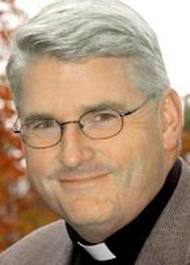
Fr John Whitney, SJ

During our discussion, we learned about one pastor, in particular, who has been very public and vocal about not supporting measures to defeat marriage equality.  Fr. John Whitney, SJ, of St. Joseph Parish, Seattle, has added a section to the parish’s website about the upcoming referendum.  In that section, he includes a letter describing his decision as well as his perspective on Referendum 74.    He begins:

“Many of you may have read in the media that St. Joseph, among other parishes, has decided not to allow the gathering of signatures for Referendum 74, which aims at repealing the marriage equality bill passed by the State of Washington. This referendum is supported by the Archdiocese of Seattle, who has asked the Knights of Columbus to collect signatures at various parishes. Although many of you have offered support for the decision not to allow signature gathering here, I believe all of you deserve an explanation of the reasoning behind the decision.

“The primary reason for not allowing this petition is the nature of the worshipping assembly. Women and men of all opinions, orientations, backgrounds, and motivations are welcomed at this altar, and are encouraged to pray for wisdom and unity, even as we all work to create social policies that respect our faith and support each other. The Church should not be a place of coercion, but of discernment, as each member of the Church (as well as each citizen), decides whether a proposal such as Referendum 74 makes us more or less like the Kingdom described by Jesus. To have petitioners at the doors seems to me inappropriately coercive and contrary to the mission of the Church, especially in the Sunday assembly.”

Fr. Whitney goes on to describe why he feels the church is not the place to debate the referendum:

“Further, the nature of the piece of legislation makes it inappropriate to be brought into the context of our worship, I believe, since Referendum 74—like the marriage equality act it seeks to overturn—concerns civil marriage, not the covenant of Catholic marriage, which is a matter of faith and exists in the Church through the ministry of every couple. Although the Archbishop has the right and responsibility to speak and educate the community about legislation, I believe that this level of involvement around the issue of civil marriage is ill-considered, and risks placing the Church on the side of injustice and the denial of civil rights. Thus, I cannot in conscience allow such signature gathering at St. Joseph. I am not telling others how to vote, but I think that a Catholic, in good conscience, can oppose this referendum and should not be pressured to support it in the context of Sunday mass.”

In addition to his statement on the parish website, the pastor also posted Archbishop Peter Sartain’s letterrequesting signatures,  and an FAQ sheet from the  Washington State Catholic Conference on why Catholics should oppose marriage equality.  Fr. Whitney explained his approach:

“Finally, I want to be clear that the Archbishop empowered pastors to make the decision about whether or not to allow signature gathering, and that we are not acting in opposition to his leadership. I am committed to offering his words directly to this community, when that is requested, and to encourage all members of the community to read them respectfully and thoughtfully, as part of the formation of conscience for any Catholic. In those rare situations where I may disagree with the Archbishop’s conclusions, I do not intend to use the pulpit or bulletin to debate, since that is not the place. As I have said, I think such debates belong outside the Church.”

He closes with a hope and prayer for unity among Catholics, even those divided by the marriage equality issue:

“It is of primary importance in all this, however, that we know we can be one community, united in heart and mind, only if we believe that every person is loved by God and valued in his or her humanity. We must listen to one another with respect—to the reality of our experiences and the grace of our call, in Christ. Hearing and loving each other is the root to true discernment, for it is in this communion that the Spirit is present and the Church—the true Church, for whom Christ was crucified and to whom he gave his body and blood—made flesh.

“May we hear God in our midst and always live to do God’s will in our world.”

On the website, Fr. Whitney provided a link for people to easily respond to him and/or to the archbishop.

We need more pastors like Father Whitney who speak forthrightly and who encourage respectful dialogue among their parishioners and between parishioners and their pastoral leaders.

–Francis DeBernardo, New Ways Ministry

Bible and Homosexuality: Does it Matter?

From Queering The Church:

August 26, 2012

By 

For Christians, the Bible is obviously important, but on homosexuality, responses differ. For traditionalists, it is a given that scripture “obviously” condemns all forms of same – sex activities, and that sodomy is “the sin that cries out to heaven for vengeance”. For an expanding pool of revisionist biblical scholars, this is a false reading of scripture, based on mistranslations or mistranslations of the original texts, and distorted by a heteronormative interpretive bias. Canon Derrek Sherwen Bailey first questioned the traditional readings back in the 1950′s, have challenged the traditional interpretations of the clobber texts, even labelling them as textual abuse, and more recently begun to promote affirmative, LGBT inclusive passages as an alternative.

But there’s another view,  that even if it is true that the Bible really does condemn homosexuality, it could be simply wrong – just it has been wrong on slavery.

The argument is neatly put by Dan Savage, in his widely reported debate with Brian Brown, of the NOM:

The Atlantic reports it so:

The Bible, if it got something as easy and obvious as slavery wrong, what are the odds that it got something as complicated as human sexuality wrong? I put those odds at about 100 percent. Pat Robertson was recently asked about this. He was asked, “If America was founded as a Christian nation why did we allow slavery?” And his answer was, “Like it or not, if you read the Bible, in the Old Testament slavery is permitted.” That’s a half-truth. In both testaments slavery is permitted and sanctioned. But then Robertson said something uncharacteristically profound: “We have moved in our conception of human beings until we realized that slavery was terribly wrong.” And so what he’s saying there is not just that we realized slavery is terribly wrong. Also, we realized the bible was wrong about slavery. I don’t think LGBT Americans are asking American Christians to do anything that you haven’t already done.

Move in your conception of the value of human beings.

Here’s the full debate, courtesy of YouTube:

Surging US Catholic Support For Marriage Equality

By Terence Weldon, Queering The Church

Marriage Equality USA logo

Marriage Equality USA logo (Photo credit: Wikipedia)

New research by the Pew Forum on religion and public life has confirmed once again that the tide of opinion is moving inexorably in favour of gay marriage. In 2oo4, supporters were outnumbered by opponents, by almost two to one (30% to 61%), but supporters now outnumber opponents, by 48% to 44%.  The age split confirms that support will continue to grow: the only groups still opposed are those over 50, and the youngest is in favour by 63% to 32%.  All this is familiar.

What is new in this poll, is its focus on the impact of President Obama’s declared support last May for the principle of marriage equality. Overall, Pew reports that there has been very little change in support since before the announcement – but that it has strengthened support in his Democratic base, and hardened opposition among his Republican opponents. This shift among Democratic voters (especially liberal Democrats) could have a beneficial impact on the gay marriage ballots this November in the Democratic and Democratic leaning states of Maine, Maryland, Washington and Minnesota, and has been widely reported on in the major news media (see for instance,Huffington PostSF Gate at the San Francisco Chronicle, or Seattle Post PI).

The strength of the Pew Forum research organization, as its name implies, is in its focus on religion and religious attitudes, and the extensive historical database of strictly comparable results, which is what I want to focus on here.

Catholics strongly support gay marriage.

First, note that Catholic overwhelmingly support gay marriage, by 58% to 33% – a margin of 25%, and identical for both White and Hispanic Catholic groups. This degree of support is greater than that shown by any other Christian grouping (Jews and other faiths are not identified), it is substantially higher than that for the population as a whole).

This degree of support by Catholics, exceeding that for other groups, has now been well – established in numerous polls. It has also been previously noted that the growth in Catholic support has exceeded that in other groups. Just how dramatic that growth has been, can be seen by comparing the latest results with those from August / September 2010.  Then, Catholic support for gay marriage was at 46% –  a plurality over opposition of just 4%. That plurality has now grown from 4% to 25%, in less than two years.

 Read the rest here.

Tonight: “The Argument for LGBT-Inclusive Christianity”

Get to the Bozeman Library tonight at 7pm…!

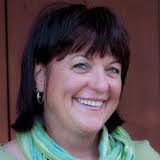
Kathy Baldock, a straight, Evangelical Christian and Executive Director of Canyonwalker Connections, will offer the public a chance to consider, discuss and debate the arguments for a Christianity that is welcoming and affirming of Gay, Lesbian, Bisexual and Transgendered persons. All are welcome.
For More about Kathy and her experience, please visit http://canyonwalkerconnections.com/about-2/ .

This forum is presented By Montana Pride 2012


MT Pride 2012 Presents Kathy Baldock: The Argument For LGBT-Inclusive Christianity

I’m really very excited. Here’s why:

My friend Kathy Baldock will be journeying to Montana from Reno this week to join us for MT Pride 2012. She will be here to speak to faith leaders, join her LGBT brothers and sisters for Montana Pride and will present at least twice. The first is at the Bozeman Public Library on Tuesday.

Entitled “The Argument For LGBT-Inclusive Christianity”, Kathy will share her story (which is really remarkable) and her conviction that there is nothing that prevents Christianity from openly embracing and affirming LGBT persons. Here’s the blurb:

Kathy Baldock, a straight, Evangelical Christian and Executive Director of Canyonwalker Connections, will offer the public a chance to consider, discuss and debate the arguments for a Christianity that is welcoming and affirming of Gay, Lesbian, Bisexual and Transgendered persons.

For More about Kathy and her experience, please visit http://canyonwalkerconnections.com/about-2/ .
This forum is presented By Montana Pride 2012.

Kathy will also present a workshop at Montana Pride 2012. Talking to Churches and Faith Leaders- How Do We Start? Evangelical Christian and LGBT ally Kathy Baldock will offer some guidance and understanding about creating a conversation with Christian faith leaders. She will share her experiences in changing hearts and minds about LGBT persons in churches and faith communities. She will also address the topic of creating “open and affirming” churches.

She will be hanging out with us all week and will be marching in the parade and participating in the Pride Interfaith Service, Sunday June 17th , 10 am at the Holiday Inn.

Kathy is also available to the faith communities of the area during the week she is here. If you’d like to speak to her, please contact me at dgsma@hotmail.com.

To my mind, equality will be won when we do two things:

  1. Win over the churches, and
  2. Engage the families of LGBT people in our struggle- especially the moms.

With Kathy’s help, we’re going to do our best to win over some churches in the next week- and maybe a few mothers….