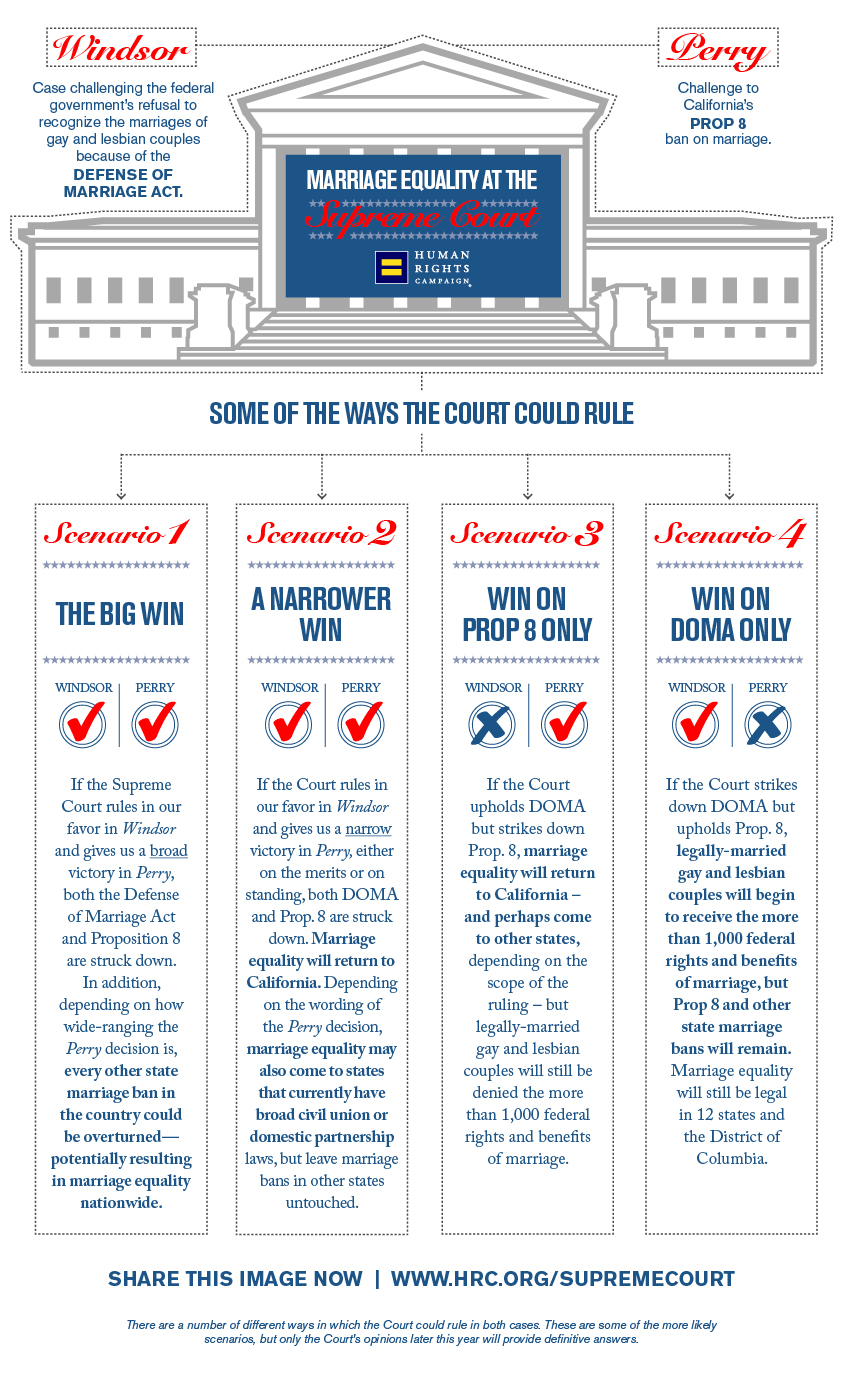
Infographic- Supreme Court Decision

click to embiggen

click to embiggen

Tonight: Montana PBS to Air Inlaws & Outlaws!

Some good news for Montana- Inlaws and Outlaws will be screened on Montana PBS tonight.

inlawsFrom the director, Drew Emery:

Montana friends!
Set your DVRs for Sunday night 6/9 10:30 pm: your local PBS station is airing our marriage documentary Inlaws & Outlaws — along with our story update: Just Marriage.

If you believe in love… and equality, please do pass on the word to friends & family!

Drew was in Montana last year, sharing the film with audiences in Helena and Bozeman. It’s an opportunity to see what love looks like up close.

Grab your peeps and watch this- it’s amazing.

What You Should Read To Prepare For Pride Month

Défilé de PASTT à la Gay Pride à Paris en France

(Photo credit: Wikipedia)

It’s from Joe Jervis at Joe.My.God– it’s the ninth year he’s run it, and it’s brilliant, thought-provoking, sad- and awesome.

You may recognize some of the people involved….

It’s here.

Work Full-time For LGBTQ Montanans!

ImageProxy.mvc

If your dream is to work full-time helping to support and develop Montana’s LGBTQ community (and to receive excellent pay and benefits doing so), Pride Foundation has an opening for a full-time Regional Development Organizer (RDO).

This position, previously held by Caitlin Copple, will close soon, so I’d encourage anyone who’s been hesitating to apply ASAP.

The position description is here.

Catholic Bishop: If You Want To Support Gays, Become Protestants

Originally posted (under a different headline) by newwaysministryblog
Sr. Jeannine Gramick speaking with Bishop Thomas Paprocki

An event last Friday that included Sr. Jeannine Gramick, the co-founder of New Ways Ministry, highlighted just how supportive Catholics are of marriage equality as the bishops play defense to support their position.

For over two hours at an event hosted by Robert Blair Kaiser and the Jesuit Alumni of Arizona, Sr. Gramick exchanged views with Bishop Thomas Paprocki of Springfield, Illinois, in front of an audience.

The National Catholic Reporter reported on the event, where Bishop Paprocki attacked  the “gay activist lobby” in his opening remarks and denigrated the attention given to the murder of Matthew Shepard in 1998 as evidence of media bias. He posited that if marriage equality passes, then “everything should be OK” in regard to any sexual practice or activity.

Alternatively, Sr. Gramick spoke of the positive changes occurring around LGBT issues, including her personal conversion that has led to nearly four decades of ministry with gay and lesbian people. The article continues:

“Gramick reflected on changes in her own attitudes, attitudes of the public and attitudes of the church hierarchy. She said more and more church leaders are moving toward support of at least civil unions.

“Referring to Paprocki’s remark that morality cannot be based on polls, she said, ‘We may not legislate on the basis of polls, but they tell us what people are thinking.’

“She said polls show Catholics’ opinions have moved from opposition to same-sex marriage to approval in a short time because nearly everyone has a gay friend, family member or business associate.”

Indicative of these shifting views, the question period was solely aimed at Bishop Paprocki’s opposition to LGBT rights. During remarks by the bishop, a member of the audience, Anne Gray, even yelled out, “That’s insulting” and followed-up with a question:

 “In response to a question from Kaiser, Paprocki said the church would love to welcome gay people but is forced into a defensive position by ‘activists pushing an agenda.’ That set off Gray, who has a gay son, again.

“‘Here I am,’ she said. ‘The big scary gay agenda…My son is a perfect human being. There is nothing intrinsically disordered about him. I know because I am his mother.’…

” ‘You need to listen to mothers,’ she said.”

Another questioner offered her personal experience of supporting lesbian family members and Paprocki made the suggestion that she leave the church to do so:

“One of the youngest people in the room said she was a devout Catholic, but when her aunt and sister told her they were gay, she was put on the spot. She asked Paprocki if she could remain a good Catholic and still support her family members in their desires to form lifelong relationships.

” ‘It is a struggle to be a good Catholic while supporting gay marriage,’ the bishop said. ‘It strains your relationship with the church.’

“He said those who oppose the church on the issue should become Protestants. ‘They do a lot of good things too,’ he said.

This is the latest instance where Catholics supportive of LGBT equality are making their voices heard to the Church’s hierarchy, including Sr. Gramick who recently confronted the famously anti-gay Cardinal Turkson of Ghana. We applaud the many people whose efforts contributed to making American Catholics the leading religious group advocating for equal marriage rights!

–Bob Shine, New Ways Ministry

Quite a different approach to the Pope’s “Welcome All” message last week….

WELCOMING ME HOME

It was my pleasure to sit behind retired Methodist Pastor, Lyle Hamilton in the basement of St. Paul’s United Methodist Church in Helena, Montana for an All Church Conference to discuss a proposed Reconciling Congregation statement.  The Conference Superintendent led the meeting and asked the fifty or so assembled to speak what was on their heart.  And a few did.

UMC Logo

UMC Logo (Photo credit: RoyJr)

The meeting, however, was anti-climatic.  Their was a strong sense that the statement of inclusion and affirmation of groups of people who have formerly felt shunned and excluded was merely a reflection of the already imbedded character of St. Paul’s anyway.  In fact, a few people described how they had heard comments over the previous year of meetings, discussion and classes leading up to this moment to the effect of “duh-uh!  Don’t we have that already?”

Yet, there was also a sense of importance, of critical mass, of mission, purpose and rightness of call.  My friends, John and Vicky Wieda, had painstakingly spearheaded the effort in that vain with deliberateness.  So yes, when it came time to reach consensus as a congregation there was little to detract from an outcome which seemed certain.  St. Paul’s would become a Reconciling Congregation.

So, why do it?  I mean, why all the fuss if St Paul’s, with its open minds, hearts and doors, has already established inclusiveness as part of its character?  Isn’t it really much ado about nothing?

Pastor Lyle gives a clue about the answer in this post on his Facebook page:

Late yesterday afternoon, at an all church conference, St. Paul’s UMC in Helena officially became a Reconciling Ministries Congregation by a consensus vote. We have now publically declared ourselves to, in fact, be what the community of Helena and most of our congregation has long felt is both our calling and our reality: “All truly means all,” and everyone has a place in this community of faith.

Our incarnated statement, that is imbedded in our soul, is as follows: “St. Paul’s United Methodist Church welcomes all people of any age, gender, color, ethnicity, sexual orientation, gender identity, economic status, or disability into the full life and membership of this congregation.”

May God bless us, every one . . . as we move forward with grace and compassion toward all!

The oft repeated statement over the months of examining this issue that “All truly means all,”which, as Lyle says, is “imbedded in our soul,” is not just a statement.  It is in many ways transcendent, like a lighthouse beacon shining through the storms and rough seas of understanding and reconciliation between who we are and what we believe, between what we believe and the world around us, between the world around us and the one within where Jesus calls with open arms and his profound and unconditional offer of love.

To proclaim that “All are welcome here,” and mean it,  is to shine the light of Jesus’s love through all the violence and hateful rhetoric in the world around us for those, like me, who else would have no place to go for the communal understanding, practice and experience of that love.  I would have no congregation, no church.  For some, perhaps, it is possible to live as a Christian without church.  For me, from the day I walked into St. Paul’s almost seven years ago in my first week of gender transition on “Welcome Home Sunday” to this moment,  it is not.

Christianity is a communal practice.  God speaks to me in many ways, some far, far away from books and buildings.  But God also speaks to me through other people – through you.  And I can find few better places to hear God speak and feel God’s presence than in the company of other Christian believers – through congregation and communal worship.  Thus, as a Christian transwoman, it is vital for me to have a Christian community to call home.

Last night I was reminded, as I spoke what was on my heart, of the day I became a member of St. Paul’s.  It was my birthday and the whole congregation sang Happy Birthday.  I stood there, dumbfounded, with a tear in my eye and my flesh all goosey.  I knew then, as publicly affirmed by this Reconciling Statement that I have my congregation and my church.  Thank you St. Paul’s for welcoming me home.

Banning Same-sex Marriage Has Psychological Toll

Fascinating stuff from Shankar Vadantam at NPR:

As the country awaits two important Supreme Court decisions involving state laws on same-sex marriage, a small but consistent body of research suggests that laws that ban gay marriage — or approve it — can affect the mental health of gay, lesbian and bisexual Americans. When several states passed laws to prohibit same-sex marriage, for example, the mental health of gay residents seemed to suffer, while stress-related disorders dropped in at least one state after gay marriage was legalized.

Here’s the research trail:

Beginning around 2004, several states banned gay marriage. Just before that series of bans, the National Institutes of Health happened to conduct a massive survey of 43,093 Americans. The questions elicited detailed information about respondents’ mental health. (To validate what people reported about themselves, psychiatrists also interviewed samples of the people in the survey, and their medical diagnoses closely matched the findings of the survey.)

Soon after the wave of state bans on gay marriage, in 2004 and 2005, the NIMH conducted a second round of interviews, managing to reach 34,653 of the original respondents. (That’s a high rate compared with most polls and surveys.)

Mark Hatzenbuehler, a psychologist at Columbia University who studies the health effects of social policies, analyzed the data gathered before and after the bans to determine how the mental health of people who identified themselves as gay, lesbian or bisexual had changed in those states.

Hatzenbuehler and his colleagues Katie McLaughlin, Katherine Keyes and Deborah Hasin published their analysis in 2010 in the American Journal of Public Health.

“Lesbian, gay and bisexual individuals who lived in the states that banned same-sex marriage experienced a significant increase in psychiatric disorders,” Hatzenbuehler says.

“There was a 37 percent increase in mood disorders,” he says, “a 42 percent increase in alcohol-use disorders, and — I think really strikingly — a 248 percent increase in generalized anxiety disorders.”

To put those numbers in perspective, although Hatzenbuehler did find more than a doubling in the rate of anxiety disorders in states that eventually banned gay marriage, in absolute numbers he found that anxiety disorders went from being reported among 2.7 percent to 9.4 percent of gay, lesbian and bisexual people.

The million-dollar question is whether the laws, and the debates around them, were responsible for the change in mental health. To help answer that question, Hatzenbuehler and his colleagues looked at comparable groups and experiences.

“We showed the psychiatric disorders did not increase in lesbian, gay and bisexual populations in states that didn’t debate and vote on same-sex marriages,” Hatzenbuehler says. “There were also no increases — or much smaller increases — among heterosexuals living in the states that passed same-sex marriage bans.”

Hatzenbuehler has also found, in a study conducted in Massachusetts, that gay men experienced fewer stress-related disorders after that state permitted gay marriage.

In a study tracking the health of 1,211 gay men in Massachusetts, Hatzenbuehler found that the men visited doctors less often and had lower health treatment costs after Massachusetts legalized same-sex marriage. When the researchers examined the diagnostic codes doctors were giving the men, they saw a decrease in disorders that have been linked to stress, such as hypertension, depression and adjustment disorders.

Hatzenbuehler says he thinks stress associated with gay-marriage debates was the “X factor.” He says the quantitative data is backed by what gays, lesbians and bisexuals told the surveyors. “They reported multiple stressors during that period,” Hatzenbuehler says. “They reported seeing negative media portrayals, anti-gay graffiti. They talked about experiencing a loss of safety and really feeling like these amendments and these policies were really treating them as second-class citizens.”

Today, about three-dozen states ban gay marriage and about a dozen have passed laws thatapprove it. Some states have laws that permit civil unions but ban gay marriage.

It’s unclear how or whether the upcoming Supreme Court decisions involving the constitutionality of same-sex marriage will affect the mental and physical health of gays and lesbians nationally.

It’s likely that many gay, lesbian and bisexual people would see an upholding of same-sex marriage bans as an example of prejudice. But it’s also possible the debate around the Supreme Court decisions could have different effects on gays than a local debate involving friends and neighbors.

Hatzenbuehler says his larger point is really that policymakers, judicial leaders and ordinary citizens need to remember that social policies are also health policies.

 

Diversity Series In Hamilton

This is big news for the Bitterroot- and I’m proud to be part of it. Click for larger version

ImageProxy.mvc

Review: The Miseducation Of Cameron Post

My friend Camille Griep recommended Emily Danforth‘s book, The Miseducation of Cameron Post to me recently. I really had very little idea what it was going to be about, other than something about a teenager. In Montana.

meMiseducation is ostensibly a story about a young teen exploring her sexuality in a conservative, evangelical community where homosexuality is viewed as a sin – and in the aftermath of her parents’ death. And that story is definitely in there. What I was not prepared for was the love letter to Montana. The language is beautiful and lyrical and I felt that landscape in a way I don’t think I ever have in a book. Here’s a taste from the first page:

Miles City had been cooking in the high nineties for days, and it was only the end of June, hot even for eastern Montana. It was the kind of heat where a breeze feels like someone’s venting a dryer out over the town, whipping dust and making the cottonseeds from the big cottonwoods float across a wide blue sky and collect in soft tufts on neighborhood lawns. Irene and I called it summer snow, and sometimes we’d squint into the dry glare and try to catch cotton on our tongues.

I am fascinated by the intersection of sexuality and religion, so it will come as no surprise that I ate up the portion of the book where Cameron gets sent off to a residential ex-gay program. I loved how she described the effect of the program, like dust and lint that just sticks to a gummy hand over time and how hard it is to wash it off.

The longer I stayed at Promise, the more all the stuff they were throwing at me, at us, started to stick, just like to those sticky hands, in little bits, at first, random pieces, no big deal. For instance, maybe I’d be in bed during lights out and I’d start to think about Coley and kissing Coley, and doing more with Coley, or Lindsey, or whomever, Michelle Pfeiffer. But then I might hear Lydia’s voice saying, “You have to fight these sinful impulses: fight, it’s not supposed to be easy to fight sin,” and I might totally ignore it, or even laugh to myself about what an idiot she was, but there it would be in her voice, in my head, where it hadn’t been before. And it was other stuff too, these bits and pieces of doctrine, of scripture, of life lessons here and there, until more and more of them were coated on, along for the ride, and I didn’t consistently question where they had come from, or why they were there, but I did start to feel kind of weighed down by them.

I hope you will be as taken with the landscape of Montana and the map that Cameron draws in her explorations as I was.

Jill Seidenstein is a queer femme writer, yogini, swimmer and traveler. You can’t read her scribblings yet, but you can get a taste of what she’s thinking about at www.slowbloom.com/blog.

Related articles


TransMSU Promotes Inclusion in Bozeman and Montana State University

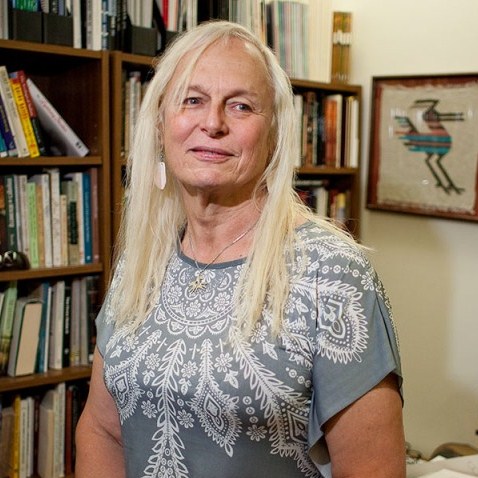
Cassidy Medicine Horse is a Pride Foundation supporter and founder of TransMSU, a new group at Montana State University in Bozeman. **Photo courtesy of the Bozeman Chronicle

Cassidy Medicine Horse is a Pride Foundation supporter and founder of TransMSU, a new group at Montana State University in Bozeman.
**Photo courtesy of the Bozeman Chronicle

By Caitlin Copple

Being trans can be a challenge anywhere, but it’s especially tough in Montana, as there are no statewide nondiscrimination protections for gender identity, including at Montana State University. A coalition of student organizations is working to change this, including TransMSU (TMSU) a support group for transgender MSU students.

Founded by graduate student Cassidy Medicine Horse, the group came into being after Medicine Horse was invited to talk about barriers to the community to the MSU student senate.

Despite Bozeman’s reputation for being a fairly liberal college town, Cassidy explains that prejudices exist when it comes to bathrooms, showers, dorms, and health care providers. Even though the school is receptive to hormone therapy coverage, it’s common for insurance carriers to exclude it from their prescription formulary. Cassidy adds that, to her knowledge, there are only three therapists and as many doctors in the Bozeman area who treat trans individuals.

Navigating these barriers while also going through a major life and identity transition was extremely difficult for Medicine Horse, and she started TransMSU to ensure other transitioning would have a built-in support network.

“Transitioning can be, at the very least, a lonely time,” she says. “Sometimes it can be filled with self-recrimination, self-loathing, anger, and great loss of family and friends.”

Beyond support, Medicine Horse hopes the group will provide a place for trans advocacy and increased visibility of the community, as they have with the efforts to add gender identity and expression to the Montana University System bylaws.

“What I am truly hoping for is that trans as a paradigm of the ‘other’ will cease to exist,” she says. “Sometimes I joke, half-heartedly, that I don’t want people just to come out of the closet. I want them to burn the closet down. The fact that a person is transgendered or transsexual should be about as interesting as whether you had mustard on your last sandwich. To be transgendered is not about sex. It is not about being homosexual or straight. It is about identity.”

Until then, she and TransMSU are partnering with the Montana Human Rights Network, a longtime Pride Foundation grantee, to work for equal protections for all Bozeman residents.

“Cassidy’s work to establish TMSU is essential to helping fill a gap as LGBTQ policy work moves forward in Bozeman,” said Jamee Greer, LGBT organizer for the Montana Human Rights Network. “It shows trans Bozemanites that they belong here, and also helps educate cisgender* folks around why trans inclusion matters.”

“Bozeman is a great little town with great folks,” adds Medicine Horse. “It’s time that we stand next to Missoula and Helena and give an additional voice to the concept of equality.”

When asked how people can be better allies to trans people, she shared:

  1. Learn the correct use of pronouns. If you don’t know, ask respectfully about pronoun preference.
  2. Don’t out us, and don’t use “bio” or “real” when referring to trans folks. If you need to designate, use “cis” or, better yet, how about referring to us just as a “person.”
  3. Do not ask me what my “real” name is or whether I have had had the surgery. It is, frankly, no one else’s business.
  4. Don’t automatically identify trans people as homosexual. Again, it’s not your concern and has nothing to do with being transgendered. Recognize that not all people fit into a nice little binary world of gender identification.
  5. Speak out when you hear pejorative remarks about trans people.

Currently, TMSU has 23 members, and the group welcomes trans, MtF, FtM, intersex, questioning, students, faculty, local residents, spouses, and supporters. The group meets weekly on Monday nights on the MSU campus from 5:30 to 7:00 p.m.

*A cisgender person is someone who identifies as the gender/sex they were assigned at birth.  The colloquial use of cisgender suggests that it is the opposite of transgender.

Caitlin Copple is Pride Foundation’s Regional Development Organizer in Montana.