Items From New Ways Ministry

New Ways Ministry Blog offers some items of interest to LGBT-inclusive Christians:

1) Sister Maureen Fiedler, who blogs for the National Catholic Reporter, comments on the passage of the Maryland marriage equality bill by suggesting that “Catholic bishops should read the writing on the wall for same-sex marriage.”

2) In a HuffingtonPost.com essay, Marianne Duddy-Burke, Executive Director of DignityUSA, observes that “Same-Sex Marriage IS Dangerous — to Church Workers .”  She is commenting on the recent firing of a Catholic parish’s music director, whichBondings 2.0 reported on here.

3) North Carolina’s two Catholic bishops are among the supporters of a proposed state constitutional amendment to define marriage heterosexually, according to “Both sides gear up in N.C. gay marriage fight,” which appeared on The Washington Post website.

4) Maryland’s Martin O’Malley and New Jersey’s Chris Christie, two Catholic governors who have opposing views about marriage equality for lesbian and gay couples, will square off on TV’s “Face the Nation,” Sunday, February 26, 2012, on CBS.  While the topic for their segment is the 2012 presidential race, since both governors have been so visible about marriage equality, it will likely come up as a topic of discussion.  For more details, check out The Washington Post’s article  “O’Malley, adversary Chris Christie booked on ‘Face the Nation.’ “

–Francis DeBernardo, New Ways Ministry

A Catholic Case For Same-Sex Marriage

Marriage Equality USA logo

Friends Jeannine Gramick and Frank DeBernardo from New Ways Ministry had an excellent Valentine’s Day Op-Ed in The Washington Post. In one of the most well prepared (both theologically and sociologically) essays I’ve read, they make the case for marriage equality:

This month in Maryland and the state of Washington, an extraordinary dynamic is playing itself out:  Two Catholic governors are prodding legislators to pass bills legalizing same-gender marriage. Like Govs. Andrew Cuomo in New York and Pat Quinn in Illinois — whose states recently legalized same-sex civil unions — Govs. Martin O’Malley and Christine Gregoire are acting against the strongly expressed opposition of their church’s bishops.As Catholics who are involved in lesbian and gay ministry and outreach, we are aware that many people, some of them Catholics, believe that Catholics cannot faithfully disobey the public policies of the church’s hierarchy. But this is not the case.The Catholic Church is not a democracy, but neither is it a dictatorship. Ideally, our bishops should strive to proclaim the sensus fidelium , the faith as it is understood by the whole church. At the moment, however, thebishops and the majority of the church are at odds. A survey published in September by the Public Religion Research Institute found that 52 percent of Catholics support marriage equality and 69 percent support civil unions.Those numbers shouldn’t surprise people who are familiar with the Catholic theological tradition. For example, Catholic thinking dictates that we should use the evidence we find in the natural world to help us reach our conclusions. Many Catholics have reflected on the scientific evidence that homosexuality is a natural variant in human sexuality, and understand that lesbian and gay love is as natural as heterosexual love.

In forming our consciences, Catholics also consult scripture and our theological tradition. Here, again, there is little firm reason to oppose marriage equality. The Bible presents us with a marital landscape that includes polygamy, concubinage, temple prostitution and Levirate marriages (in which a man is bound to marry his brother’s widow.) Jesus disputed the Mosaic law on divorce, saying that what God has joined man must not separate, but this dictum was modified in the letters of St. Paul.

When we see the manifold changes that marriage has undergone throughout history, many Catholics wonder why our bishops believe that heterosexual marriage in its current 21stcentury state is a matter of divine revelation.

Those who delve into the theology of marriage will encounter the writings of St. Augustine of Hippo, who articulated what Christians have come to call “the goods of marriage.” These are enumerated in contemporary terms as partnership, permanence, fidelity and fruitfulness. Same-sex couples demonstrate all of these attributes just as opposite-sex couples do, unless one defines “fruitfulness” narrowly as the ability to procreate. But many heterosexual couples cannot or choose not to procreate, and the church marries them anyway.

English: St. Augustine of Hippo

Image via Wikipedia

The deeper one looks into the church’s core teachings, the more one realizes that the bishops are not representing the breadth of the Catholic tradition in their campaign against marriage equality. Nowhere is that more true than in the area of Catholic social justice teaching.Catholic social teaching requires that all people be treated with dignity, regardless of their state in life or their beliefs. It upholds the importance of access to health-care benefits, the protection of children, dignity in end of life choices, and, most importantly, the promotion of stable family units. Marriage equality legislation would be an obvious boon to same-sex couples and their children in each of these areas, yet the bishops are spending millions of dollars opposing it.

Brilliant. If you’re a pray-er, these two deserve all you can give them.

Full story here

Guest Post: All Across The Land, Religious support For Marriage Equality Continues To Grow

(From Bondings 2.0)
By Francis DiBernardo, Director, New Ways Ministry

As if the legislative victory on marriage equality in Washington State were not evidence enough of a major shift in the landscape of public opinion on this issue, Robert Jones of the Public Religion Research Institute has highlighted important data about religious (including Catholic) support for these initiatives.  In a HuffingtonPost.comcolumn he writes:

Icon for Wikimedia project´s LGBT portal (Port...

Image via Wikipedia

” . . . a new exploration of 2011 polling by Public Religion Research Institute offers decisive evidence that the old assumptions about battle lines between secular proponents and religious foes no longer hold. Majorities of five major religious groups and the religiously unaffiliated favor allowing gay and lesbian couples to marry, compared to three major religious groups who oppose same-sex marriage. On the side supporting same-sex marriage, the religiously unaffiliated (72 percent) are joined by majorities of Jews (76 percent), Americans affiliated with a non-Judeo-Christian religion (63 percent), white Catholics (56 percent), Hispanic Catholics (53 percent) and white mainline Protestants (52 percent). Together, these religious groups make up approximately 45 percent of the general population.”

Even more importantly, Jones notes that even where opposition to marriage equality does exist among religious groups, evidence is strong that the younger generation is much more supportive than their elders, signaling that future change is imminent:

“. . . [A] generational gap signals that with the passage of time, this intense resistance may ebb. Even among white evangelical Protestants — the group most opposed to same-sex marriage — nearly 4-in-10 (39 percent) white evangelical Protestant Millennials favor allowing gay and lesbian couples to marry legally, a rate that is more than 20 points higher than that of white evangelicals ages 30 and older (18 percent). The same is true of Catholics: 66 percent of Catholic Millennials favor allowing gay and lesbian couples to marry, 15 points higher than Catholics ages 30 and above (51 percent).”

Jones is not the only voice proclaiming this new evidence.  On February 7th, the Pew Forum on Religion and Public Life issued a report that went deeper into the statistics on Catholics:

“Among Catholics as a whole, supporters of same-sex marriage now outnumber opponents (52% vs. 37%). In 2010, Catholics were more evenly divided on the issue, with 46% favoring same-sex marriage and 42% expressing opposition. A majority of white Catholics (57%) now express support for same-sex marriage, while Hispanic Catholics continue to be closely divided (42% favor same-sex marriage, 42% are opposed).”

On the Washington Post’s “On Faith” blog, Ross Murray of GLAAD, also notes the important shift in how the media covers the religious angle of the marriage equality debate:

“In 2008, the ‘gays versus religion’ frame was strongly entrenched in the mentality of the American public. Much of the driving force behind Prop 8, in terms of both organization and money, came from the leadership of the Roman Catholic and Mormon churches. People of faith who were personally supportive of marriage equality didn’t speak out, or felt that their support of LGBT people would be seen as being at odds with their faith.

“That is no longer the case. We are in a new reality.”

Murray’s blog post continues with example after example of religious groups speaking out for marriage equality in the media, including the Catholic coalition, Equally Blessed, of which New Ways Ministry is a member, along with Call To ActionDignityUSA, and Fortunate Families.

Murray notes that the religious voice in political debates is not only good for the outcome of the debate, but good for religious LGBT people themselves:

“It is indeed a new reality. In less than four years, our country has come from being one that pitted LGBT people against people of faith. Those of us who hold both of identities of LGBT and faithful no longer have that same struggle. We are not being called to deny our God or the way that God made us. This affirmation from the courts, the increasing public acceptance, and the leadership of people of faith in the call for LGBT inclusion affirms us in our faith, our identity, and our place in this country.”

(The prolific Murray also has a HuffingtonPost column on the same topic, but from a slightly different perspective.  It is definitely worth a read, too.)

And by the way, in the Washington State initiative, which began this post, the only thing left for it to become law is the signature of Governor Christine Gregoire, a Catholic, who has pledged to do so.  Reports say that signature can come as early as next week.

The Catholic Factor Of Proposition 8

From New Ways Ministry comes this interesting observation:

The reaction of the Catholic hierarchy to the news yesterday that a federal court has declared California’s Proposition 8 unconstitutional has been, predictably, negative.  After all, the hierarchy, aided by over a million dollars from the Knights of Columbus, worked so furiously to get Proposition 8′s constitutional ban against marriage equality passed into law.

Bishop Gerald E. Wilkerson, president of the California Catholic Conference, and auxiliary bishop from Los Angeles, issued a response yesterday which included the following:

“We are disappointed by the ruling today by a panel of the Ninth Circuit that would invalidate the action taken by the people of California affirming that marriage unites a woman and a man and any children from their union. However, given the issues involved and the nature of the legal process, it’s always been clear that this case would very likely be decided by the U.S. Supreme Court. Marriage between one man and one woman has been—and always will be—the most basic building block of the family and of our society.”

But a reaction from an usher at Our Lady of Angels Cathedral in Los Angeles may indicate better where Catholics in the pew stand on this issue–even those who initially voted for Proposition 8.  Ruben Garcia is quoted on the public radio website, spcr.org:

” As a parishioner and a Catholic and a married man, I do believe in the sanctity of marriage,’ Garcia said, ‘and I do believe that it should be between a man and a woman, but I’m torn because I also believe in the separation of church and state. “

That may be the crux of the argument. Catholics are twisted by the legal/moral argument of the hierarchy- if it’s immoral, it must be/become illegal. The problem in a deomocratic society is this: morals cannot be legislated effectively as representative of the entire population- because they are not representative of the entire population. Despite what bishops want to believe, the reality is that morals are not universal- there is no clear agreement on any number of moral issues.
And ignoring reality by trying to persuade by legislation will only make the remaining few points of agreement much less accessible.

Catholic Progressives: Speak Up!

From my friends over at New Ways Ministry:

From a Kensington.Patch.com article on marriage equality in Maryland entitled “O’Malley’s same-sex marriage bill to provide more religious protections” comes this quote which serves as a reminder that  Catholic progressives need to speak up to their civil and church leaders:

” ‘I’m getting some people that are calling me to say they don’t support it, and they’re coming from churches, mainly the Catholic Church,’ said Delegate James W. Hubbard (D-Prince George’s County), a bill supporter and member of the Health and Government Operations Committee and chair of the Public Health and Long-Term Care subcommittee.

” ‘I listen to everybody, and I’ve been here 20 years. Those who really get wound up on these things are the ones who call. The people who support these things don’t call,’ he said.”

Point taken. As ridiculously hard as it is sometimes, it’s heartening to remember that the Roman Catholic Church is not the official far right- it’s got a progressive side, too. And plenty of people who go to mass regularly identify as “liberal”. Not to mention the rich history of dissent that has, arguably, saved the church’s bacon on more than one occasion (see: Catherine of Siena).

Reminder: don’t let the right-wing hijack your churches. When any institution moves too far to one side, it not only becomes unbalanced, it begins to convince itself that it’s supposed to be leaning that way.

Often Overlooked, Sisters Are At Equality Forefront

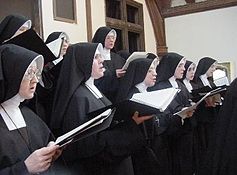
What do you know about nuns?

nuns

Image by neil1877 via Flickr

I’m not talking about the caricatured, stereotyped and ridiculous portrayals by movies, television and popular culture (Dead Man Walking and a few others excepted). You’ve probably seen pictures of nuns marching for civil rights in the sixties. You may heard of the selfless sacrifices made by sisters in the missionary field. And you may know a sister (or two) who have changed your life for the better.

I do. Several, in fact.

Sisters have been on the cutting edge of social issues (it can be argued) for over a thousand years- much of the hierarchy cannot claim even a fraction of the social justice work these women have accomplished. They have been working (often very quietly) to keep the fundamental message of Jesus alive- the message that compassion, dignity and respect is the only response to every human person.

What you may not know is this: they are also some of the fiercest advocates of social justice for LGBT persons.

New Ways Ministry, a Catholic organization dedicated to promoting understanding and dignity for LGBT persons, has an excellent blog post about the work of religious sisters for LGBT equality. Excerpt:

It’s no secret–though it’s not well-known, either–that high on the list of Catholic supporters of LGBT equality are nuns.  Communities of women religious have consistently been supportive of education, dialogue, and justice activities for LGBT people since the late 1970s.

After Vatican II, when nuns’ communities re-evaluated their charisms and ministries, they quickly realized that the church had long neglected lesbian/gay rights and that this was an issue that cried for justice.  They responded positively and actively.

Johnson’s article  highlights the reason that nuns can be so steadfast:

“American nuns don’t want to fight the official church, but neither are they likely to sacrifice the integrity of their consciences for the sake of peace.”

At New Ways Ministry,  we are indebted to our Sisters for financial, spiritual, and practical support over our 35 year history.  More New Ways Ministry programs have been held in convents and motherhouses than in any other type of Catholic facility by far.

Read the full post here– and follow their blog on Twitter– it’s a heartening voice in a religious climate that is often far from charitable.

So if you have a negative view about nuns, consider changing your mind. And if you know a sister who’s braving the forefront of equality- thank them. Send them this post, in fact.

We owe them more than we think.

Related articles