Raging Against The Hate Machine

In light of this:

“the Republican platform included language rejecting not just same-sex marriage but also the watered-down alternative that many elected officials find more palatable: civil unions. The GOP platform committee also defeated a proposed amendment that said all Americans should be treated “equally under the law” as long as they’re not hurting anyone else.”

I present this:

Hard Truths (About Gay Men & HIV)

From NAPWA’s Positive Voice Newsletter:

National Gay Men’s HIV/AIDS Awareness Day – NGMHAAD – is coming September 27, three months to the day after National HIV Testing Day, and hard on the heels of July’s landmark International AIDS Conference (IAC) in Washington, D.C. We have two messages this year: Be aware, know your risk, and, Let’s end this epidemic! Because we matter – and we can.

Speaker after speaker at IAC returned to this year’s good but challenging news: yes, we still need more science to stamp out HIV – more and better antivirals, an effective vaccine, and a functional cure – but we already have all the biomedical tools we need to make new HIV infections a thing of the past. The hard part is reaching “key populations” – groups with high rates of existing infections and new infections because they have been marginalized, stigmatized, denied civil rights, and excluded from health care.

NGMHAAD is for one of those “key populations:” this country’s men who have sex with men (MSM). NAPWA founded NGMHAAD in 2008 because we want them to know the epidemic isn’t over. We want them to know how high their HIV risk really is – because so many are already infected, and too many don’t know it. And we want them to know that we’ve come a long way since AIDS was first reported in 1981, and even further since Stonewall, but stigma is still driving this epidemic and gay men don’t have to take it anymore.

So let’s look at some numbers and see what that the gay men’s HIV epidemic looks like in the U.S.

The July 28 issue of The Lancet opened an admirable series of articles on HIV among gay men worldwide with a look at epidemiology, and reported that HIV prevalence among men who have sex with men in its North American region is a jaw-dropping 15.4% – almost one in six. The real prevalence may be a little lower – The Lancet assumes that only 3.7% of American men are MSM, a number we think is too low, and raising the estimated number of MSM would reduce the calculated prevalence a little – but it’s still clear that prevalence is breathtakingly higher among MSM than in the rest of the population.

Let’s calculate just how much higher.

About 251 million Americans are 15 or older. If 5 percent of the men are MSM, we have 6.3 million MSM and 245 million “others” 15-and-older in this country. We’re all familiar with the CDC’s estimates that 1.2 million Americans are living with HIV, and 60% of them are MSM. That gives us 480,000 infections in 245 million “others,” for a prevalence of 0.2% – one in five hundred. It also gives us 720,000 infections in 6.3 million American MSM, for a prevalence of 11.5% – just shy of one in eight. HIV prevalence among American MSM is almost 60 times what it is in the rest of the population.

That means HIV-negative MSM who are active with partners whose status they don’t know are at much higher risk than many realize. So the first and most important message of National Gay Men’s Awareness Day is – simply – be aware. Know your status. Know your risk. If you aren’t absolutely sure you know your own and your partner’s status, keep your condoms handy.

In September 10’s Positive Voice, we’ll write about how we got to where we are and what’s needed to deal with the MSM epidemic on the ground. Why near-universal testing is so important when prevalence is already so high. The need to confront stigma and talk frankly about sex in communities where this is deeply uncomfortable. The need for pride and love. The need to have culturally competent and welcoming health care for MSM.

And in the September 24 issue, just three days before NGMHAAD, we’ll remember the quarter-million (at least) American MSM who have died of AIDS and examine our responsibility as their survivors to demand action to end this epidemic once and for all. Now that we can, we must.

Ad to Air During RNC, Republican Mayor Of San Diego Advocates Marriage


Sanders Joins HRC and Freedom to Marry, Appeals to Conservative Values

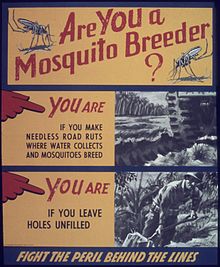
Red Ribbons And Mosquitos

Yesterday, a friend sent me the following:

“Today I saw this headline:

West Nile Outbreak Largest Ever, 41 dead

and it made me think of this:

Rare Cancer Seen In 41 Homosexuals

…and wondering about what makes a disease a crisis versus a judgment. The number of victims was the same.”

Indeed.

And to further the irony, the famous speech given by Mary Fisher to the Republican National Convention in 1992- 11 years after the rise of “gay cancer” was highlighted in a feature by the New York Times today:

TWENTY years ago this month, Mary Fisher took the stage of the Republican National Convention at the Houston Astrodome and delivered a 13-minute prime-time speech that was seen by many as a sharp rebuke of her party’s negligence in the face of the growing AIDS epidemic.

Mary Fisher in 1992 made what is considered one of the best American speeches of the 20th century.

Ms. Fisher, a mother of two young children who had worked in Gerald Ford’s White House, addressed the delegates as someone who was H.I.V. positive herself. “Tonight, I represent an AIDS community whose members have been reluctantly drafted from every segment of American society,” she said. “I am one with a black infant struggling with tubes in a Philadelphia hospital.” She added, “I am one with the lonely gay man sheltering a flickering candle from the cold wind of his family’s rejection.”

It was a speech that was both surprising and poignant. Few, including Ms. Fisher herself, expected that she would survive a disease that had already killed more than 150,000 Americans by the summer of 1992.

But Mary Fisher is still alive — and still taking issue with her political party.

As she should. The discrimination and loathing that prevented government intervention is still with us. It’s made itself known in issues of women’s health, gender inequity, transgender rights and the House defense of DOMA.

However, West Nile will probably not become the epidemic that AIDS did. Because mosquitos don’t discriminate.

They bite everyone.


…And Rehberg Still Wants To Defund Americorps

Rep Rehberg wants to deny over 1400 students and volunteers who want to give service to America the chance to make Montana a better place. He doesn’t think it works.

Well, I know the Congressman has been baffled by facts before, but here are a few (with pictures) to help clear things up.

Look what Americorps has done in Montana:

(click the pic for a way to make a difference )


Reverse.

So, what is my response to Mitt Romney picking a man who conveniently disregards his church’s teaching on universal healthcare and caring for the poor, doesn’t think women need protecting, doesn’t believe in hate crimes, supports banning of same-sex adoptions, wants to gut medicare and keep allowing corporations to buy elected offices in this country?

With Resistance to Treatment Rising, CDC Updates Gonorrhea Treatment Guidelines

From The National Coalition Of STD Directors:

Today, the Centers for Disease Control and Prevention (CDC) released updated guidelines for the treatment of the sexually transmitted disease gonorrhea, which is a major cause of pelvic inflammatory disease, ectopic pregnancy, and infertility and can facilitate HIV transmission.[i]  CDC estimates there are more than 700,000 gonorrhea infections each year in the United States.  The updated guidelines were published in CDC’s Morbidity and Mortality Weekly Report. 

The change marks an end to CDC exclusively recommending oral antibiotic treatment as the first line of defense for gonorrhea, and now instead recommends that infections be treated with the injectable antibiotic ceftriaxone in combination with one of two other oral antibiotics, either doxycycline or azithromycin.  This change in treatment has significant implications for clinical service delivery and infected patients alike, as the simple act of taking pills is replaced by an administered injection by a certified health professional.

“We applaud the CDC’s preemptive strike of changing recommended treatment and with the intention of extending the life of the last effective drug,” said William Smith, Executive Director of the National Coalition of STD Directors (NCSD). “However, the rising resistance of gonorrhea to our last line of defense against it must be a clarion call to policymakers and private industry alike to invest in the research and development pipeline for new antibiotics and more sophisticated diagnostics…and quickly.  We desperately need additional options to meet the challenges of this infection,” continued Smith.

Last summer, the CDC sounded the alarm on gonorrhea’s rising resistance to antimicrobials. This report outlined that we are on the verge of a highly untreatable gonorrhea epidemic as   gonorrhea has developed resistance to every class of antibiotics put up against it and there is no new drug in the pipeline.  Documented increases in resistance throughout the U.S. are what has prompted the CDC to make the current recommended treatment change.

Full presser here.

HIV Home Test A “Double Edged Sword”

Kudos to Great Falls Tribune Reporter Michael Beall for writing about the newly approved Rapid HIV Home Test- and asking Montanans in the field what they think about it.

Greg Smith, the executive director of AIDS Outreach in Bozeman, said he and others have mixed feelings about the U.S. Food and Drug Administration’s decision to approve the first over-the-counter HIV test kits.

English: Logo of the U.S. Food and Drug Admini...

English: Logo of the U.S. Food and Drug Administration (2006) (Photo credit: Wikipedia)

“I think it’s great that people will have access to testing,” said Smith, who was diagnosed with HIV in 2007. “But my concern is that they wouldn’t have the support that we offer in community-based testing situations.”

The OraQuick test is similar to the OraSure tests health clinics use and detects the presence of HIV in saliva. It returns results within 20 to 40 minutes.

The test is as simple as swabbing the upper and lower gums and inserting the test stick into a solution.

But Smith said the home test is a double-edged sword.

“On one hand, information is great, but on the other we need to provide that information so that it’s received well,” he said. “We want that support there.”

Trisha Gardner, City County Health Department community health education specialist, said reviews of the test are overwhelmingly positive, but she’s concerned because those who take the tests at home and test positive won’t have someone there to help them know what to do next. At the same time, she knows how important testing is to stopping the spread of the disease.

“You can’t do anything to control the spread of it if you don’t know you have it,” Gardner said. “People will be more likely to (get tested) because they don’t have to go in anywhere. They don’t have to be seen.”

Full story here.

Join NAPWA (and me) For Free

Infected/Affected by HIV/AIDS?

Join the National Association of People With AIDS (NAPWA). NAPWA is doing amazing work advocating for people HIV infected- and affected. It’s important that they have people from rural areas in their membership, so if you are HIV+ and live in Montana (or other rural areas) I would encourage you to join. From their mission statement:

Founded as a 501(c)(3) charitable organization in 1983, NAPWA advocates for the lives and dignity of all people living with HIV/AIDS, especially the more than a million Americans who live with it today. We want the epidemic to end, and we want life to be better for people with HIV until it does.

They are offering- for the first time ever- a free one year membership. To join me as a NAPWA member, click here:  http://www.napwa.org/freemembership

Most HIV-Positive Americans Lack Regular Medical Care

English: Enterprise Performance Life Cycle

English: Enterprise Performance Life Cycle (Photo credit: Wikipedia)

From Betsy McKay of the Wall Street Journal comes this from the recently concluded International AIDS  Conference in Washington DC:

HIV Data (1990, 2000, 2010)

HIV Data (1990, 2000, 2010) (Photo credit: cmdelaserna)

More than half of the people diagnosed with the HIV virus in the U.S. aren’t getting treatment for their infection, the U.S government said (Friday).

African-Americans and younger people are least likely to be receiving regular treatment, meaning that programs to keep them under a doctor’s care aren’t working or aren’t plentiful enough, according to a report by the Centers for Disease Control and Prevention.

While 81% of those African Americans estimated to be infected are diagnosed, only 29% get ongoing care, and just 21% are “virally suppressed,” or have their virus controlled by a regular regimen of antiretroviral, or ARV, drugs. Among Americans ages 25 to 34, 72% of those infected are diagnosed, but 28% get care and a mere 15% are virally suppressed.

Overall, an estimated 1.1 million Americans are infected with HIV. Only 46% of those who are diagnosed with HIV get regular treatment, while a quarter of all those estimated to be infected are virally suppressed.

“We’ve got to do better,” says Jonathan Mermin, director of the CDC’s division of HIV/AIDS Prevention.

The data were released at the XIX International AIDS Conference in Washington, D.C.

The challenge is to find ways to make HIV testing more widespread, and then make it easier to link those who are diagnosed directly into care — and to make sure they stay there, says Mermin.  “I want to make the healthy choice the easy choice,” he says.

And therein lies the challenge. The easy choice is sometimes pretending the choices don’t even exist….

Read the rest here. 

English: IPSF HIV/AIDS Campaign Logo

English: IPSF HIV/AIDS Campaign Logo (Photo credit: Wikipedia)