Missoula Sips For Pride Foundation!

If you’re looking for something to do Saturday evening, look no further!

Missoula Sips for Pride Foundation
Saturday, March 31 – 5:00-9:00 PM
Celebrate spring with Missoula’s LGBTQ and allied
community with a wine tasting and friend-raiser
hosted by Ten Spoon Winery!

Please RSVP by Thursday, March 29th

To RSVP or should you have any questions, please contact Caitlin Copple at 406-546-7017 or caitlin@pridefoundation.org

Rehberg Didn’t Listen As “Promised”

You’d think he’d be more careful in an election year- or maybe he just thinks we’re not paying attention. From The Montana Democrats:

Multimillionaire Congressman Dennis Rehberg said earlier this month that he needed to “talk to Montanans” before making a decision on his party boss’s latest attack on Medicare.

That was one week ago.  The House is expected to vote today on its plan to cut hundreds of billions of dollars from Medicare while giving tax breaks to millionaires.
And despite his promise, Congressman Rehberg still has not met with Montanans about Rep. Paul Ryan’s plan to attack Medicare.

“No matter how Congressman Rehberg votes on this bill, there can be no doubt that he’s serving his own interests, not Montana’s best interests,” said Dick.  “Congressman Rehberg can’t erase his record of voting against Medicare.  And let’s be clear:  Congressman Rehberg’s own political career is the only thing that will influence his vote on this bill.”

Congressman Rehberg has consistently supported the Ryan budget’s basic goals:  Giving huge tax breaks to corporations that ship jobs overseas, while gutting health care and education. Last July, Rehberg voted for the House’s “Cap, Cut and Balance” bill which, like the current proposal, would have forced huge cuts to Medicare in order to protect tax loopholes for millionaires.

The last time Rep. Ryan’s plan to attack Medicare came before Congress, Rehberg admitted he hadn’t read the bill just days before it came up for a vote [Rehberg conference call, 4/8/11; The Hill,4/6/11].

National Catholic Reporter Supports Bishops Call To Rethink Sexuality

From New Ways Ministry Blog
 

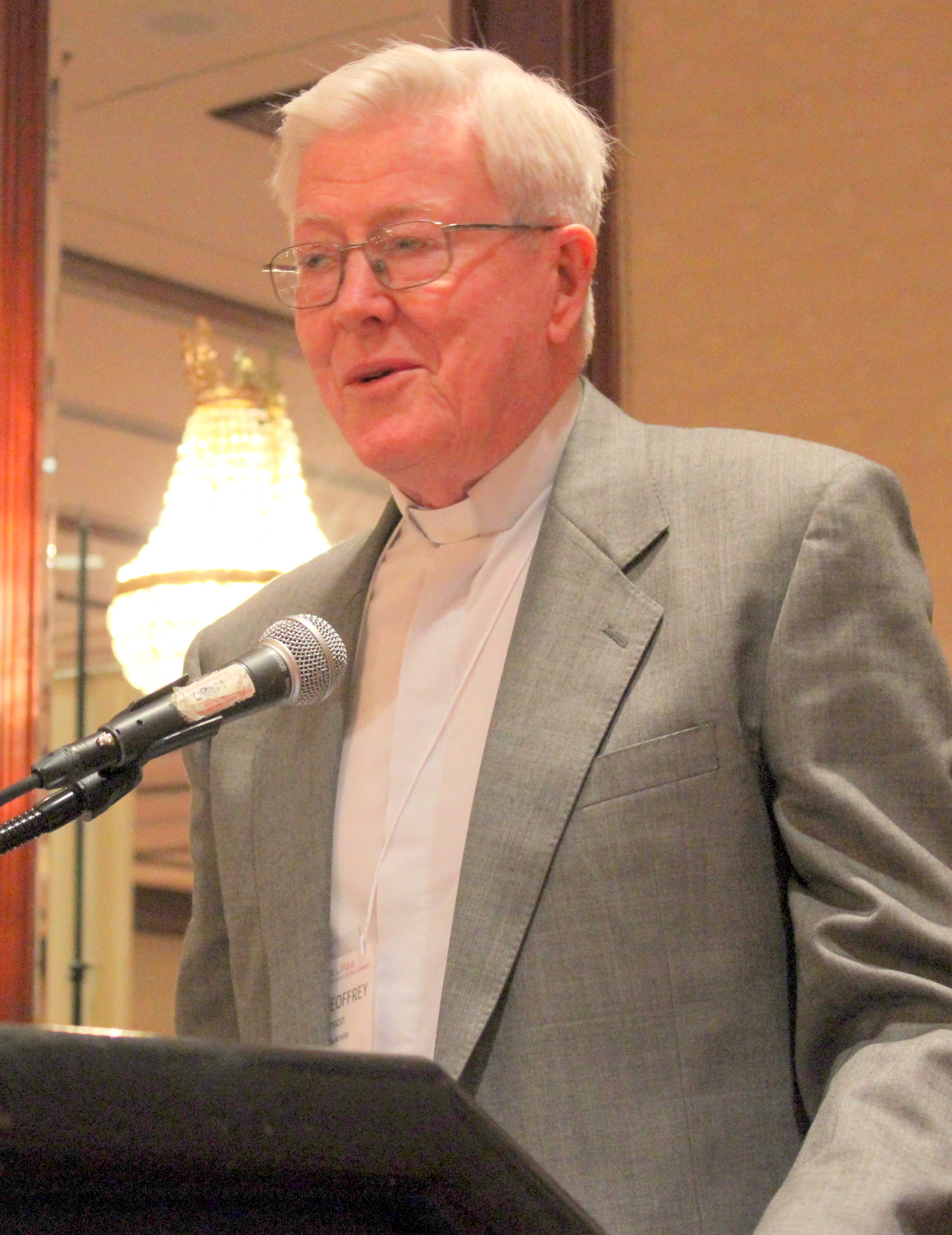
Bishop Robinson

New Ways Ministry’s Seventh National Symposium in Baltimore two weeks ago continues to make headlines.   The National Catholic Reporter (NCR) has editorialized in support of Bishop Geoffrey Robinson’s call to re-think the Catholic Church’s official teaching on sexuality, which he made during a talk at the Symposium.  An NCR columnist, Eugene Kennedy, the renowned psychologist and church observer, has also praised the Australian bishop’s proposal.

After summarizing Bishop Robinson’s main points (which can be read in the same newspaper’s article about the talk), the NCR editorial notes:

“Robinson is not the first to articulate the need for a responsible reexamination of sexual ethics, one that takes seriously the radical call to selfless love, but the addition of a bishop’s voice adds new dimension to the conversation. By rebuilding Christian morality in the area of sexuality in the way Robinson suggests, we will achieve a teaching that can better challenge the message about sexuality trumpeted by the dominant culture in television, music and advertising, a sexuality that idolizes self-gratification and that puts ‘me’ before ‘you.’ By placing the needs of the other first, our sexual ethic would reject sexual violence — physical and psychological, the idolatry of self-gratification, the objectification of people, and the trivializing of sex when it is separated from love.”

The NCR rightly points out that Robinson’s approach is not one of a wild-eyed radical:

“In the end, Robinson is making a profoundly traditional suggestion about sexuality, because what he proposes is rooted in genuine personal responsibility. He writes: ‘Many would object that what I have proposed would not give a clear and simple rule to people. But God never promised us that everything in the moral life would be clear and simple. Morality is not just about doing right things; it is also about struggling to know what is the right thing to do. … It is about taking a genuine personal responsibility for everything I do.’ ”

The tradition that Robinson is following is the tradition of Jesus in the Scriptures:

“Robinson’s take on sexuality — that it deserves deeper consideration than the narrow, rule-bound approach that has evolved in Christian circles — takes us to the heart of the radical approach Jesus took toward human relationships.”

NCR columnist Eugene Kennedy has also praised Bishop Robinson’s proposal.  In an essay entitled “Bishop Robinson and the redemption of eros,” Kennedy writes:

“Bishop Robinson’s purpose is, in fact, that set out by Pope John XXIII as his reason for convening Vatican II, “To make the human sojourn on earth less sad.”

“Indeed, in urging a much needed review of what and how the church teaches about human sexuality, Bishop Robinson draws on themes central to Vatican II. The first of these is found in placing the reality of the human person rather than the abstraction of natural law as the central reference point in church teachings and papal pronouncements about marriage and sexual activity.

“The second is found in the shift from an emphasis on objective acts to subjective intentions and dispositions in making judgments on the badness or goodness of how people behave. This rightfully emphasizes the impact that our actions or omissions have on other persons rather than on the ire that has idled within so many church leaders who have been so preoccupied with sin. . . .

“Robinson’s convictions on the need for a thorough examination of the church’s teaching on sexuality are significant in themselves but also because he has found a way to speak about this essential matter from within the church, even if in the mannered traditional way that dialogue moves, however slowly, toward a wider circle of prelates.”

After Bishop Robinson spoke at the Symposium, many people told me that they felt something new and remarkable had taken place. One person told me that it felt  like a new chapter had been opened in the church’s discussion on sexuality.  His talk offered not only hope, but a way forward that people felt was authentically human and authentically Catholic.His experience as the Australian Bishops’ Conference coordinator of pastoral responses to that nation’s sexual abuse crisis transformed his thinking on how Catholicism approached sexuality and how that approach can be improved.  As was evident from the style and content of his talk, Bishop Robinson had one three things that more bishops should emulate:  he opened his ears, his mind, and his heart.
 
–Francis DeBernardo, New Ways Ministry

Young Men’s Retreat In One Word: AMAZING

I had the privilege to spend the weekend with 14 young gay/bi men from across the state of Montana for a weekend of fun, education, fun, community building, fun, discussion and did I say, fun?

Whenever I go away for the weekend I have a lot to catch up on- thus the reason for no posts for the last two days. But I wanted to say that being around these guys, watching their enthusiasm for life, their interest in making life better for young gay men in the state and the strength and energy they brought to (and hopefully took home from) this weekend, energized me and gave me renewed energy to do what I do.

It might sound sappy, but I don’t care. This retreat was the best I’ve ever been involved in- and the (I want to call them kids, but I don’t want to sound condescending) participants made me realize that the future is in pretty good hands.

That’s excellent, because I’m not getting any younger.

Special thanks to FDH and Associates (David Herrera, Chantz Thilmony) and the Montana Gay Men’s Task Force for their dedication to the wellness, safety and education of gay/bi men in Montana. And to Bernie Kneefe for being the Den Mother.

If you’re a young gay/bi man who wants to be involved in this next year- go here. They’ll hook you up.

Analysis: Why some people do not receive continuous HIV medical care

by Chris Morley

Only 42% of the people diagnosed with HIV in the USA receive continuous HIV medical care after their diagnosis (seeing their HIV doctor at least every six months), according the the first national study in the USA.

  • 28% had a gap of at least one year between HIV medical check ups
  • 31% let 7-12 months pass between their appointments.

Who are the people missing care some of the time and what are their reasons? What are the consequences and what might be done to reduce the harm?

Over 17,000 adults attending 12 clinics within the HIV Research Network across the country, were surveyed by the Perelman School of Medicine, Pennsylvania, who reported their findings in the online journal AIDS in March 2012. This summary is based on a report in Medical News Today.

Why continuous HIV care is better

  • People with HIV whose health is regularly monitored and treated are less likely to become sick
  • People receiving continuous treatment are far less infectious and this very significantly reduces the spread of HIV
  • Regular attendance cuts total health costs by preventing serious health problems from developing that require expensive hospital treatment.

So regular, frequent HIV care means better longer term health for the person with HIV, fewer new people becoming infected, and lowers HIV health costs.

Who’s more likely to attend regularly for HIV care?

  • Patients who begin treatment on Medicare, not private insurance
  • Older patients
  • Men infected through sex with men
  • White patients
  • Women
  • People with very low CD4 counts (or an AIDS diagnosis) on starting care.

Sometimes missing care

So we may assume that the people more likely to have gaps in their care (of over 6 months) will broadly be the mirror image:

  • People with private insurance
  • People without healthcare insurance
  • Younger people, including those infected by mother to baby transmission
  • People infected through Injecting Drug Use
  • Heterosexually infected people, most especially Heterosexual Men
  • African Americans, Hispanic people, Native Americans, other ethnic minorities and migrants

At risk of missing HIV care

The researchers themselves suggest that HIV healthcare providers should treat the following people as at risk of not attending as regularly as they should:

  • Symptomless people, who may think they are well enough to skip appointments
  • People with depression, anxiety, or with difficulties accepting their diagnosis, or with other mental health conditions
  • People using substances (alcohol, drugs)
  • People with practical difficulties in their lives: poverty or debts, long working hours or low wages, unable to take time off, poorly housed, with childcare responsibilities, with travel problems
  • People with other health conditions and disabilities
  • People who move home or district, especially if this is often
  • People who have changed doctors
  • People jailed, or otherwise institutionalised.

Future work

The study authors suggest standard criteria should be developed to decide the  appropriate gaps between appointments for people in different circumstances. Some people will need personalised care plans based on the stage of their HIV illness, and their particular social circumstances.

More studies are needed to pinpoint the times when some people are more likely to fail to appear for appointments, and to identify what works to ensure people do attend every time.

Using insurance records data may help track people through changing situations and help establish which are the patterns that lead to increased risk of missing continuous HIV medical care.

Other research and experience in other countries

With 68% of the people with HIV in this US study not attending for HIV check-ups and care at least once in every six months, the USA appears to have one of the worst national HIV care regular attendance records in the developed world. This is the first national USA study of HIV care attendance but other countries have been tracking HIV healthcare non-attendance for some years.

The USA can therefore benefit from using other countries’ experience to  help  understand better what is happening, and consider adopting solutions that have already been found to reduce the numbers missing HIV  appointments.

For example, in Northern France, 13% disappeared for at least 12 months immediately after their diagnosis, and over half of those returned after an average lapse of 19 months; but almost half of those returnees by then had a dangerously low CD4 count of under 200, and another one quarter returned and were then given an AIDS diagnosis.

3/4 of those who dropped out suffered serious health and life expectancy consequences. There was a more-than-fivefold increase in the chance of dying in the year after return, compared with people who had stayed in care.

Suggested ACTIONS for healthcare and clinical staff

  • Tell people, when giving the positive test result, that coming to ALL your appointments and taking treatment as recommended, keeps most people well, with a near normal life expectancy. That it is really important to come, even when you feel very well and have no symptoms.
  • AND the people who miss their appointments are five times more likely to die within the next 12 months than those who keep their appointments.
  • Do everything you can to obtain a wide range of ways to contact people, and permission to use all these, with discretion.
  • Send SMS text reminders a day or so before the appointment.
  • Quickly and rigorously follow up all people who don’t attend.
  • Strongly encourage people newly diagnosed to become an active user of a community HIV project as soon as possible. This is because contact with and seeing other people like themselves who are living well with HIV is immensely reassuring and supportive and also improves mental and physical well-being. It counters the  stigma and isolation of living with HIV. It provides a safe space to talk about HIV. The clinic’s messages will be  reinforced by what other people living with HIV and community volunteers and staff say. Clinic staff giving a positive diagnosis must understand that most people getting their HIV diagnosis will remember only fragments of the important information they are told by the clinic. The shock of diagnosis means many mishear and misinterpret the limited amount they do remember.

In London, UK, where free HIV treatment for all is provided through the National Health Service, a study at London’s King’s College Hospital found that 40% of the patients seen at least once between 1995 and 2005, were not seen at all during 2006. Crosschecks with the national anonymised HIV database held by the Health Protection Agency, found half (20%) were using another HIV clinic, a small number had died, but more than 1 in 5 (over 20%) of all their patients were completely missing from  HIV care throughout the snapshot year of 2006.

Compare that 20% missing with the 68% missing in the USA.

There are a wide range of studies from British and other countries’ HIV clinics using different measures, finding various levels of loss, a variety of common causes, and making a range of suggestions for action. A 20% attrition rate is about average.

Some hospitals are clearly better at retaining patients than others; some HIV clinics have many people with complex problems and needs; in the bigger cities where there is a choice of HIV treatment centres, there is some ‘churn’, people going to another hospital without telling the first, because they have moved or wanted a change.

There is a wealth of detailed information, exploration of the reasons people disappear, and suggestions for ways to reduce the loss of people from HIV care, in this detailed report of experiences in London and Manchester, UK

Lost to care: the mystery of the disappearing patients in HIV Treatment Update.

This is the most thorough resource available, incorporating lessons from a range of European studies. Reading and acting on the various findings is recommended.

Other useful papers 

Reaching Lost to Care Populations Clinical Infectious Diseases 2006, full text free online.

High rate of loss to clinical follow up among African HIV-infected patients attending a London clinic: a retrospective analysis of a clinical cohort. Journal of Int AIDS Soc. 2010, abstract.

Many Black, HIV-Infected Women in Mississippi Are Lost to Care After Giving Birth Interview with Aadai Rana MD The Body, 2008, with weblinks to two other resources 8

Differences and disadvantages in the USA

There are a number of reasons why it is more likely many people will miss HIV care appointments in the USA than in other countries. These help explain why only 42% of US people with HIV attend HIV clinic at least once every six months. This low rate of regular attendance means that HIV clinics in the USA must work very much harder to reduce the 68% of no shows.

  • US health care is often excellent but without doubt the most expensive in the world. Large numbers of people have no health insurance, or inadequate health insurance; there are problems accessing and with  inadequate funding for the public healthcare programs, Medicare and Medicaid.
  • HIV is an expensive healthcare condition to treat.
  • Co-infections and other co-morbidities are common, compounding treatment complexity, treatment adherence, and increasing health costs.
  • Distances to HIV treatment centres and travel difficulties may be considerable.
  • HIV stigma and discrimination seems particularly rife in many parts of the USA. There are no international data comparisons available yet, although the international HIV Stigma Index will help answer this need. Lambda Legal carried out a USA HIV stigma survey within US healthcare in 2009 and publish a factsheet detailing discrimination and stigma in HIV healthcare and elsewhere.

These and possibly other factors contribute significantly to the high rate of missed HIV appointments and loss to HIV care in the USA.

~Chris Morley is a community HIV policy and practice expert based in NW England. He researched and co-authored for the UK’s HIV Treatment Update: Lost to care: the mystery of the disappearing patients.

He’s worked on a wide range of English national and regional HIV policy and practice issues including

  • making free HIV treatment available to all migrants
  • ending the prosecution of people living with HIV for HIV transmission
  • promoting the use of HIV treatment as part of the HIV prevention toolkit
  • developing support for gay men living with HIV on using HIV treatment to prevent onward transmission
  • making gay men’s HIV prevention work friendly and relevant to gay men living with HIV
  • combating HIV stigma and discrimination
  • supporting teenagers and children living with HIV in the care system
  • readying adult HIV services for older teenagers to transfer
  • developing services for older people living with HIV

AIDS Activists Arrested At Rehberg’s Office

…for protesting the needle exchange ban “sneaked” into the Federal Funding Bill in December- despite scientific research which shows that it does not promote drug use, but does stem the progress of infectious disease.  From The Missoula Indy:

via wikipedia

A demonstration by AIDS activists Wednesday morning targeted Rep. Denny Rehberg of Montana and other congressmen for their role in “sneaking in” a federal ban on clean needle exchange programs. Ten activists were arrested outside Rehberg’s office. Capitol Police put the total number of those arrested at 29; activist organizations say the number was actually 32.

The Huffington Post described the background of the demonstration:

“Rehberg was targeted for his role as chair of the House Appropriations subcommittee on health and human services, where he led the effort to ban funding for needle exchange programs, adding it to a House spending bill that funded the federal government through fiscal year 2012…

The ban was originally adopted in 1989 but was finally lifted by Congress in 2009. Republicans lawmakers quietly slipped the ban back into their spending bill in December of last year.”

In addition to Rehberg, activists targeted Rep. Hal Rogers (R-Ky.) and House Speaker John Boehner (R-Ohio). There were also rallies in New York outside the offices of Sens. Chuck Schumer and Kirsten Gillibrand. The groups taking credit for the demonstrations were Housing WorksHealth Global Access Project and Citiwide Harm Reduction.

Activists are against the ban because studies show that clean needle programs help curb the spread of HIV and hepatitis C, and reduce the rate of new HIV infections among injection drug users by as much as 80 percent. The Huffington Post article also notes that additional research shows “syringe exchange programs do not increase the numbers of injection drug users and can further reduce long-term healthcare costs for people with HIV or hepatitis C.”

Indy reporter Jessica Mayrer wrote a 2010 cover story about outreach workers across Montana working on HIV and hepatitis C prevention programs, and how drastic cuts to funding were affecting their efforts.

The false meme that is promoted is this: clean needles encourage drug use and do not prevent the spread of disease.
The truth is this: clean needles do not significantly increase drug use and do prevent the spread of disease.

The only logical conclusion is this: the lawmakers who promoted this ban want those who use needles to spread and to die of deadly disease.

They are not interested in public health, they are interested in shaming people with disease (addiction, Hep C, HIV). Completely and utterly irresponsible.

Gay Marriage – A Mystery – Church History

Scott Terry’s sculpture about Proposition 8 is now a YouTube video:

From his website:

When the religious right campaigned to repeal the right of California gays and
lesbians to marry, I was silent.  It’s not that I didn’t care or was uninterested…I
just didn’t care enough to get involved.  I don’t ever see myself getting
married, so I did not join the fight.

That was a mistake.

So while I did not voice my opinions or feel alarmed at the potential for
California voters to feel strongly enough about gay marriage to amend the
state constitution, I do have a really short fuse when people take their
religious dogma out of their respective churches and expect everyone else to
adopt it.  I get even more impatient with the “it’s the way it’s always been”
argument.  I mean, get real.  If we lived by the way it’s always been, we’d still
believe in slavery and child labor.

This art piece is my late entry into the argument and an apology for my earlier
silence.
On December 5th, 2008 when I first envisioned the creation of this piece, I
sent an email to the ProtectMarriage group, inquiring where I might obtain
some YesOn8 lawn signs.  Here’s the text of that email:

Me:  “Hi.  I need some YesOn8 lawn signs.  Can you tell me where I could get
them?”

The ProtectMarriage folks reply:  “Your best option would be visiting your
local church.  They might have some leftover from the campaign.”

Powerful message, I think.

Me, too. Thanks Scott!

Screening Tomorrow In Bozeman: “For The Bible Tells Me So”

Can the love between two people ever be an abomination? Is the chasm separating gays and lesbians and Christianity too wide to cross? Is the Bible an excuse to hate? We’re going to discuss this after a screening of “For the Bible Tells Me So” Wednesday March 21st 7pm at The Procrastinator Theater in the SUB at MSU- sponsored by BridgerCare. From the movie’s website:

Through the experiences of five very normal, very Christian, very American families — including those of former House Majority Leader Richard Gephardt and Episcopal Bishop Gene Robinson — we discover how insightful people of faith handle the realization of having a gay child. Informed by such respected voices as Bishop Desmond Tutu, Harvard’s Peter Gomes, Orthodox Rabbi Steve Greenberg and Reverend Jimmy Creech, FOR THE BIBLE TELLS ME SO offers healing, clarity and understanding to anyone caught in the crosshairs of scripture and sexual identity.

I’ll be facilitating a discussion which will include persons who have ben involved in ex-gay reparative “therapy”, and members of local Christian communities.

From my friend Ted Hayes:

Greg,  your audience is in for a great time at this movie.  Daniel Karslake, the producer, is a personal friend of about 15 years and a great guy.  We had a showing in 2008 at the State University of New York, New Paltz, with both Dan and Mary Lou Wallner, who is featured in the film, on the scene for that particular weekend.  It literally poured rain that evening but did not dampen the spirits of the more that 200 persons who braved the storm to be in attendance.

The film is wonderful, the stories are wonderful and the people involved with it are wonderful.  Wish I could be there to share in this experience with all my fellow Montanans-in-law (my late partner was from Lewistown).

Hope to see you there! 

Instant Gratification Has Made Us Impatient

Take a look at this infographic which illustrates how impatient the Google Society has become:
Instant America
Created by: Online Graduate Programs
Thanks, Tony Shin!

Cebull Resignation/Impeachment Petitions Update

When I first looked at the internets regarding public discontent regarding Richard Cebull’s lack of professional judgment, (Cebull Petitions Pepper The Internet- And They Should) there were 5 petitions circulating in the informational ether.

Now, the number is up. On Change.org alone there are 10.

Will anything happen? Will the complaint by the Montana GOP (against Senators Baucus and Tester for filing an investigation request with the Senate Select Committee on Ethics to take a look) get any traction? Will the story just fade away?

Nope.

Not as long as I have a computer and internet access….