What If Jesus Had been A Republican?

Jesus Christ in Capernaum (study)

Jesus Christ in Capernaum (study) (Photo credit: Wikipedia)

A peek:

The Lazy Paralytic

1. When Jesus returned to Capernaum after some days, it was reported that he was at his home. 2. So many gathered around that there was no longer room for them, not even in front of the door; and he was speaking the word to them. 3. Then some people came, bringing to him a paralyzed man, carried by four of them. 4. And when they could not bring him to Jesus because of the crowd, they removed the roof above him; and after having dug through it, they let down the mat on which the paralytic lay. 5. When Jesus saw this he grew angry, “Why did you wreck my roof? Do you have any idea how much that cost to install? Do you know how many tables and chairs I had to make in my carpentry shop to pay for that roof? The reeds alone cost five talents. I had them carted in from Bethany.” 6. The disciples had never seen Jesus so angry about his possessions. He continued, “This house is my life. And the roof is the best part.” The disciples fell silent. 7. “It’s bad enough that you trash my private property, now you want me to heal you?” said Jesus, “And did you not see the stone walls around this house?” “Yes,” said the man’s friends. “Are these not the stone walls common to the towns and villages of Galilee?” 8. “No,” Jesus answered. “This is a gated community. How did you get in?” The man’s friends grew silent. 9. Then Jesus turned and said to the paralytic, “Besides, can’t you take care of your own health problems? I’m sure that your family can care for you, or maybe the synagogue can help out.” 10. “No, Lord,” answered the man’s friends. “There is no one. His injuries are too severe. To whom else can we go?” 11. “Well, not me,” said Jesus. “What would happen if I provided access to free health care for everyone? That would mean that people would not only get lazy and entitled, but they would take advantage of the system. 12. Besides, look at me: I’m healthy. And you know why? Because I worked hard for my money, and took care of myself.” The paralyzed man then grew sad and he addressed Jesus. “But I did work, Lord,” said the paralytic. “Until an accident rendered me paralyzed.” “Yes,” said the man’s friends. “He worked very hard.” 13. “Well,” said Jesus, “That’s just part of life, isn’t it?” “Then what am I to do, Lord?” said the paralytic. “I don’t know. Why don’t you sell your mat?” 14. All in the crowd then grew sad. “Actually, you know what you can do?” said Jesus. “You can reimburse me for my roof. Or I’ll sue you.” And all were amazed. 15. “We have never seen anything like this,” said the crowd.

More here.

Tune In Tonight

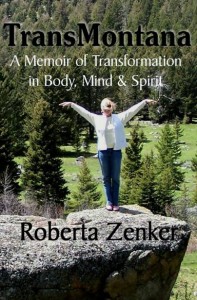
If you’d like to understand what transgender people go through- well, you’re in luck. My friend Bobbie Zenker will be on YPR’s Home Ground tonight at 6:30, interviewed by Brian Kahn (one of the best interviewers around).

(click to see the book)

Bobbie’s story is inspirational on many levels, and for me represents the power of truth, exploration and acceptance. Her new book, TransMontana, is a must-read,  creating understanding and humanity through the components of sexual/gender/spiritual identity. All people must- if they are interested in integrity- explore the truth of their experience and strive to live it honestly and authentically. Bobbie’s life is a dramatic example of that process.

Bobbie’s life is authentically her own, and, as I said before, an inspiration for all people who struggle to live an honest life. Tune in tonight, not only to hear Bobbie’s story, but maybe parts of your own.

Compassion For The Boy Who Cried “Wolf!”

So, I want to take a moment to respond to the faux gay-bashing incident that swept me (and the gay media) by storm yesterday.

Yeah, I’m angry.

I think this may have set things back a bit as far as people taking the threat to LGBTQ people seriously in the state of Montana. When someone needs the help of the police because they have been a victim of  gay assault, will it be met with deep suspicion and possibly a sneer?

I’m also really worried about the kid who reported the whole thing.

I’m worried that this will ruin his life. I’m worried that this decision to report- however it was made- was possibly made under the influence. Bad decisions are made every day under the influence of drugs and alcohol. Montana is populated with an extraordinary amount of repeat DUI offenders. Our stats are not pretty. When Montana police respond to fights, domestic violence or robbery, they’re mostly alcohol related. Ask any cop. In a 2010 survey of  Montana State Prison inmates, 93% had alcohol related to their crime. 93 percent. So I’m worried that an all-too-common clouded decision-making process will become a reason for retribution.

Yeah, I’m worried that the community that so quickly rallied around him will turn just as quickly against him.

I want to argue for some understanding. We don’t know the circumstances. We don’t know the reasons. We don’t know the situation. We don’t know anything- except what the police reports and press releases have told us.

I think that the concern we all had for him can be turned in a new direction- toward trying to understand- and trying to forgive. Youthful indiscretion aside, mistakes are made- and so are apologies.

When his is made, I’m going to do my damnedest to accept it.

Because I’ve made mistakes of my own.

I also know that we’re going to need to remember the response that galvanized a bunch of people around the country into action. Because, someday, we’re going to need to rally around a victim of hate, a victim of injustice, a victim of violence- and I don’t want to have suspicion be the first voice that enters my head. I want compassion to be the first voice.

And I don’t want the memory of this or any incident to overcome compassion’s voice in my heart.

Ever.

That’s my prayer.

Loyalty Oaths Are Sprouting Up Across the U.S. Catholic Church

From New Ways Ministry: 

Loyalty oaths seem to be coming into fashion in Catholic churches, as more and more bishops are using this instrument to require that Catholics working in the church, even on a volunteer basis, pledge total fidelity to the magisterium, including official directives about LGBT people.

The issue was sparked this week by a Washington Post article on Bishop Paul LoVerde, of Arlington, Virginia, who has instituted such an oath for religious education teachers there. Four teachers have already resigned because of the requirement.  The Post report states:

“The Arlington Diocese, which includes nearly a half-million Catholics across northern and eastern Virginia, is one of a small but growing number that are starting to demand fidelity oaths. The oaths reflect a churchwide push in recent years to revive orthodoxy that has sharply divided Catholics.

“Such oaths are not new for priests or nuns but extend now in some places to people like volunteer Sunday school teachers as well as workers at Catholic hospitals and parish offices.

“One in Baker, Ore., reiterates the sinfulness of abortion and says, “I do not recognize the legitimacy of anyone’s claim to a moral right to form their own conscience in this matter.” One in Oakland, Calif., requires leaders of a group doing outreach to gay and lesbian Catholics to say they “affirm and believe” official church teaching on marriage, hell and chastity. [For the Bondings 2.0 report on the Oakland oath, click here.]

“The Arlington ‘profession of faith’ asks teachers to commit to “believe everything” the bishops characterize as divinely revealed, and Arlington’s top doctrine official said it would include things like thebishops’ recent campaign against a White House mandate that most employers offer contraception coverage. Critics consider the mandate a violation of religious freedom.”

The article quotes Rose Zagarri, one of the resigned teachers:

“Zagarri said the oath was a “slap in the face” to Catholics who have remained active and close to the church despite controversies.

“ ‘Although I fully understand the authoritative role of the Catholic hierarchy in defining the teachings of the faith, in my view only a person who is willing to abandon her own reason and judgment, or who is willing to go against the dictates of her own conscience, can agree to sign such a document,’ she wrote to Arlington Bishop Paul Loverde.

“ ‘This is not in the spirit of what people go to a Catholic church for, which is community and a loving, welcoming environment. It’s exclusionary, a suppression of dissent, let’s all line up and be the army of God,’ Zagarri said in an interview for this article.”

Seattle Post-Intelligencer blog reports that the loyalty oath in the Baker, Oregon, diocese (mentioned above) states that some of the teachings that the oath includes are:

“the sinfulness of contraception, the evil of extra-marital sexual relationships, the unacceptability of homosexual relationships, the wrongness of co-habitation before marriage.”

According to the Post-Intelligencer, the Baker diocese oath goes even further on the issue of abortion, with the statement:

“I do not recognize the legitimacy of anyone’s claim to a moral right to form their own conscience on this matter.”

A wise warning against such loyalty oaths was raised by Rev. Ronald Nuzzi, Rev. Ronald Nuzzi, director of the leadership program for Catholic educators,University of Notre Dame.  The Washington Post article concludes with:

“Nuzzi said he keeps a photo on his desk from the 1940s that shows all the German bishops in their garb, doing the Nazi salute.

“ ‘I keep it there to remind people who say to do everything the church says, that their wisdom has limitations, too.’ ”

–Francis DeBernardo, New Ways Ministry

What Captures Your Attention Controls Your Life

Neurobiology has been very clear in recent findings- giving something full attention is the best way to change, understand or deepen the experience of that something. And repeated focus is the key to successfully changing the very pathways of our brains. This can be very helpful when dealing with depression or substance abuse, for example.

An interesting article in the Harvard Business Review gives a more accessible overview of what monks and nuns (of many religions) have known for millennia: Focusing regularly changes your brain- and your life. Excerpt:

“A few years ago, DisneyWorld executives were wondering what most captured the attention of toddlers and infants at their theme park and hotels in Orlando, Florida. So they hired me and a cultural anthropologist to observe them as they passed by all the costumed cast members, animated creatures, twirling rides, sweet-smelling snacks, and colorful toys. But after a couple of hours of close observation, we realized that what most captured the young children’s attention wasn’t Disney-conjured magic. Instead it was their parents’ cell phones, especially when the parents were using them.

Those kids clearly understood what held their parents’ attention — and they wanted it too. Cell phones were enticing action centers of their world as they observed it. When parents were using their phones, they were not paying complete attention to their children.

Giving undivided attention is the first and most basic ingredient in any relationship. It is impossible to communicate, much less bond, with someone who can’t or won’t focus on you. At the same time, we often fail to realize how what we focus on comes to control our thoughts, our actions, and indeed, our very lives.

Whatever we focus upon actually wires our neurons. For example, pessimistic people see setbacks and unhappy events as Personal (It’s worst for me), Pervasive (Everything is now worse) andPermanent (It will always be this way) according to Learned Optimism author Marty Seligman. Yet, with practice, he found that we can learn to focus more attention on the positive possibilities in situations to craft a redemptive narrative of our life story. Consciously changing what you pay attention to can rewire your brain from a negative orientation to a positive one. “Attention shapes the brain,” as Rick Hanson says in Buddha’s Brain.”

Read the rest here.

Cast All Your Votes For Dancing

I know the voice of depression
Still calls to you.

I know those habits that can ruin your life
Still send their invitations.

But you are with the Friend now
And look so much stronger.

You can stay that way
And even bloom!

Fabric architectural design of Hafez tomb

Fabric architectural design of Hafez tomb (Photo credit: Wikipedia)

Keep squeezing drops of the Sun
From your prayers and work and music
And from your companions’ beautiful laughter.

Keep squeezing drops of the Sun
From the sacred hands and glance of your Beloved
And, my dear,
From the most insignificant movements
Of your own holy body.

Learn to recognize the counterfeit coins
That may buy you just a moment of pleasure,
But then drag you for days
Like a broken man
Behind a farting camel.

You are with the Friend now.
Learn what actions of yours delight Him,
What actions of yours bring freedom
And Love.

Whenever you say God’s name, dear pilgrim,
My ears wish my head was missing
So they could finally kiss each other
And applaud all your nourishing wisdom!

O keep squeezing drops of the Sun
From your prayers and work and music
And from your companions’ beautiful laughter

And from the most insignificant movements
Of your own holy body.

Now, sweet one,
Be wise.
Cast all your votes for Dancing!

~Hafiz

Clergy Can Fight HIV On Faith-friendly Terms

An excellent article from Science Daily:

In the United States, where blacks bear a disproportionate burden of the HIV/AIDS epidemic, black religious institutions could help turn the tide. In a new study in PLoS ONE based on dozens of interviews and focus groups with 38 of Philadelphia’s most influential black clergy, physicians and public health researchers find that traditional barriers to preaching about HIV prevention could give way to faith-friendly messages about getting tested and staying on treatment.

The public health community has long struggled with how best to reduce HIV infection rates among black Americans, which is seven times that of whites. In a new paper in the journal PLoS ONE, a team of physicians and public health researchers report that African-American clergy say they are ready to join the fight against the disease by focusing on HIV testing, treatment, and social justice, a strategy that is compatible with religious teaching.

“We in public health have done a poor job of engaging African-American community leaders and particularly black clergy members in HIV prevention,” said Amy Nunn, lead author of the study and assistant professor of medicine in the Warren Alpert Medical School of Brown University. “There is a common misperception that African American churches are unwilling to address the AIDS epidemic. This paper highlights some of the historical barriers to effectively engaging African American clergy in HIV prevention and provides recommendations from clergy for how to move forward.”

The paper analyzes and distills dozens of interviews and focus group data among 38 African-Amereican pastors and imams in Philadelphia, where racial disparities in HIV infection are especially stark. Seven in 10 new infections in the city are among black residents. With uniquely deep influence in their communities, nearly all of the 27 male and 11 female clergy said they could and would preach and promote HIV testing and treatment.

That message, delivered by clergy or other influential figures, would provide a needed complement to decades of public health efforts that have emphasized risk behaviors, Nunn said. Research published and widely reported last year, for example, suggests that testing and then maintaining people on treatment could dramatically reduce new infections because treatment can give people a 96-percent lower chance of transmitting HIV.

“For decades, we’ve focused many HIV prevention efforts on reducing risky behavior,” said Nunn, who is also based at The Miriam Hospital. “Focusing on HIV testing and treatment should be the backbone of HIV prevention strategies and efforts to reduce racial disparities in HIV infection. Making HIV testing routine is the gateway to getting more individuals on treatment. African American clergy have an important role to play in routinizing HIV testing.”

The barriers clergy members face

Many religious leaders acknowledged that they’ve struggled with how best to combat the epidemic, particularly with challenges related to discussing human sexuality in church or mosque, according to the analysis in the paper.

“One time my pastor spoke to young people about sex, mentioning using protection,” the paper quotes a clergy member as saying in one example. “I was sitting in the clergy row; you could feel the heat! I was surprised he said that. Comments from the clergy highlighted they were opposed to that. It’s a tightrope walk.”

Many clergy members also said they face significant barriers to preaching about risk behaviors without still emphasizing abstinence.

“It’s my duty as a preacher to tell people to abstain,” one pastor told the research team, “but if they’re still having sex and they’re getting HIV, there has to be another way to handle this.”

What clergy can do

Many clergy members suggested couching the HIV/AIDS epidemic in social justice rather than behavioral terms, Nunn said. They also recommended focusing on HIV testing as an important means to help stem the spread of the disease and reduce the stigma.

“We need to standardize testing,” one pastor told the researchers. “One thing that we could do immediately is to encourage our congregations — everybody — to get tested. … We’re not dealing with risk factors. And we’re all going to get tested once a year. That’s the one thing that we could do that doesn’t get into our doctrine about sexuality.”

In general, many of the religious leaders said they could encourage discussion of HIV not only in main worship services, but also in ministries and community outreach activities.

FULL ARTICLE HERE

Transgender Breakthrough

From Kris Hermanns, Executive Director, Pride Foundation:

I wasn’t sure if you heard word (Monday), but history was made once again.

For the first time ever, the Equal Employment Opportunity Commission (EEOC) has ruled that discrimination against an employee or applicant on the basis of the person’s gender identity violates the prohibition on sex discrimination contained in Title VII of the Civil Rights Act of 1964.

The EEOC’s decision means that transgender employees across the country who experience workplace discrimination can now file a claim with the EEOC at any of its offices across the country.

Below is a link to a full article about the EEOC decision, the implications, and comments from some of the leading legal minds who have been working to advance transgender legal protections for decades. I encourage you to read it.

This is an incredible decision. We continue to make steady progress and are moving closer to the day when LGBTQ people and their families are fully recognized, protected, and supported.

It’s exciting to know Pride Foundation is a part of making this all happen.

Thank you.

Kris

# # #

Transgender Breakthrough

EEOC ruling that gender-identity discrimination is covered by Title VII is a ”sea change” that opens the doors to employment protection for transgender Americans

By Chris Geidner
Published on April 23, 2012, 10:38pm | Comments

An employer who discriminates against an employee or applicant on the basis of the person’s gender identity is violating the prohibition on sex discrimination contained in Title VII of the Civil Rights Act of 1964, according to an opinion issued on April 20 by the Equal Employment Opportunity Commission (EEOC). The opinion, experts say, could dramatically alter the legal landscape for transgender workers across the nation.

More at http://www.metroweekly.com/news/?ak=7288

Related articles

National Catholic Reporter Supports Bishops Call To Rethink Sexuality

From New Ways Ministry Blog
 

Bishop Robinson

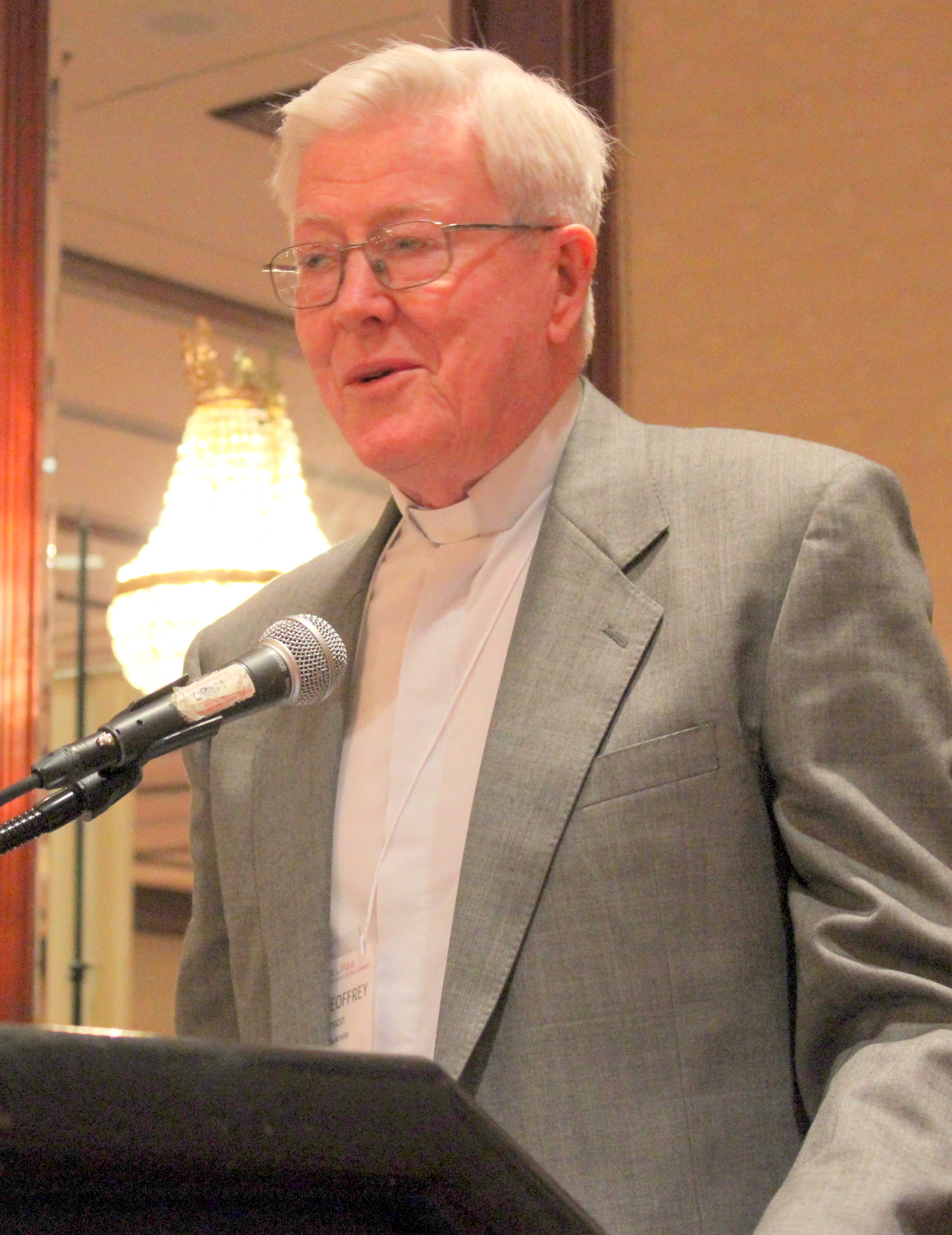
New Ways Ministry’s Seventh National Symposium in Baltimore two weeks ago continues to make headlines.   The National Catholic Reporter (NCR) has editorialized in support of Bishop Geoffrey Robinson’s call to re-think the Catholic Church’s official teaching on sexuality, which he made during a talk at the Symposium.  An NCR columnist, Eugene Kennedy, the renowned psychologist and church observer, has also praised the Australian bishop’s proposal.

After summarizing Bishop Robinson’s main points (which can be read in the same newspaper’s article about the talk), the NCR editorial notes:

“Robinson is not the first to articulate the need for a responsible reexamination of sexual ethics, one that takes seriously the radical call to selfless love, but the addition of a bishop’s voice adds new dimension to the conversation. By rebuilding Christian morality in the area of sexuality in the way Robinson suggests, we will achieve a teaching that can better challenge the message about sexuality trumpeted by the dominant culture in television, music and advertising, a sexuality that idolizes self-gratification and that puts ‘me’ before ‘you.’ By placing the needs of the other first, our sexual ethic would reject sexual violence — physical and psychological, the idolatry of self-gratification, the objectification of people, and the trivializing of sex when it is separated from love.”

The NCR rightly points out that Robinson’s approach is not one of a wild-eyed radical:

“In the end, Robinson is making a profoundly traditional suggestion about sexuality, because what he proposes is rooted in genuine personal responsibility. He writes: ‘Many would object that what I have proposed would not give a clear and simple rule to people. But God never promised us that everything in the moral life would be clear and simple. Morality is not just about doing right things; it is also about struggling to know what is the right thing to do. … It is about taking a genuine personal responsibility for everything I do.’ ”

The tradition that Robinson is following is the tradition of Jesus in the Scriptures:

“Robinson’s take on sexuality — that it deserves deeper consideration than the narrow, rule-bound approach that has evolved in Christian circles — takes us to the heart of the radical approach Jesus took toward human relationships.”

NCR columnist Eugene Kennedy has also praised Bishop Robinson’s proposal.  In an essay entitled “Bishop Robinson and the redemption of eros,” Kennedy writes:

“Bishop Robinson’s purpose is, in fact, that set out by Pope John XXIII as his reason for convening Vatican II, “To make the human sojourn on earth less sad.”

“Indeed, in urging a much needed review of what and how the church teaches about human sexuality, Bishop Robinson draws on themes central to Vatican II. The first of these is found in placing the reality of the human person rather than the abstraction of natural law as the central reference point in church teachings and papal pronouncements about marriage and sexual activity.

“The second is found in the shift from an emphasis on objective acts to subjective intentions and dispositions in making judgments on the badness or goodness of how people behave. This rightfully emphasizes the impact that our actions or omissions have on other persons rather than on the ire that has idled within so many church leaders who have been so preoccupied with sin. . . .

“Robinson’s convictions on the need for a thorough examination of the church’s teaching on sexuality are significant in themselves but also because he has found a way to speak about this essential matter from within the church, even if in the mannered traditional way that dialogue moves, however slowly, toward a wider circle of prelates.”

After Bishop Robinson spoke at the Symposium, many people told me that they felt something new and remarkable had taken place. One person told me that it felt  like a new chapter had been opened in the church’s discussion on sexuality.  His talk offered not only hope, but a way forward that people felt was authentically human and authentically Catholic.His experience as the Australian Bishops’ Conference coordinator of pastoral responses to that nation’s sexual abuse crisis transformed his thinking on how Catholicism approached sexuality and how that approach can be improved.  As was evident from the style and content of his talk, Bishop Robinson had one three things that more bishops should emulate:  he opened his ears, his mind, and his heart.
 
–Francis DeBernardo, New Ways Ministry

Sullivan: “The Hierarchy Versus The Future”

In one of the most concise analyses I’ve read on the issues created and faced by the Roman Catholic Church, Andrew Sullivan offers some articulate insight:

Stained glass at St John the Baptist's Anglica...

Image via Wikipedia

Here in America, we see a Catholic hierarchy all but joining forces with the Republican party to insist on their right to control what is offered as healthcare to their employees in religiously-affiliated schools and hospitals and public services. In Britain, we see a furious campaign to prevent gay couples from having civil marriage licenses, a reform backed by the Conservative prime minister, and both opposition parties. And for much of the moment, this will be what the Church presents to the world: an attempt to control the medical care for women in its employ and its determination to keep homosexuals out of the word “marriage” and, thereby, “family.”

There is a spiritual and religious cost to this. And I do not mean that the Church should always “keep up with the times.” There are moments when a Church’s role is precisely to abandon the contemporary world in order to uphold what it takes to be eternal truths. But the narrowness of the current crusades – against a pill used by 98 percent of Catholic women, whose consciences are their own, and against people of a different sexual orientation that the Church acknowledges is unchosen – damages Christianity in the culture, and, in my view, misses the forest for the trees.

Christianity is not about the control of others; it is about the liberation Christ brings to each of us, and how we can learn to trust that incarnated love in escaping our daily failures, sins, weakness, cruelties – in order to bring love into being in the world.

Exactly what I’ve been saying (although not as eloquently). The alignment with a particular party is dangerous precisely because politics and religion are partners of convenience, not of allegiance or ideology. Those shift much more often than does dogma.

Andrew further quotes Fr Ceirion Gilbert, a Welsh priest who sums up the situation in The Tablet thus:

As a priest who deals daily with young people, teachers and catechists, I fear that yet again the Catholic Church is aligning herself with the wrong side, portraying herself as the “defender” of a position and an interpretation of society and humanity at odds with that of younger generations and almost incomprehensible to them in its rigidity and – to use an admittedly “loaded” term, bigotry.

Is it possible, also taking into account Bishop Robinson’s public comments last week, that some people are actually getting it?  When will the bishops get it?

The church is going to have a tough row to hoe if it believes it can play offense on sexuality while simultaneously playing defense on clerical sexual misconduct and abuse. That kind of ridiculousness is what is seriously undermining her credibility today.

Read Fr Gilbert’s full essay here. It’s fantastic.