New Drug Targets Viral Infections- Hope for HIV?

Science Daily reports a dramatic breakthrough in drug treatment of viral infection:

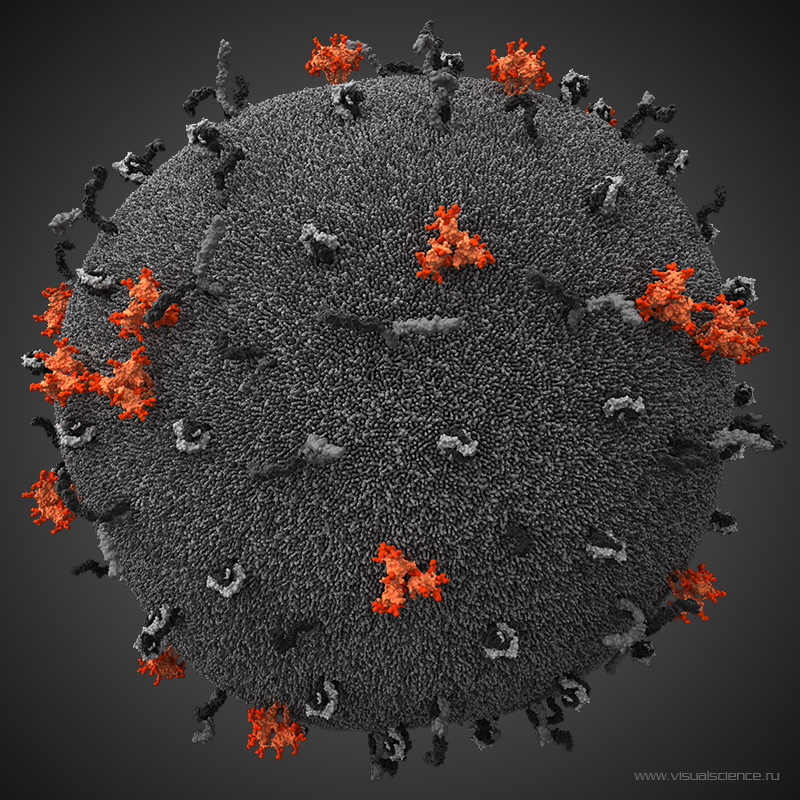
Influenza Virus

Most bacterial infections can be treated with antibiotics such as penicillin, discovered decades ago. However, such drugs are useless against viral infections, including influenza, the common cold, and deadly hemorrhagic fevers such as Ebola.

Now, in a development that could transform how viral infections are treated, a team of researchers at MIT’s Lincoln Laboratory has designed a drug that can identify cells that have been infected by any type of virus, then kill those cells to terminate the infection.

Viruses are notoriously difficult to treat- technically, they aren’t “alive” so there’s not an effectively good way to “kill” them. Killing the specific cells in which they reside seems like a good place to start- and also has implications for the treatment of cancer, HIV- any disease which starts with an infected or mutated cell.

Read the full article here.

Study: Simple Changes To Dating Sites Could Lower STD’s, HIV

Simple Changes to Dating Websites Could Decrease Spread of HIV and Sexually Transmitted Diseases

A study released today recommends eight ways to reduce transmission of HIV and other sexually transmitted diseases (STDs) among men who meet male sex partners online.

Owners of popular dating and “hook-up” websites and users of those websites, along with HIV and STD program directors, agreed that a few simple measures could have a major impact on the spread of sexually transmitted diseases.

Among the online measures supported by a majority of those surveyed:

• Including “safe sex” as a profile option and allowing users to search for partners by such characteristics
• Providing directories of STD testing locations
• Sending automatic reminders to get an HIV/STD test at regular intervals chosen by users
• Having chat-rooms and other areas for HIV+ men looking for other HIV+ men
• Providing e-cards to notify partners of a potential exposure to STDs
• Posting videos that show men discussing safe sex, HIV status, and related issues
• Providing access to sexual health experts

“Finding sex and love online is here to stay,” said Dan Wohlfeiler, one of the study’s authors working with the California HIV/STD Prevention Training Center for this project. “This shows how we can work with the website owners to turn the internet into a force for the health of their users.”

In California, gay and bisexual men who were diagnosed with syphilis or gonorrhea most frequently reported the Internet as where they met sex partners.

More than 3000 users, 82 state and local HIV and STD Program directors and 18 owners of dating and “hook-up “ websites completed the survey.

Jen Hecht, Education Director at STOP AIDS Project and co-author, said “Since all three groups agree these strategies are important, can be done, and would be used, we need to be getting them online now.”

The study also found a number of strategies with less support. Website owners expressed skepticism about health department staff going online to notify users that they might have been exposed to an STD. In contrast, a majority of HIV and STD prevention directors and users thought this strategy was important. The authors are planning follow-up meetings with owners to further understand their concerns.“We have rising rates of STDs among gay and bisexual men and turning that around means everyone needs to take responsibility for their sexual health,” said Bill Smith, Executive Director of the National Coalition of STD Directors (NCSD). “This study shows how public health professionals, as well the users and owners of sex seeking websites, can band together to make a real difference in securing the sexual health of gay men.”

The study, entitled “How Can We Improve HIV and STD Prevention Online for MSM” funded by amfAR, the Foundation for AIDS Research, was co-authored by H. Fisher Raymond and Willi McFarland at the San Francisco Department of Public Health. The results have been posted today at http://www.stopaids.org/online.

2011 GAY/BI HIV+ Men’s Health Retreat


To register, click here.


ADAP Waiting List Passes 9,000


As of August 4th – and for the first time ever – the number of people lingering on AIDS Drug Assistance Program wait lists passed 9,000. A total of 9,039 people in 13 states are now unable to access their medications via the programs, which provide drugs to under and un-insured individuals who are not eligible for other programs such as Medicaid. What’s more, Alabama, which already had a wait list, has reduced its program’s formulary, while Illinois, which already had expenditure caps, has lowered its program’s financial eligibility to 300% the Federal Poverty Level. This brings the total number of states that have enacted “cost-containment” measures to eighteen, plus Puerto Rico.

For more information on the nation’s ADAP crisis, visit www.ADAPaction.org.

Disease and Dad

From my friend Mark S King over at My Fabulous Disease comes this gem:

The descriptions of his decline, in whispered calls from back home, had a dreadfully familiar feel to them. Weight loss at a frightful pace. Losing interest in the world. Suddenly looking very old indeed. Most gay men of a certain age have heard those words, have seen the patient, have buried the friend. This case was different, though. It wasn’t AIDS, it was cancer.

And the patient was Dad.

Dad and Mark

The disease had swept rapidly through my father since his initial diagnosis. The inevitable was approaching, but the territory was completely unfamiliar to my family, who hadn’t seen a death in more than 30 years. They were about to get a tour through hell. I have traveled it many times.

Amazing take- especially since losing my own mom in April….
Read the full story here.

Survey Time!

I am always interested in helping researchers understand HIV+ persons, our treatment and the ways we live with our disease. So when I run across them, I like to bring them to your attention.

You are invited to participate in a research project entitled: “Impact of physician communication on HIV/AIDS patients.”
You will be asked about your experiences communicating with your doctor.
This questionnaire will also ask you about your demographic information as well as your HIV/AIDS treatment.

Take the survey here.

Thought You Didn’t Have To Worry About Hepatitis C?

Hot on the heels of Godzilla Gonorrhea, comes further buzzkill from Science Daily:

Sexual transmission of hepatitis C virus (HCV) is considered rare. But a new study by researchers at Mount Sinai School of Medicine, working with the Centers for Disease Control and Prevention (CDC), provides substantial evidence that men with HIV who have sex with other men (MSM) are at increased risk for contracting HCV through sex.

Yeah. I know- what next? And while it bears further watching, it’s still not the end of the world:

“While hepatitis C is rarely transmitted among stable heterosexual couples, this is clearly not the case among HIV-infected MSM in New York City,” said Dr. Daniel Fierer, Assistant Professor of Medicine and Infectious Diseases at Mount Sinai School of Medicine. “MSM, and to some extent their health care providers are generally not aware that having unprotected receptive sex can result in HCV infection. The good news is that the cure rate for new HCV infections is very high with early treatment, but without regular testing of the men at risk, these largely asymptomatic infections may be missed and this opportunity lost.”
“Our study suggests that HIV-infected MSM should take steps to protect themselves and others by using condoms. Also, health care providers should be screening these men for hepatitis C, and public education and outreach programs should include information about these risks,” Dr. Fierer concluded.

And if you think you’re at risk, (for more info, click this link) you should talk to your healthcare provider and/or ask to be tested.

Your health is YOUR health. Advocate for it.

HIV: Treatment is Prevention

Today’s New England Journal of Medicine has an excellent research study on HIV, entitled Preventing HIV-1 Infection with Antiretroviral Therapy.

Scott Hammer,MD, in an editorial for the journal, gives a brief overview of the study:

In this issue of the Journal, Cohen et al. describe the results of the HIV Prevention Trials Network (HPTN) 052 study, which has now provided definitive proof that (as suggested by the findings of previous cohort studies) antiretroviral treatment reduces the rate of sexual transmission of HIV-1.

Did you hear that? Definitive proof.

Early antiretroviral treatment not only significantly lowers the risk of transmitting the virus, it also shows increased health benefits for the HIV infected. The conclusions by the research team in the article:

In conclusion, the biologic plausibility of the use of antiretroviral therapy for the prevention of HIV-1 infection has been carefully examined during the past two decades. The idea of HIV-1 treatment as prevention has garnered tremendous interest and hope and inspired a series of population-level HIV-1 treatment-as-prevention studies that are now in the pilot or planning stages. Such interventions are based on the hypothesis that the use of antiretroviral therapy reliably prevents HIV-1 transmission over an extended period of time. In this trial, we found that early antiretroviral therapy had a clinical benefit for both HIV-1–infected persons and their uninfected sexual partners. These results support the use of antiretroviral treatment as a part of a public health strategy to reduce the spread of HIV-1 infection. (emphasis mine)

This is science at work. Get tested. If you’re HIV-positive, get into care and take your meds. We can slow this thing down.

Money quote from Dr Hammer:

Antiretroviral therapy is by no means perfect and is not the ultimate answer to controlling and ending the HIV epidemic. Adverse events, emergence of drug-resistant viral strains, maintenance of adherence, sustainability, and cost are just some of the concerns. However, this is precisely the wrong time to limit access to antiretroviral therapy in resource-limited settings, since we have the tools in hand to maintain or restore health in infected persons and reduce transmission to their sexual partners.

Yep.
So now that we know, will anything happen?

(PS- the picture above is of my morning pills)

Common Lab Tests for HIV+ Persons- And Why You May Need Them

HIV-infected persons have a lot to deal with. There’s a lot to know about this disease- and it can be overwhelming. It can be hard to think about- and even harder to talk about. Because it can be overwhelming, we may often simply let our healthcare providers do what they think is best for us.

But I think and have seen- both as an HIV+ person and as a mental health professional- that a proactive stance by a patient is more likely to decrease feelings of depression, helplessness and fear, and increase feelings of strength, health and well-being.

Knowledge is power- and knowing about your disease only helps your healthcare provider give you more excellent care. Plus, knowledge of the truth can help defeat the head-gremlins that want to prey on our deepest fears…. Your medical provider may be an expert in diagnosis, but you are the expert on your own body. Unless you both work together, diagnosis and treatment can become extremely difficult- and frustrating for you both.

To that end, I’ve scoured the internet, and created a brief HIV lab test information sheet. This is a conversation starter- and perhaps, a self-education starter. There is also a link to the printable document at the end of the piece. Print it out, take it to your doctor (or PA or ARNP) at your next visit and ask them what they think.

Treatment is a team effort. So if you’re on the bench wishing you were anywhere else but here, maybe it’s time to get in the game with the rest of your team. The win may be up to you.

Types of Lab Tests for HIV+ Persons- and Why You May Need Them

Once you have tested positive for HIV, your HIV care provider will probably ask you to take a number of laboratory tests as part of your routine care. This sheet is only the beginning to a conversation with your healthcare provider. Please discuss all of these tests with your provider, and what role they play in your care.  (Feel free to copy and bring it with you to medical appointments) The list may include:

  • CD4/T-cell count*: A count of your CD4 cells gives a general measure of the health of your immune system, and is a good measurement of immunosuppression. A normal CD4 cell count is more than 500 cells per cubic millimeter (mm3) of blood. If you have a CD4 count of fewer than 200/mm3, you will be diagnosed as having AIDS. Why it’s important: This is a good measure of your risk of opportunistic infections and the strength of your immune system. It will give you and your healthcare provider the information you need to decide the best way to treat your HIV disease.
  • CD4 Percentage*: This measures how many of your lymphocytes (types of white blood cells) are actually CD4 cells. This measurement is more stable than CD4 counts over a long period of time, and, for most people, the CD4 percentage remains a more reliable measure of immune function than CD4 count. Why it’s important: This measurement is a more reliable snapshot and is less likely to vary in between blood tests than CD4 counts (which can vary from month to month or day to day).
  • Viral Load (VL)*: This test measures the amount of HIV in your blood.
Why it’s important: The goals of HIV treatment are to keep your viral load at undetectable levels and to keep your CD4 count high. A viral load test offers a good indicator of how well your treatment is working to achieve those goals.
  • Complete Blood Count (CBC)*: This is a measure of the concentration of red blood cells, white blood cells, and platelets in a sample of your blood.
Why it’s important: A CBC is one of the most commonly ordered blood tests. It can reveal infections, anemia (abnormality in your red blood cells), and other medical issues.
  • Serum Chemistry Panel*: This test helps provide information about your body’s metabolism. It gives your doctor information about how your kidneys and liver are working, and can be used to evaluate your blood sugar levels, calcium levels, etc.
Why it’s important: Some HIV medications can have serious side effects, and this test helps your healthcare provider to monitor the impact of your medications on your body’s ability to function normally.
  • Fasting Lipid Panel (Cholesterol and Triglycerides)**: These tests measure your total cholesterol level, as well as give you information about the different types of fat proteins in your body.
Why it’s important: Some HIV medications can affect your cholesterol levels and the way your body processes and stores fat. This can make you prone to other medical problems, including heart problems.
  • Fasting Glucose (blood sugar)**: This test measures your blood sugar levels to check for signs of pre-diabetes or diabetes.
Why it’s important: Some HIV medications can affect blood sugar levels, potentially leading to complications like diabetes.
    (key: *usually every 3 months, **usually every 6 months)

    In addition, there are additional tests that may be done less frequently, but are still important for the maintenance of your health.  These include:

  • Sexually Transmitted Disease (STD) Screening: These screening tests check for syphilis, gonorrhea and chlamydia.
Why it’s important: Having an STD, can make it easier to pass HIV to others. Untreated STDs can also be damaging to your own immune system.
  • PAP Smear (Cervical and Anal): This is a screening test for abnormal cells that could become cancerous. It involves using a swab to take cell samples directly from the cervix and anus.
Why it’s important: For women living with HIV, abnormal cell growth in the cervix is common, and abnormal anal cells are common for both men and women who are HIV-positive. These abnormal cells may become cancerous if they aren’t treated.
  • Hepatitis A, B, and C tests: These blood tests check for current or past infection with Hepatitis A, B, or C…
Why it’s important: Some people who are living with HIV are also co-infected with hepatitis. Checking you for hepatitis A, B, and C can help your provider to determine if you need to be treated, or if you are a candidate for one of the existing hepatitis vaccines.
  • Tuberculosis (TB) Skin Test: This skin test checks for exposure to TB. A positive skin test does not mean you have active TB, but it means you will need further evaluation and possible treatment.
Why it’s important: Untreated TB can be a deadly disease for people living with HIV. Early screening and treatment will help limit your risk of severe illness, as well as lower your chances of transmitting TB to others if you do have it.
  • Toxoplasmosis Screening: This test checks for exposure to a parasite that can cause severe damage to the brain, eyes, and other organs in people with weakened immune systems.
Why it’s important: Toxoplasmosis can be a deadly opportunistic infection for people living with HIV. Your clinician needs to know if you have been exposed to the parasite that causes toxoplasmosis or are at risk for exposure. This will help your healthcare provider to decide if you need preventative treatment. If your CD4 count falls below 100/mm3, you will probably need to do another screening, even if your earlier screens were negative.
  • Vitamin D levels: This test checks for vitamin D levels in the blood. Why it’s important: Vitamin D is vital for bone health, and there is some evidence that people with HIV need more vitamin D. Some patients are at risk for bone loss from medication, lifestyle or both. Vitamin D levels can be checked easily and deficiencies can be simply treated.
  • Testosterone screening: This test checks for levels of testosterone in the blood. Why it’s important: Low testosterone can be an effect of HIV, HIV medications, or both. Some men remain relatively unaffected, but a baseline of testosterone levels at diagnosis can help with diagnosing a decreasing testosterone levels during HIV treatment. Symptoms of low testosterone include fatigue and low libido. Treatment is replacement therapy with patches, injections or gel.

In addition, you and your provider should talk about ANY symptoms you may be noticing or experiencing such as sleeplessness, fatigue, anxiety, loss of appetite. These may be signs of depression or other issues common to people with chronic illness which you can address together- and which can sometimes be easily alleviated. You do not have to suffer- and a good relationship with your medical provider is a great step to living with HIV- not suffering from HIV.

Give your healthcare provider this number for the UCSF WARMLINE for them to discuss HIV treatment issues, concerns or education with healthcare experts:
1-800-933-3413.   -Even doctors need support!

Sources: http://aids.about.com/od/newlydiagnosed/qt/cbc.htm,
http://www.thebody.com/content/art50043.html, http://labtestsonline.org/understanding/conditions/hiv?start=1, http://www.thewellproject.org,
http://aids.gov/hiv-aids-basics/diagnosed-with-hiv-aids/understand-your-test-results/types-of-lab-tests/  

Click for a printable copy of  Types of Lab Tests and Why They Are Important

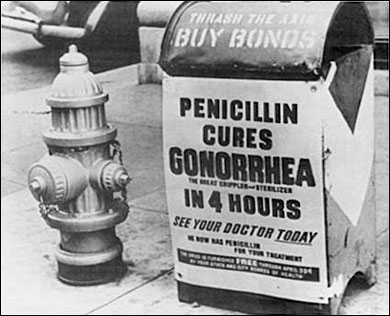
Gonorrhea: Not So Easy To Kill Anymore

Not anymore. . .

Think if you get the clap, you can just go get a shot or take a pill to be cured?

Not so fast, bucko. There’s now another reason to protect yourself:

Today, the Centers for Disease Control and Prevention (CDC) outlined laboratory trends from 2000-2010 that show growing resistance of gonorrhea to antimicrobials.  Gonorrhea, a sexually transmitted disease (STD), is a major cause of pelvic inflammatory disease, ectopic pregnancy, and infertility and can facilitate HIV transmission. (Press release, National Coalition of STD Directors)

Yep. Gonorrhea. It used to be a serious disease, before antibiotics made it easy to treat. Now that we’ve been taking antibiotics for everything, resistance is setting in and we’re running out of effective drugs to cure it.

…cephalosporin antibiotics are the last line of defense for treating the disease, as the bacteria has developed resistance to all other antibiotics.  The highest level of resistance to cephalosporins, regardless of sexual partner, was found in the Western region of the United States, particularly Hawaii and California, as well as in men who have sex with men in all regions.

“This new data outlines what state and local health departments have been seeing on the ground—that highly untreatable gonorrhea is near,” stated William Smith, Executive Director of the National Coalition of STD Directors. “There are currently no new drugs in development for this infection.  If this last class of drugs fails we will have no definitive treatment options for gonorrhea.  We call on researchers, government, and partners in industry to make the development of new, effective drug treatments for gonorrhea a public health priority,” continued Smith.

This is a big deal.

It’s important for sexually active persons to be screened for all STD/STI’s at least every six months, or more often if you have many sexual partners and/or have had unprotected sex- and that includes oral- gonorrhea can easily infect the throat. And, remember, any STD/STI increases the risk of contracting/spreading HIV. From the CDC:

Untreated gonorrhea can cause serious and permanent health problems in both women and men.

In women, gonorrhea is a common cause of pelvic inflammatory disease (PID). About 750,000 women each year in the United States develop PID. The symptoms may be quite mild or can be very severe and can include abdominal pain and fever. PID can lead to internal abscesses (pus-filled “pockets” that are hard to cure) and long-lasting, chronic pelvic pain. PID can damage the fallopian tubes enough to cause infertility or increase the risk of ectopic pregnancy. Ectopic pregnancy is a life-threatening condition in which a fertilized egg grows outside the uterus, usually in a fallopian tube.

In men, gonorrhea can cause epididymitis, a painful condition of the ducts attached to the testicles that may lead to infertility if left untreated.

Gonorrhea can spread to the blood or joints. This condition can be life threatening. In addition, people with gonorrhea can more easily contract HIV, the virus that causes AIDS. HIV-infected people with gonorrhea can transmit HIV more easily to someone else than if they did not have gonorrhea. (emphasis mine)

We’ve taken the cure for granted for too long. So- be careful out there.

Full article here.