Seven Ways To Save On HIV Meds

Mark S King over at My Fabulous Disease has some excellent ways to save on medication costs for HIV+ persons. Excerpt:

With all the doctor appointments and wellness activities we engage in, living with HIV/AIDS can be a full-time job. And the truth is, it doesn’t pay very well. We’ve all been feeling the pinch of tough economic times. So I hope you’ll find some savings in this new video blog, “7 Ways to Save Money on Meds.”

Jason King, a pharmacy specialist and patient advocate at AIDS Healthcare Foundation in Ft Lauderdale, was kind enough to give me a tour of their “Out of the Closet” thrift store and then sit down to discuss ways to save money that your pharmacist might not be telling you.

Really Helpful Stuff. Read the rest.

Common Lab Tests for HIV+ Persons- And Why You May Need Them

HIV-infected persons have a lot to deal with. There’s a lot to know about this disease- and it can be overwhelming. It can be hard to think about- and even harder to talk about. Because it can be overwhelming, we may often simply let our healthcare providers do what they think is best for us.

But I think and have seen- both as an HIV+ person and as a mental health professional- that a proactive stance by a patient is more likely to decrease feelings of depression, helplessness and fear, and increase feelings of strength, health and well-being.

Knowledge is power- and knowing about your disease only helps your healthcare provider give you more excellent care. Plus, knowledge of the truth can help defeat the head-gremlins that want to prey on our deepest fears…. Your medical provider may be an expert in diagnosis, but you are the expert on your own body. Unless you both work together, diagnosis and treatment can become extremely difficult- and frustrating for you both.

To that end, I’ve scoured the internet, and created a brief HIV lab test information sheet. This is a conversation starter- and perhaps, a self-education starter. There is also a link to the printable document at the end of the piece. Print it out, take it to your doctor (or PA or ARNP) at your next visit and ask them what they think.

Treatment is a team effort. So if you’re on the bench wishing you were anywhere else but here, maybe it’s time to get in the game with the rest of your team. The win may be up to you.

Types of Lab Tests for HIV+ Persons- and Why You May Need Them

Once you have tested positive for HIV, your HIV care provider will probably ask you to take a number of laboratory tests as part of your routine care. This sheet is only the beginning to a conversation with your healthcare provider. Please discuss all of these tests with your provider, and what role they play in your care.  (Feel free to copy and bring it with you to medical appointments) The list may include:

  • CD4/T-cell count*: A count of your CD4 cells gives a general measure of the health of your immune system, and is a good measurement of immunosuppression. A normal CD4 cell count is more than 500 cells per cubic millimeter (mm3) of blood. If you have a CD4 count of fewer than 200/mm3, you will be diagnosed as having AIDS. Why it’s important: This is a good measure of your risk of opportunistic infections and the strength of your immune system. It will give you and your healthcare provider the information you need to decide the best way to treat your HIV disease.
  • CD4 Percentage*: This measures how many of your lymphocytes (types of white blood cells) are actually CD4 cells. This measurement is more stable than CD4 counts over a long period of time, and, for most people, the CD4 percentage remains a more reliable measure of immune function than CD4 count. Why it’s important: This measurement is a more reliable snapshot and is less likely to vary in between blood tests than CD4 counts (which can vary from month to month or day to day).
  • Viral Load (VL)*: This test measures the amount of HIV in your blood.
Why it’s important: The goals of HIV treatment are to keep your viral load at undetectable levels and to keep your CD4 count high. A viral load test offers a good indicator of how well your treatment is working to achieve those goals.
  • Complete Blood Count (CBC)*: This is a measure of the concentration of red blood cells, white blood cells, and platelets in a sample of your blood.
Why it’s important: A CBC is one of the most commonly ordered blood tests. It can reveal infections, anemia (abnormality in your red blood cells), and other medical issues.
  • Serum Chemistry Panel*: This test helps provide information about your body’s metabolism. It gives your doctor information about how your kidneys and liver are working, and can be used to evaluate your blood sugar levels, calcium levels, etc.
Why it’s important: Some HIV medications can have serious side effects, and this test helps your healthcare provider to monitor the impact of your medications on your body’s ability to function normally.
  • Fasting Lipid Panel (Cholesterol and Triglycerides)**: These tests measure your total cholesterol level, as well as give you information about the different types of fat proteins in your body.
Why it’s important: Some HIV medications can affect your cholesterol levels and the way your body processes and stores fat. This can make you prone to other medical problems, including heart problems.
  • Fasting Glucose (blood sugar)**: This test measures your blood sugar levels to check for signs of pre-diabetes or diabetes.
Why it’s important: Some HIV medications can affect blood sugar levels, potentially leading to complications like diabetes.
    (key: *usually every 3 months, **usually every 6 months)

    In addition, there are additional tests that may be done less frequently, but are still important for the maintenance of your health.  These include:

  • Sexually Transmitted Disease (STD) Screening: These screening tests check for syphilis, gonorrhea and chlamydia.
Why it’s important: Having an STD, can make it easier to pass HIV to others. Untreated STDs can also be damaging to your own immune system.
  • PAP Smear (Cervical and Anal): This is a screening test for abnormal cells that could become cancerous. It involves using a swab to take cell samples directly from the cervix and anus.
Why it’s important: For women living with HIV, abnormal cell growth in the cervix is common, and abnormal anal cells are common for both men and women who are HIV-positive. These abnormal cells may become cancerous if they aren’t treated.
  • Hepatitis A, B, and C tests: These blood tests check for current or past infection with Hepatitis A, B, or C…
Why it’s important: Some people who are living with HIV are also co-infected with hepatitis. Checking you for hepatitis A, B, and C can help your provider to determine if you need to be treated, or if you are a candidate for one of the existing hepatitis vaccines.
  • Tuberculosis (TB) Skin Test: This skin test checks for exposure to TB. A positive skin test does not mean you have active TB, but it means you will need further evaluation and possible treatment.
Why it’s important: Untreated TB can be a deadly disease for people living with HIV. Early screening and treatment will help limit your risk of severe illness, as well as lower your chances of transmitting TB to others if you do have it.
  • Toxoplasmosis Screening: This test checks for exposure to a parasite that can cause severe damage to the brain, eyes, and other organs in people with weakened immune systems.
Why it’s important: Toxoplasmosis can be a deadly opportunistic infection for people living with HIV. Your clinician needs to know if you have been exposed to the parasite that causes toxoplasmosis or are at risk for exposure. This will help your healthcare provider to decide if you need preventative treatment. If your CD4 count falls below 100/mm3, you will probably need to do another screening, even if your earlier screens were negative.
  • Vitamin D levels: This test checks for vitamin D levels in the blood. Why it’s important: Vitamin D is vital for bone health, and there is some evidence that people with HIV need more vitamin D. Some patients are at risk for bone loss from medication, lifestyle or both. Vitamin D levels can be checked easily and deficiencies can be simply treated.
  • Testosterone screening: This test checks for levels of testosterone in the blood. Why it’s important: Low testosterone can be an effect of HIV, HIV medications, or both. Some men remain relatively unaffected, but a baseline of testosterone levels at diagnosis can help with diagnosing a decreasing testosterone levels during HIV treatment. Symptoms of low testosterone include fatigue and low libido. Treatment is replacement therapy with patches, injections or gel.

In addition, you and your provider should talk about ANY symptoms you may be noticing or experiencing such as sleeplessness, fatigue, anxiety, loss of appetite. These may be signs of depression or other issues common to people with chronic illness which you can address together- and which can sometimes be easily alleviated. You do not have to suffer- and a good relationship with your medical provider is a great step to living with HIV- not suffering from HIV.

Give your healthcare provider this number for the UCSF WARMLINE for them to discuss HIV treatment issues, concerns or education with healthcare experts:
1-800-933-3413.   -Even doctors need support!

Sources: http://aids.about.com/od/newlydiagnosed/qt/cbc.htm,
http://www.thebody.com/content/art50043.html, http://labtestsonline.org/understanding/conditions/hiv?start=1, http://www.thewellproject.org,
http://aids.gov/hiv-aids-basics/diagnosed-with-hiv-aids/understand-your-test-results/types-of-lab-tests/  

Click for a printable copy of  Types of Lab Tests and Why They Are Important

Disturbed? Run For Office!

A friend recently drew my attention to some of the similarities between the recently announced KKK GOP Congressional candidate in Montana and some of the extremist members of the Republican Party in the Montana Legislature. I thought I’d share a few with you. So, just to catch you up:

John Abarr, a former organizer for the KKK, filed to run in the Republican primary for Montana’s congressional seat on May 25, 2011. (More info here: http://helenair.com/news/article_613dd194-8cdc-11e0-9dfc-001cc4c002e0.html)

Abarr’s ties to the KKK have been well documented. Of his affiliation with the Klan, he has said:

“It’s not any different than the NAACP,” he says. “The Klan is basically a civil rights organization that stands up for the rights of white people. The Montana Human Rights Network likes to blow everything out of proportion.”

Gotta love the logic. Republicans, such as gubernatorial candidate Rick Hill have tried to distance themselves from this guy.  However, after this legislative session in Montana, it’s hard to deny the fact that he is well within the extremist wing of the Republican party.

LGBT Issues

Abarr has also called for the deportation of gays, lesbians and Jewish people: http://missoulanews.bigskypress.com/missoula/etc/Content?oid=1133942 And, as I’ve reported numerous times, the Montana Republican Party Platform calls for the re-criminalization of gay people in the state:

“We support the clear will of the people of Montana expressed by legislation to keep homosexual acts illegal.”

During the Legislative session, Republicans refused to remove language that had been ruled unconstitutional by both the state and federal supreme courts calling for the criminalization of gays and lesbians from Montana law. And they made  disgusting comments on the bill :

 Some Republicans even denied that the courts had struck down the statute

HIV/AIDS

According to the Human Rights Network, Abarr sent a flier to the Bozeman Daily Chronicle in 2007, urging Bozeman residents to stay inside to avoid contracting HIV during the Montana Pride Celebration. He claimed that HIV could be transmitted by air. 

During the most recent legislative session, Republican House Speaker Pro Tempe, Rep. Janna Taylor claimed people in prison were spreading HIV by blowdarts: http://www.youtube.com/watchv=igYKflAdzjo&feature=channel_video_title

Racial Minorities

Abarr said of his choice to move to Montana:

“I’ve pretty much decided since I spent some time in California that it (a pure white Christian nation) is just not gonna be. I mean there’s so many of them (racial minorities),” Abarr says, adding that in Montana it’s easier to achieve an all-white society.”

Republican Rep. James Knox introduced a bill that would redefine what a citizen of Montana is and essentially ignore the 14th Amendment to the US Constitution. This bill would have likely removed citizenship from Native Americans and the children of immigrants in the state.

Convinced? I’ll bet there’s more if you look.

The key to redefining politics in this state is to redefine politicians. We effectively tied the hands of the most effective tool (building relationships) by enacting term limits. There is no longer any reason for any of our state legislators to cultivate relationships for the good of the people of the State of Montana- instead, people are just interested in ramming their own crazy-ass agendas through the legislative process.

Reason will only prevail when we elect reasonable people- people who are interested in communicating, are not threatened by differences and will work to guarantee a future in this state for all its people- not just a few…

Low Vitamin D Levels Associated With Rapid HIV Progression

From AIDSMeds.com:

HIV-positive people with very low vitamin D levels were more likely to develop AIDS and to die than people with higher vitamin D levels, according to a study published online January 25 in the journal AIDS.

Low vitamin D levels have been found in numerous studies in HIV-negative people to be associated with serious illnesses, including cardiovascular disease, cancer, diabetes and kidney failure. What’s more, a number of recent studies have found that the proportion of people with HIV who have low vitamin D levels is quite high, with fewer than a quarter in some studies having ideal levels.

…and so it’s always a good idea to have your Vitamin D level checked regularly with your doctor, whether you’re HIV+ or not. More on Vitamin D can be found here.

And  read the full story from AIDSMeds.com here. 

Another Reason To Start HIV Treatment Sooner?

Science Daily is reporting on a study by UC San Francisco that indicates that the rate of infection among men who have sex with men (MSM) could be significantly reduced by treating HIV immediately upon diagnosis and expanding HIV testing:

If HIV-infected adults in San Francisco began taking antiretroviral treatments as soon as they were diagnosed, the rate of new HIV infections among men who have sex with men would be cut by almost 60 percent over five years….

The finding is published in the April 15, 2011 issue of Clinical Infections Diseases.

The decision of when to begin treatment with antiretroviral drugs is a subject of some debate, with the experts evenly split on whether to begin antiretroviral therapy immediately upon HIV diagnosis or waiting until a patient’s CD4 cell count drops below 500 cells per microliter….”Our clinicians recommended initiating antiretroviral therapy to all of our HIV positive patients based on our assessment that delaying treatment allows the virus to do damage to major organs systems and would lead to poorer outcomes for patients. It is too early to tell if this shift in treatment strategy last year by our clinic and the Department of Public Health has had any impact in preventing HIV infections,” said (study co-author) Havlir.

Starting retroviral treatment early makes sense- it reduces the risk of transmission significantly and probably keeps people healthy and alive longer. And isn’t that the point?

Read the full article here.

University of California – San Francisco (2011, April 13). HIV rate in San Francisco could be cut sharply with expanded treatment, study predicts. ScienceDaily. Retrieved April 15, 2011, from http://www.sciencedaily.com/releases/2011/04/110413093219.htm

End The Ban On HIV+ Organ Donation?

When I was diagnosed with HIV, a friend said “You’re an organ donor aren’t you? You’d better change that.”

I agreed, and changed my driver’s license organ donor status (goodbye, little red heart!). But in the back of my mind I wondered “Why couldn’t I donate to other HIV+ people should they need it? Surely having an infected organ and a few more years of life would be worth it.” Especially now, when HIV (unlike, say Hepatitis C) is a very medically treatable disease. Not a picnic, but neither is renal failure

Is it worse to have HIV than having to undergo weekly dialysis? Or to have a heart that works, or a liver, etc.? And if you already have HIV and need an organ, does it make sense that HIV+ donors be excluded?

Now it seems the feds are starting to think about the same things. According to The New York Times, The Centers For Disease Control And Prevention are about to issue new guidelines that will allow the study of HIV+ organ donation and transplantation.

It’s about time. Literally.

What do you think? If it were about saving your life, would you accept an HIV+ organ?

Statins May Benefit Persons with HIV

Persons with HIV often take statins to combat high cholesterol levels caused by taking certain HIV Meds, but a new study suggests statins could benefit HIV+ persons by lowering inflammation and calming the immune system.
It may be a low cost way to lower the damaging effects of HIV in the human body. Read it here.

World AIDS Day: A Need To Remember

Because I think it’s still relevant, I’m reprinting (with a few updates) my column for World AIDS Day from last year. I may just continue to do so as long as it still makes sense….
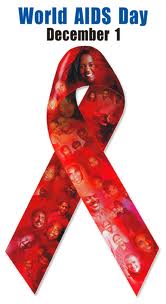

Remember when World AIDS Day used to be important?

I do.

I remember December 1st as a day when people gathered in terror and grief with candles and tears listening to words that couldn’t begin to touch the pain and anger and sadness.

I remember when it was a time for all kinds of people to gather together, people that probably wouldn’t be in the same room for any other reason. At World AIDS Day services in the early Nineties, I remember seeing queer activists, quietly closeted gay men and women, Episcopal and Catholic priests, Native American leaders, Protestant ministers, atheists, nuns and agnostics. I saw elected officials, Republicans and Democrats, wheelchair-bound elderly, parents, children, nurses, doctors, cowboys, lawyers, accountants, little old ladies and, once, a rodeo clown. All coming together, all looking for comfort and hope and compassion among others who could maybe understand.

We don’t really do that now. And maybe it’s okay that we don’t.
Maybe it’s good that the terror I remember so vividly on the faces of  friends and complete strangers is no longer there. Maybe it’s good that people aren’t dying so fast and so painfully, isolated and afraid. Maybe it’s good that we’re not so traumatized by fear and grief and anger.

Maybe.

Is terror a good thing? Is a painful death beneficial? Is emotional trauma something to be longed for?

No. But I have to say, those scenes of suffering and bravery certainly helped capture the zeitgeist of the Eighties and Nineties. It helped keep AIDS in our collective consciousness. Drama and fear and compassion fueled activism and grassroots movements and the formation of community-based organizations. AIDS was overwhelmingly real. It was dramatic. It went to the Oscars, the Emmys, the Grammys and the Tonys. And it won. More than once.

So I’m not sure if it’s a good thing that HIV isn’t such a drama queen anymore. Not to say that I want people to suffer needlessly. I don’t. I just happen to think we’re not paying attention because it’s no longer hip, sexy, avant-garde and noble to do so. I think that our short attention spans need to be constantly reminded. And, there’s really not a lot of spectacular theatrics to grab our attention today. Well, not compared to the past.

But, trust me, it’s still there. There are some rather dramatic facts to consider:

  • People are still being infected. In the U.S. there are over fifty thousand new diagnoses a year. The CDC estimates that one in five persons with HIV doesn’t know it. That means they may not be protecting their sexual partners out of ignorance. That means more HIV.
  • Gay men, and/or Men who have Sex with Men (MSM) account for more than half of all new infections each year, and MSM is the only risk group in the country whose infections are increasing. MSM account for nearly half of all persons living with HIV in the United States today. Nearly half. And those are just the ones we know about. That means that for all the talk we hear about “AIDS is not a gay disease,” it is. That means sexually active MSM are having sex with HIV+ partners statistically more often than any other members of the general population- and being infected. HIV significantly and dramatically lives in the bodies of gay men.
  • HIV strains the budget of every state in the Union. So much so, that states have cut or are considering cuts in funding to drug assistance programs and other HIV support and prevention services. These services keep people alive at a cost of hundreds of millions of dollars a year. More money is needed with every new infection. That money comes out of your taxes.
  • People are still dying. Yes, the drugs help, and people with HIV are living longer lives, but the drugs don’t always work, and HIV mutates. Our immune systems are under a great deal of strain and one serious opportunistic infection can kill. I lost a friend just this year.
  • It’s not over. Families are still being traumatized and our community is being hurt by this epidemic. Here in Montana, with its relatively miniscule gay population, new members joined my HIV+ support group this year,  most are gay men in their twenties- kids, really. All facing a lifetime radically different than they had hoped for.

And those are just some of the many points to consider.

Is it good that people are no longer dying and suffering in such huge numbers? Yes.
Is it good that we no longer gather in great numbers, sharing strong emotions, standing hopefully resolute in the face of pain and suffering and memory? I don’t think so.

Personally, I need to remember these facts and these people, because they’re part of my history, my community, my country and my world. I need to be reminded that my compassion, my voice and my heart are all still relevant. I need to be reminded that I’m not alone, I need to remind others of the same thing. And I think doing it once a year is the least I can do.

That’s why I’ll be going to a World AIDS Day service this year. That’s why I’ll be wearing a red ribbon, holding a candle in the dark, listening to words of grief, bravery and encouragement. To remember, to remind, to regroup.

Because I still think it’s important.