“Where Would I Begin?” Reflections on the Historic filing of the Crawford Case

The historic litigation in the case of M.C. has profound significance for many in the intersex community. Advocates for Informed Choice (AIC) is publishing a series of personal responses to the M.C. litigation. The first in this series is by longtime intersex activist and former AIC staff member Jim Ambrose (formerly Jim Bruce). This piece originally appeared on AIC’s blog, June 5, 2013.

“M.C. will spend the rest of his life paying for his caretakers’ actions.” – Erica K. Landau, Huffington Post

Where would I begin? I asked myself that question every other hour after AIC asked me to submit my reaction to the filing of the Crawford case. Hell, I’m asking it right now. I worked for AIC from 2009 to February, 2013 so I knew this case was coming for a while. That said I had a feeling it wouldn’t get filed, that it’d slip away or rather be taken away. I wasn’t alone in feeling that simply filing the lawsuit, just filing it, would be monumental. Looking back it was kind of like when an 8 year-old thinks Christmas is an oasis (7 months away!), too far off to comprehend day-to-day and so the kid resigns himself to childhood drudgery. Because, come on, nothing exists that far in the future least of all everything you ever wanted.

But, on the morning of May 14, 2013 The Southern Poverty Law Center (SPLC) and Advocates for Informed Choice issued a press release detailing how a group of professional adults irreparably harmed a child in South Carolina. I gazed at my laptop as a press conference took place right in front of some giant brick courthouse. Attorneys representing a child called M.C. stood in a semi-circle behind a podium, and there was Anne! Anne, who will argue breathlessly that ‘They Might Be Giants’ was the greatest band of the 20thcentury, was right there on the Primetime Live at 5 Eyewitness News! Ever-measured Anne gently explained what she knows she can prove: That what happened to M.C. was unnecessary, arrogant and brutal.

You see, for me, the most difficult aspect of intersex advocacy is making this complex issue understood by any audience. Intersex stuff is nothing but sprawl. It gets everywhere: sex, genitals, going to the bathroom, hormones, clothing, fitting in, not fitting in, showering, sports, inclusion/exclusion, sex again, interpersonal connection, how we all sleep at night, self-determination, the opportunities we give ourselves and take from others and contentment. You know, the basics. These items are hardly approachable because most educated folks often fail to even understand the difference between sex and gender. So tell me how a kid is to know what a numerator is if they struggle to count to 10?

So, then two of the bravest people I may ever know did something most intersex advocates (myself included) thought could never happen. They stood in front of cameras, on record, in their son’s hometown and demanded justice. Pam and Mark Crawford denounced the needless removal of their son’s genitals and reproductive organs as “a careless and reckless action,” and that the State of South Carolina “disfigured (M.C.) because they could not accept him for who he was.” When I glanced down to watch the seconds peel away on the web clip I noticed my hands and knees were trembling. No. I was shaking all over. That’s when I realized Pam bears a passing resemblance to my own mother. My mother has that red hair, those sturdy-yet-stylish eyeglasses, and a voice that tells a careful listener suffering is something you do alone.

The thing is M.C. and I (along with many intersex people) share a similar childhood narrative. We both endured early years of ghastly cosmetic genital surgery, the loss of our reproductive organs and silence. But, M.C. was adopted by the Crawford family. I never saw the inside of an orphanage. M.C. has a sense of self and of his safety. My sense of self was gray, disoriented. I did not feel safe. M.C. has a voice that he uses. I had a voice too, but if I’d shared that voice with my parents I would have told them I was lost. M.C. used his voice to inform his family that he is a boy.

Pam projected her voice. I can hear it as I type: “The adults involved are sending him the message that your body is not acceptable and has to change in order for you to be loved.” I know how true those words are. I, and many intersex advocates, have articulated versions of them to those in power for the past 20 years. But, hey, why should highly-educated clinicians listen to a handful of surgical ingrates? History tells us that appeals for mercy through testimonials of truth and suffering have never been enough to effect institutional change. Those words from a proud and committed mother of an intersex kiddo in front of most of the world are not an appeal for mercy. They are a shot across the bow.

Pam’s unshakeable words found a spot in me I thought I’d grieved out. Out and away. I’d say it was unbearable save for the fact that I knew thousands of other intersex people were witnessing the Crawfords’ demonstration of love and belief in their son. I shared May 14, 2013 with many people, especially the ones no longer with us. And, frankly that experience reminds me how alone I was for so long, how alive I am now and, finally that resilience brings liberation to those residing on the right side of history.

Jim Ambrose is a worker bee at The Interface Project. #justice4mc

Related articles

Montana-based nonprofit to host film + discussion June 26 at the Emerson

By Caitlin Copple

From nearby mine tailings to the products we use every day on our skin, Montanans are part of an uncontrolled chemical experiment on our bodies.  An award-winning documentary film is partnering with a national nonprofit to bring the story of the chemical burden all people carry to Bozeman.

“Unacceptable Levels” will show at 7:30 p.m. on Wednesday, June 26, at the Emerson Theater, located at 111 S. Grand in Bozeman. This event is free and will include a post-film panel discussion. Panelists include Erin Switalski of Women’s Voices for the Earth, Richard Eidlin of the American Sustainable Business Council, and two special guests from the Bozeman area. The idea from the film came from Brown’s experience with his wife as they struggled to become parents.

“I was drinking a glass of water one night at a restaurant where I was working,” Brown said. “There was one thing about it I noticed right away. We’re supposed to drink eight glasses of water a day, but this thing smelled and tasted like a swimming pool. I thought, ‘How could this possibly be okay?’ Then I read that there are ‘acceptable levels’ of chlorine and other contaminants in water. I forgot about it until my wife had her second miscarriage, and that’s when my mind went back to that glass of water. I started thinking, what could conceivably be in that?”

According to Women’s Voices for the Earth, the national organization hosting the event, the average person carries some 200 chemicals in his or her body on any given day. Those chemicals can include hormone disruptors, allergens, and cancer-causing chemicals – and we’re exposed to them from some surprising sources. Women and small children are disproportionately affected by toxic chemical exposure, explains Erin Switalski, executive director of Women’s Voices for the Earth. Switalski will be sharing ways people can avoid these scary chemicals, as well as become involved in convincing the government and corporate conglomerates to eliminate them in household products.

“Unacceptable Levels” examines the results of the chemical revolution of the 1940s through the eyes a father seeking to understand the world in which he and his wife are raising their children. Through interviews with the top minds in the fields of science, advocacy, and law, Brown presents us with the story of how the chemical revolution brought us to where we are, and of where, if we’re not vigilant, it may take us. Learn more at www.unacceptablelevels.com.

Women’s Voices for the Earth is a national organization that works to eliminate toxic chemicals that harm women’s health by changing consumer behaviors, corporate practices and government policies. To learn more, visit www.womensvoices.org.


Tonight: Montana PBS to Air Inlaws & Outlaws!

Some good news for Montana- Inlaws and Outlaws will be screened on Montana PBS tonight.

inlawsFrom the director, Drew Emery:

Montana friends!
Set your DVRs for Sunday night 6/9 10:30 pm: your local PBS station is airing our marriage documentary Inlaws & Outlaws — along with our story update: Just Marriage.

If you believe in love… and equality, please do pass on the word to friends & family!

Drew was in Montana last year, sharing the film with audiences in Helena and Bozeman. It’s an opportunity to see what love looks like up close.

Grab your peeps and watch this- it’s amazing.

Work Full-time For LGBTQ Montanans!

ImageProxy.mvc

If your dream is to work full-time helping to support and develop Montana’s LGBTQ community (and to receive excellent pay and benefits doing so), Pride Foundation has an opening for a full-time Regional Development Organizer (RDO).

This position, previously held by Caitlin Copple, will close soon, so I’d encourage anyone who’s been hesitating to apply ASAP.

The position description is here.

Bozeman Area Community Foundation Searching For A Director

This map shows the incorporated and unincorpor...


A chance to do some good in the Bozeman Area:


A job description for the Foundation Manager is below. Those interested to apply should submit a cover letter, resume and three references to info@bozemanfoundation.org. Electronic submissions only. The Foundation will begin reviewing applications June 15th, and the position will remain open until filled.


Click here for more info: BACF_FdtnMgr_Position_FINAL


Banning Same-sex Marriage Has Psychological Toll

Fascinating stuff from Shankar Vadantam at NPR:

As the country awaits two important Supreme Court decisions involving state laws on same-sex marriage, a small but consistent body of research suggests that laws that ban gay marriage — or approve it — can affect the mental health of gay, lesbian and bisexual Americans. When several states passed laws to prohibit same-sex marriage, for example, the mental health of gay residents seemed to suffer, while stress-related disorders dropped in at least one state after gay marriage was legalized.

Here’s the research trail:

Beginning around 2004, several states banned gay marriage. Just before that series of bans, the National Institutes of Health happened to conduct a massive survey of 43,093 Americans. The questions elicited detailed information about respondents’ mental health. (To validate what people reported about themselves, psychiatrists also interviewed samples of the people in the survey, and their medical diagnoses closely matched the findings of the survey.)

Soon after the wave of state bans on gay marriage, in 2004 and 2005, the NIMH conducted a second round of interviews, managing to reach 34,653 of the original respondents. (That’s a high rate compared with most polls and surveys.)

Mark Hatzenbuehler, a psychologist at Columbia University who studies the health effects of social policies, analyzed the data gathered before and after the bans to determine how the mental health of people who identified themselves as gay, lesbian or bisexual had changed in those states.

Hatzenbuehler and his colleagues Katie McLaughlin, Katherine Keyes and Deborah Hasin published their analysis in 2010 in the American Journal of Public Health.

“Lesbian, gay and bisexual individuals who lived in the states that banned same-sex marriage experienced a significant increase in psychiatric disorders,” Hatzenbuehler says.

“There was a 37 percent increase in mood disorders,” he says, “a 42 percent increase in alcohol-use disorders, and — I think really strikingly — a 248 percent increase in generalized anxiety disorders.”

To put those numbers in perspective, although Hatzenbuehler did find more than a doubling in the rate of anxiety disorders in states that eventually banned gay marriage, in absolute numbers he found that anxiety disorders went from being reported among 2.7 percent to 9.4 percent of gay, lesbian and bisexual people.

The million-dollar question is whether the laws, and the debates around them, were responsible for the change in mental health. To help answer that question, Hatzenbuehler and his colleagues looked at comparable groups and experiences.

“We showed the psychiatric disorders did not increase in lesbian, gay and bisexual populations in states that didn’t debate and vote on same-sex marriages,” Hatzenbuehler says. “There were also no increases — or much smaller increases — among heterosexuals living in the states that passed same-sex marriage bans.”

Hatzenbuehler has also found, in a study conducted in Massachusetts, that gay men experienced fewer stress-related disorders after that state permitted gay marriage.

In a study tracking the health of 1,211 gay men in Massachusetts, Hatzenbuehler found that the men visited doctors less often and had lower health treatment costs after Massachusetts legalized same-sex marriage. When the researchers examined the diagnostic codes doctors were giving the men, they saw a decrease in disorders that have been linked to stress, such as hypertension, depression and adjustment disorders.

Hatzenbuehler says he thinks stress associated with gay-marriage debates was the “X factor.” He says the quantitative data is backed by what gays, lesbians and bisexuals told the surveyors. “They reported multiple stressors during that period,” Hatzenbuehler says. “They reported seeing negative media portrayals, anti-gay graffiti. They talked about experiencing a loss of safety and really feeling like these amendments and these policies were really treating them as second-class citizens.”

Today, about three-dozen states ban gay marriage and about a dozen have passed laws thatapprove it. Some states have laws that permit civil unions but ban gay marriage.

It’s unclear how or whether the upcoming Supreme Court decisions involving the constitutionality of same-sex marriage will affect the mental and physical health of gays and lesbians nationally.

It’s likely that many gay, lesbian and bisexual people would see an upholding of same-sex marriage bans as an example of prejudice. But it’s also possible the debate around the Supreme Court decisions could have different effects on gays than a local debate involving friends and neighbors.

Hatzenbuehler says his larger point is really that policymakers, judicial leaders and ordinary citizens need to remember that social policies are also health policies.


Review: The Miseducation Of Cameron Post

My friend Camille Griep recommended Emily Danforth‘s book, The Miseducation of Cameron Post to me recently. I really had very little idea what it was going to be about, other than something about a teenager. In Montana.

meMiseducation is ostensibly a story about a young teen exploring her sexuality in a conservative, evangelical community where homosexuality is viewed as a sin – and in the aftermath of her parents’ death. And that story is definitely in there. What I was not prepared for was the love letter to Montana. The language is beautiful and lyrical and I felt that landscape in a way I don’t think I ever have in a book. Here’s a taste from the first page:

Miles City had been cooking in the high nineties for days, and it was only the end of June, hot even for eastern Montana. It was the kind of heat where a breeze feels like someone’s venting a dryer out over the town, whipping dust and making the cottonseeds from the big cottonwoods float across a wide blue sky and collect in soft tufts on neighborhood lawns. Irene and I called it summer snow, and sometimes we’d squint into the dry glare and try to catch cotton on our tongues.

I am fascinated by the intersection of sexuality and religion, so it will come as no surprise that I ate up the portion of the book where Cameron gets sent off to a residential ex-gay program. I loved how she described the effect of the program, like dust and lint that just sticks to a gummy hand over time and how hard it is to wash it off.

The longer I stayed at Promise, the more all the stuff they were throwing at me, at us, started to stick, just like to those sticky hands, in little bits, at first, random pieces, no big deal. For instance, maybe I’d be in bed during lights out and I’d start to think about Coley and kissing Coley, and doing more with Coley, or Lindsey, or whomever, Michelle Pfeiffer. But then I might hear Lydia’s voice saying, “You have to fight these sinful impulses: fight, it’s not supposed to be easy to fight sin,” and I might totally ignore it, or even laugh to myself about what an idiot she was, but there it would be in her voice, in my head, where it hadn’t been before. And it was other stuff too, these bits and pieces of doctrine, of scripture, of life lessons here and there, until more and more of them were coated on, along for the ride, and I didn’t consistently question where they had come from, or why they were there, but I did start to feel kind of weighed down by them.

I hope you will be as taken with the landscape of Montana and the map that Cameron draws in her explorations as I was.

Jill Seidenstein is a queer femme writer, yogini, swimmer and traveler. You can’t read her scribblings yet, but you can get a taste of what she’s thinking about at www.slowbloom.com/blog.

Related articles


TransMSU Promotes Inclusion in Bozeman and Montana State University

Cassidy Medicine Horse is a Pride Foundation supporter and founder of TransMSU, a new group at Montana State University in Bozeman. **Photo courtesy of the Bozeman Chronicle

Cassidy Medicine Horse is a Pride Foundation supporter and founder of TransMSU, a new group at Montana State University in Bozeman.
**Photo courtesy of the Bozeman Chronicle

By Caitlin Copple

Being trans can be a challenge anywhere, but it’s especially tough in Montana, as there are no statewide nondiscrimination protections for gender identity, including at Montana State University. A coalition of student organizations is working to change this, including TransMSU (TMSU) a support group for transgender MSU students.

Founded by graduate student Cassidy Medicine Horse, the group came into being after Medicine Horse was invited to talk about barriers to the community to the MSU student senate.

Despite Bozeman’s reputation for being a fairly liberal college town, Cassidy explains that prejudices exist when it comes to bathrooms, showers, dorms, and health care providers. Even though the school is receptive to hormone therapy coverage, it’s common for insurance carriers to exclude it from their prescription formulary. Cassidy adds that, to her knowledge, there are only three therapists and as many doctors in the Bozeman area who treat trans individuals.

Navigating these barriers while also going through a major life and identity transition was extremely difficult for Medicine Horse, and she started TransMSU to ensure other transitioning would have a built-in support network.

“Transitioning can be, at the very least, a lonely time,” she says. “Sometimes it can be filled with self-recrimination, self-loathing, anger, and great loss of family and friends.”

Beyond support, Medicine Horse hopes the group will provide a place for trans advocacy and increased visibility of the community, as they have with the efforts to add gender identity and expression to the Montana University System bylaws.

“What I am truly hoping for is that trans as a paradigm of the ‘other’ will cease to exist,” she says. “Sometimes I joke, half-heartedly, that I don’t want people just to come out of the closet. I want them to burn the closet down. The fact that a person is transgendered or transsexual should be about as interesting as whether you had mustard on your last sandwich. To be transgendered is not about sex. It is not about being homosexual or straight. It is about identity.”

Until then, she and TransMSU are partnering with the Montana Human Rights Network, a longtime Pride Foundation grantee, to work for equal protections for all Bozeman residents.

“Cassidy’s work to establish TMSU is essential to helping fill a gap as LGBTQ policy work moves forward in Bozeman,” said Jamee Greer, LGBT organizer for the Montana Human Rights Network. “It shows trans Bozemanites that they belong here, and also helps educate cisgender* folks around why trans inclusion matters.”

“Bozeman is a great little town with great folks,” adds Medicine Horse. “It’s time that we stand next to Missoula and Helena and give an additional voice to the concept of equality.”

When asked how people can be better allies to trans people, she shared:

  1. Learn the correct use of pronouns. If you don’t know, ask respectfully about pronoun preference.
  2. Don’t out us, and don’t use “bio” or “real” when referring to trans folks. If you need to designate, use “cis” or, better yet, how about referring to us just as a “person.”
  3. Do not ask me what my “real” name is or whether I have had had the surgery. It is, frankly, no one else’s business.
  4. Don’t automatically identify trans people as homosexual. Again, it’s not your concern and has nothing to do with being transgendered. Recognize that not all people fit into a nice little binary world of gender identification.
  5. Speak out when you hear pejorative remarks about trans people.

Currently, TMSU has 23 members, and the group welcomes trans, MtF, FtM, intersex, questioning, students, faculty, local residents, spouses, and supporters. The group meets weekly on Monday nights on the MSU campus from 5:30 to 7:00 p.m.

*A cisgender person is someone who identifies as the gender/sex they were assigned at birth.  The colloquial use of cisgender suggests that it is the opposite of transgender.

Caitlin Copple is Pride Foundation’s Regional Development Organizer in Montana.

Help Find Pride Foundation’s Next Montana Staffer

Dear Supporters,

As many of you know, Pride Foundation’s Montana Organizer, Caitlin Copple has recently accepted a role at the national nonprofit Women’s Voices for the Earth to be a part-time communications contractor. Women’s Voices for the Earth is a national nonprofit organization that works to eliminate toxic chemicals that harm women’s health by changing consumer behaviors, corporate practices, and government policies. Caitlin was with Pride Foundation for over two years and was an inaugural member of our regional team that expanded our staffing impact and structure across our 5-state region.
All along the way, and for years before, Caitlin has served as a proud champion and activist in our LGBTQ movement in Montana, and we are sad to see her go. Yet, we are aware of the incredible network and foundation she built with your help and excited for the opportunities ahead both for her and Pride Foundation’s work on justice issues around the Northwest.
With Caitlin’s departure, Pride Foundation is conducting a competitive regional search for the Regional Development Organizer (RDO) in Montana. And we’d like to ask for your help in this process.
Pride Foundation is a donor-supported community foundation that inspires a culture of generosity by connecting and strengthening organizations, leaders, and students who are advancing equality for LGBTQ people and their families in the Northwest. The Regional Development Organizer in Montana will provide strategic vision and leadership for Pride Foundation’s programmatic efforts throughout Montana. This person will also oversee all aspects of grants and scholarships across the state including scholar and grantee recruitment, review processes, and on-going support.

Additionally, the new RDO will have the unique opportunity to serve in collaboration with other statewide LGBTQ and allied organizations to continue to move equality forward in cities across the Treasure State. Finally, the new RDO will work closely with Pride Foundation’s Community Giving and Communications teams to ensure best practices in fund raising, donor stewardship, storytelling, and community support.
The ideal candidate would bring a creative and thoughtful approach to program support while maintaining an appreciation of Pride Foundation’s history, legacy, and commitment to social justice philanthropy. Pride Foundation has a $3 million operating budget with 16 full-time employees and several student interns. It is governed by a Board of Directors with 23 members from across the 5-state region with diverse professional, cultural, and personal backgrounds.
This position reports to the Director of Regional Operations and Leadership.  Please see the full position description and share the opportunity with your networks of friends and colleagues.
Best,
Amy White
Director of Regional Operations and Leadership


http://www.pridefoundation.org | info@pridefoundation.org | 1.800.735.7287 | Headquarters Mailing Address: 1122 E Pike St PMB 1001 | Seattle, WA 98122 US

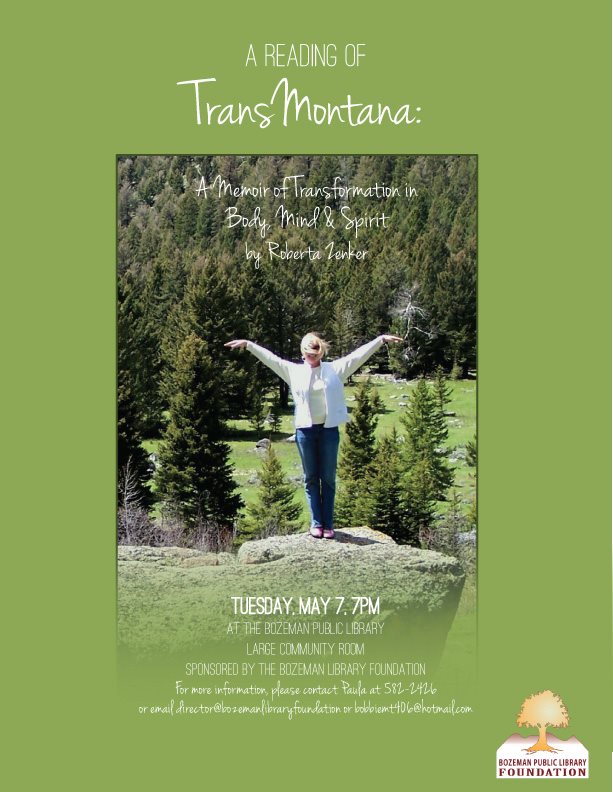
Reading Tonight!

179484_10200840724808059_756741155_n