Most HIV-Positive Americans Lack Regular Medical Care

English: Enterprise Performance Life Cycle

English: Enterprise Performance Life Cycle (Photo credit: Wikipedia)

From Betsy McKay of the Wall Street Journal comes this from the recently concluded International AIDS  Conference in Washington DC:

HIV Data (1990, 2000, 2010)

HIV Data (1990, 2000, 2010) (Photo credit: cmdelaserna)

More than half of the people diagnosed with the HIV virus in the U.S. aren’t getting treatment for their infection, the U.S government said (Friday).

African-Americans and younger people are least likely to be receiving regular treatment, meaning that programs to keep them under a doctor’s care aren’t working or aren’t plentiful enough, according to a report by the Centers for Disease Control and Prevention.

While 81% of those African Americans estimated to be infected are diagnosed, only 29% get ongoing care, and just 21% are “virally suppressed,” or have their virus controlled by a regular regimen of antiretroviral, or ARV, drugs. Among Americans ages 25 to 34, 72% of those infected are diagnosed, but 28% get care and a mere 15% are virally suppressed.

Overall, an estimated 1.1 million Americans are infected with HIV. Only 46% of those who are diagnosed with HIV get regular treatment, while a quarter of all those estimated to be infected are virally suppressed.

“We’ve got to do better,” says Jonathan Mermin, director of the CDC’s division of HIV/AIDS Prevention.

The data were released at the XIX International AIDS Conference in Washington, D.C.

The challenge is to find ways to make HIV testing more widespread, and then make it easier to link those who are diagnosed directly into care — and to make sure they stay there, says Mermin.  “I want to make the healthy choice the easy choice,” he says.

And therein lies the challenge. The easy choice is sometimes pretending the choices don’t even exist….

Read the rest here. 

English: IPSF HIV/AIDS Campaign Logo

English: IPSF HIV/AIDS Campaign Logo (Photo credit: Wikipedia)


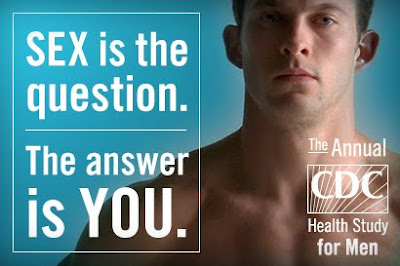
Let’s Talk About Sex

“Sex Is the Question,” is an engaging and important survey regarding the sexual practices of gay and bisexual men. This entirely confidential survey is sponsored by the Center for Disease Control, and will be used by state and local health departments to better understand the HIV epidemic among gay and bisexual men and potentially create new techniques to reverse the trend. “Sex Is the Question” is the largest survey ever attempted by a US federal agency for gay and bisexual men, and it will only take you a few minutes to complete. Do you want another great reason to take the survey? For every completed survey, “Sex Is the Question” will make a monetary donation to the It Gets Better Project.

How can you take the survey? Just click on this link. After you complete the survey, you will also have the opportunity to invite your friends to participate, and a donation will be made to the It Gets Better Project for each of your friends who completes the survey too. In addition, “Sex is the Question” is not just a survey. It is the first study of its kind to provide immediate feedback to its participants by incorporating videos and other interactive tools. At the end of the survey, you will be presented with personalized insight and comparisons based on your answers. Thank you for your consideration! With you support, we can help put an end to HIV once and for all, and in doing so, support a terrific organization.

Medicaid Expansion Likely To Lower Deaths

Medicaid expansion under the Affordable Care Act is contentious- mostly because Republicans don’t want to give President Obama any credit- for anything. But if this study, reported today by the New York Times, is any indication, not going forward could be deadly.

Senate Passes Insurance Industry Aid Bill

Senate Passes Insurance Industry Aid Bill (Photo credit: Mike Licht, NotionsCapital.com)

Into the maelstrom of debate over whether Medicaid should cover more people comes a new study by Harvard researchers who found that when states expanded their Medicaid programs and gave more poor people health insurance, fewer people died.

The study, published online Wednesday in The New England Journal of Medicine, comes as states are deciding whether to expand Medicaid by 2014 under the Affordable Care Act, the Obama administration’s health care law. The Supreme Court ruling on the law last month effectively gave states the option of accepting or rejecting an expansion of Medicaid that had been expected to add 17 million people to the program’s rolls.

Seems fairly reasonable. So why would anyone reject the expansion?

Medicaid expansions are controversial, not just because they cost states money, but also because some critics, primarily conservatives, contend the program does not improve the health of recipients and may even be associated with worse health. Attempts to research that issue have encountered the vexing problem of how to compare people who sign up for Medicaid with those who are eligible but remain uninsured. People who choose to enroll may be sicker, or they may be healthier and simply be more motivated to see doctors.

The New England Journal study reflects a recent effort by researchers to get around that problem and allow policy makers to make “evidence-based decisions,” said Katherine Baicker, an investigator on the study who served on former President George W. Bush’s Council of Economic Advisers.

“I think it’s a very significant study in part because of the paucity of studies that have really looked at health outcomes of insurance coverage,” said Karen Davis, the president of the Commonwealth Fund, a nonpartisan research foundation. “Actual mortality studies are few and far between. This is a well-done study: timely, adds to the evidence base, and certainly should raise concern about the failure to expand Medicaid coverage to people most at risk of not getting the care that they need.”

A Republican-appointed official calling this “evidence based”- will it be enough? Probably not. But the evidence is still there:

“So often you hear, ‘Oh well, poor people just shoot each other, and that’s why they have higher mortality rates,’ ” said Diane Rowland, executive vice president of the Kaiser Family Foundation, a nonprofit group. “In the midst of many claims about what Medicaid does and doesn’t do, it actually shows that it cannot only be beneficial for health, but in preventing some of the premature deaths of the uninsured.”

Janet M. Currie, director of the Center for Health and Well-Being at Princeton, said the new study, combined with the Oregon research, should help transform the Medicaid debate into one about dollars, rather than over whether covering poor people improves health.

“This says, well there is benefit to giving people insurance,” Dr. Currie said. “Maybe you don’t want to pay the cost, but you can’t say there’s no benefit.”

Gay Men Are Flunking The Test

Also published on Bilerico.com

Yesterday, I posted an article about  a press release by the Journal Of The American Medical Association:

“…all adult patients, regardless of CD4 cell count, should be offered antiretroviral therapy (ART), according to an article in the July 25 issue of JAMA, a theme issue on HIV/AIDS. Other new recommendations include changes in therapeutic options and modifications in the timing and choice of ART for patients with an opportunistic illness such as tuberculosis.”

This follows the “treatment as prevention” model, based on the scientific research that people with HIV on antiretroviral therapy- with an undetectable viral load- are 96% less likely to pass on the virus.
us-statistics-2.jpgThis seems to be very good news. If you have HIV, you should find out early, get on meds and you’ll have a better chance of living a longer healthier life.

So what’s the problem? The problem is twofold:

  1. People at risk aren’t being tested: 20-25% of all HIV-infected people don’t know they have it.
  2. People at risk are still not being tested: Gay and Bisexual men of all races are the most severely affected by HIV

That’s not a typo- they’re basically the same reason, but there’s a difference. Any guesses?

Hint: It’s probably why most gay men won’t even read this article.

20-25% of all people with HIV don’t know they have it. Why not?

Here’s my take: Denial is one of the strongest mechanisms in the human psyche. It is fed by lack of information, by avoidance and by a strong desire for an alternative reality. If you’ve had unprotected sex, you’ve probably engaged in the process of denial. You’ve probably downplayed the risk, probably lied to yourself a little. You may have even gone over and over it in your mind, seizing every opportunity to deny the possibility of trouble.

“He looked okay”; “He didn’t seem sick”; “He pulled out”; “He would have told me if he had HIV”, etc, etc, and etc.

Well, we all know where that goes…. As individuals, we’re not facing facts. If we were, we’d be getting tested.

us-statistics-1.jpgGay and Bi men of all races are the most severely affected by HIV. Of course. We know that. Don’t we?

Again, denial applies. Gay and Bi men aren’t talking about HIV anymore. Our friends aren’t dying, so there’s no reason to be concerned. People with HIV aren’t out- aren’t well-known in our communities. Why? I was once told “You don’t need to harp about HIV all the time- it’s not that big of a deal.” Except that it is.

HIV has complicated my life in ways many people can’t believe. I am on catastrophic health insurance through the state- almost three times as expensive as my partner’s insurance. I get assistance for my meds- which cost about $25,000 a year- but (crazily), I can’t make more than $30,300 and still qualify for the program. I have joint pain, sleep issues, battles with depression, fatigue and a body that is aging at several times the normal rate– most probably due to inflammation- the hallmark of HIV disease. And yet, if I talk about this to friends or family, I’m seen as a whiner or someone trying unnecessarily to worry people I care about. It’s the “shut up- at least you’re not dying” defense. I know several HIV+ people who haven’t told anyone of their status, mostly because it’s “uncomfortable”.

No shit.

As a community, we’re not facing facts. If we were, we’d be talking to our friends about the importance of maintaining our health. We’d be talking about the hard reality of HIV.

But we’re not. Denial still holds sway, both individually and as a community. We’re lying to ourselves- we’re lying to each other- and infection rates stay the same.

We have a chance to change this trend. But only if everyone with HIV starts treatment, gets into care. This recommendation of the AMA may help with that. But it’s not up to doctors, nurses and social workers, it’s up to us.

We’re being tested, both as individuals and as a community. The problem is, we’re flunking.

Because we’re not showing up.

(Images source)

“All Adult HIV Patients Should Be Offered Antiretroviral Therapy”

From Science Daily:

Included in the 2012 International Antiviral Society-USA panel recommendations for human immunodeficiency virus (HIV) patient care is that all adult patients, regardless of CD4 cell count, should be offered antiretroviral therapy (ART), according to an article in the July 25 issue of JAMA, a theme issue on HIV/AIDS. Other new recommendations include changes in therapeutic options and modifications in the timing and choice of ART for patients with an opportunistic illness such as tuberculosis.

Melanie A. Thompson, M.D., of the AIDS Research Consortium of Atlanta, presented the findings of the article at a JAMA media briefing at the International AIDS Conference.

Journal of the American Medical Association

Journal of the American Medical Association (Photo credit: Wikipedia)

“Since the first antiretroviral drug was approved 25 years ago, improvements in the potency, tolerability, simplicity, and availability of ART have resulted in dramatically reduced numbers of opportunistic diseases and deaths where ART is accessible,” according to background information in the article. “New trial data and drug regimens that have become available in the last 2 years warrant an update to guidelines for ART in HIV-infected adults in resource-rich settings.”

The benefit of suppressing the virus, in my opinion, is greater than the possible toxicity of medication and navigating possible side effects. We know that as long as HIV is in the body, unchecked, it’s doing damage. It’s more likely than possible that people who start antiretroviral therapy early will have less problems with secondary conditions (joint pain, arthritis, memory problems) as they progress in their lives. I think this is tremendous news.

Full Story Here.

President’s Welcome Video To International AIDS Conference 2012

Some history and a commitment to continue progress:

HIV Treatment Breakthrough: Weekly Injection Could Replace Daily Pill Regimen

HIV-1 Gag

HIV-1 Gag (Photo credit: AJC1)

For a number of people with HIV, treatment can be troublesome because medicine should be taken at the same time every day- sometimes more than once a day. Some medications must be taken with food, some without. Some can only be taken near bedtime because they cause drowsiness.

Science Daily reports a treatment breakthrough:

(A) University of Nebraska Medical Center research team’s progress toward developing weekly or twice-monthly injectable antiretroviral therapy (ART) nanomedicines for patients with human immunodeficiency virus (HIV) infection will be highlighted as the cover story in the Journal of Infectious Diseases.

A long-acting, nanoformulated ART (nanoART) would be a substantive improvement over daily and sometimes more complex regimen of pills, said Howard Gendelman, M.D., the lead investigator on the development of nanoART for HIV/AIDS and professor and chairman of the department of pharmacology and experimental neuroscience (PEN) at UNMC.

The journal article hails the successful testing of UNMC’s ART injectables as treatment of HIV-infected mice and in preventing new infections.

“We actually followed the process exactly as we would with a person — and it worked,” Dr. Gendelman said. “This is all very exciting. Although there are clear pitfalls ahead and the medicines are not yet ready for human use, the progress is undeniable.”

This could prove to be helpful- most especially in the developing world- where people have trouble managing a regimen of pills or have low access to long-term medication treatments. But it may have significant impact everywhere, changing the way HIV is treated….

Full article here.

Infographic: Ending The Drug War Will Help End AIDS

From Jag Davies, Drug Policy Alliance in today’s Huffington Post:

Throughout the world, research has consistently shown that drug criminalization forces people who use drugs away from public health services and into hidden environments where HIV risks become significantly elevated. Mass incarceration of nonviolent drug offenders also plays a major role in spreading the pandemic, as inhumane conditions and lack of HIV prevention or treatment measures in prison lead to HIV outbreaks and AIDS cases behind bars – and among families and communities once those imprisoned are released.

Yet in countries where addiction is treated as a health issue, the fight against HIV/AIDS is being won. New HIV infections in countries such as Australia, Germany and Switzerland have been virtually eliminated among people who use drugs, just as mother-to-child HIV transmission has been eliminated in countries that make medicines for pregnant women accessible.

In the United States, however, the federal government has resisted evidence-based HIV prevention strategies — costing us hundreds of thousands of lives and billions of dollars. Congress re-instated a longstanding ban last December that prohibits using federal funds for syringe access programs — a move that will cost thousands of more lives in years to come.

Money talks- just remind your politicians that the money they are not spending on “immorality” is costing the taxpayers 1000x the amount in the long run…

Guest Post: People Living with HIV Can Increase Physical Health and Quality of Life through Exercise

By Jim Rollince, GymSource

Adhering to a rigid exercise program can seem intimidating to a person who has been diagnosed with HIV.  Because this particular disease is so varied in how it affects each person who has it, people with HIV are often at various stages of physical health and emotional health.  Sometimes, the disease can seemingly lie dormant for years.  Other times, the disease can attack and leave a person feeling extremely ill, mentally depleted, and exhausted of nearly all energy.  Exercise is one way that a person who has HIV can fight back and take positive steps to regaining strength and increasing his or her overall health.

Increased Cardio Health Benefits Stem from Consistent Exercise Routines

It is well known that physical exercise can greatly improve cardio health.  In many situations, healthy hearts equal healthy bodies.  Many people are able to fight diseases through consistent exercise programs.  While beginning with a rigorous exercise program may not be feasible for an HIV patient who is fighting severe symptoms of the disease, beginning with a mild program and then steadily increasing it can result in wonderful improvements on the way the person feels each day.

Setting up home gym equipment is an ideal way to be prepared to exercise any time there is free time to do so.  If an HIV patient is working full time or part time, going to regular doctor visits, and taking care of other responsibilities, a home gym may be the best solution to find time to exercise.  Using a treadmill, an exercise bike, and an elliptical machine can result in tremendous health benefits and improved heart conditions.  Improving the heart and blood circulation throughout the body will make the person feel physically stronger and this can have a great and lasting impact on how well the person is physically able to cope with the disease.

Remain Committed to Regular Fitness Activities for Increased Health

The US National Library of Medicine provides an online medical journal that details numerous benefits that people who have been diagnosed with HIV or AIDS can gain from committing to regular exercise sessions.  Psychological benefits, increased circulation, easier breathing, and stronger muscles are all potential benefits a person can gain by committing to exercise on a regular basis.

Getting outside during nice weather and taking advantage of warm and pleasant weather to hike, swim, or go biking with friends is an ideal way to enjoy exercise and socialization at the same time.  When time is short, the individual can take advantage of fitness equipment at home to get in a few minutes of treadmill jogging or working out on an elliptical.  Every time a person engages in physical activity, the body will respond by increasing metabolism and potentially increasing levels of energy.

Truvada Approved For HIV Prevention

The first-ever daily pill to help prevent against HIV was approved Monday by U.S. regulators for use in uninfected adults who are at risk for getting the virus that causes AIDS.
Truvada, made by Gilead Sciences in California, has been on the market since 2004 and was approved by the Food and Drug Administration for a new use as a tool to help ward off HIV in otherwise healthy people, in combination with safe sex and regular testing.
The pill as pre-exposure prophylaxis has been hailed by some AIDS experts as a potent new tool against human immunodeficiency virus, but some health care providers are concerned it could encourage risky sex behavior.
In addition, the regimen is estimated to cost around $14,000 per year, making it out of reach of many.

The National Association of People With AIDS  (NAPWA) strongly supports today’s move by the United States Food and Drug Administration to approve use of Truvada (emtricitabine/ tenofovir disoproxil fumarate) for pre-exposure prophylaxis (PrEP) to reduce the risk of sexually acquired HIV-1 infection.

“It’s time for people at high risk of HIV infection to be empowered to protect themselves and others,” said Frank J. Oldham, Jr., NAPWA’s President and CEO. “Today’s approval of Truvada for HIV prevention gives them an important new tool to do that.

“PrEP is not a final solution to the spread of HIV,” Oldham continued, “but it can be one tool, and a very useful one, in a well stocked toolkit of prevention measures. We urge all Americans to assess their HIV risk realistically and use condoms if they are at risk, but we thank the FDA for approving Truvada for PrEP for those who cannot or will not.”

Truvada is one of the pills I take every day- if it can prevent anyone from getting HIV- it should. The “how” is still being determined.