Common Lab Tests for HIV+ Persons- And Why You May Need Them

HIV-infected persons have a lot to deal with. There’s a lot to know about this disease- and it can be overwhelming. It can be hard to think about- and even harder to talk about. Because it can be overwhelming, we may often simply let our healthcare providers do what they think is best for us.

But I think and have seen- both as an HIV+ person and as a mental health professional- that a proactive stance by a patient is more likely to decrease feelings of depression, helplessness and fear, and increase feelings of strength, health and well-being.

Knowledge is power- and knowing about your disease only helps your healthcare provider give you more excellent care. Plus, knowledge of the truth can help defeat the head-gremlins that want to prey on our deepest fears…. Your medical provider may be an expert in diagnosis, but you are the expert on your own body. Unless you both work together, diagnosis and treatment can become extremely difficult- and frustrating for you both.

To that end, I’ve scoured the internet, and created a brief HIV lab test information sheet. This is a conversation starter- and perhaps, a self-education starter. There is also a link to the printable document at the end of the piece. Print it out, take it to your doctor (or PA or ARNP) at your next visit and ask them what they think.

Treatment is a team effort. So if you’re on the bench wishing you were anywhere else but here, maybe it’s time to get in the game with the rest of your team. The win may be up to you.

Types of Lab Tests for HIV+ Persons- and Why You May Need Them

Once you have tested positive for HIV, your HIV care provider will probably ask you to take a number of laboratory tests as part of your routine care. This sheet is only the beginning to a conversation with your healthcare provider. Please discuss all of these tests with your provider, and what role they play in your care.  (Feel free to copy and bring it with you to medical appointments) The list may include:

  • CD4/T-cell count*: A count of your CD4 cells gives a general measure of the health of your immune system, and is a good measurement of immunosuppression. A normal CD4 cell count is more than 500 cells per cubic millimeter (mm3) of blood. If you have a CD4 count of fewer than 200/mm3, you will be diagnosed as having AIDS. Why it’s important: This is a good measure of your risk of opportunistic infections and the strength of your immune system. It will give you and your healthcare provider the information you need to decide the best way to treat your HIV disease.
  • CD4 Percentage*: This measures how many of your lymphocytes (types of white blood cells) are actually CD4 cells. This measurement is more stable than CD4 counts over a long period of time, and, for most people, the CD4 percentage remains a more reliable measure of immune function than CD4 count. Why it’s important: This measurement is a more reliable snapshot and is less likely to vary in between blood tests than CD4 counts (which can vary from month to month or day to day).
  • Viral Load (VL)*: This test measures the amount of HIV in your blood.
Why it’s important: The goals of HIV treatment are to keep your viral load at undetectable levels and to keep your CD4 count high. A viral load test offers a good indicator of how well your treatment is working to achieve those goals.
  • Complete Blood Count (CBC)*: This is a measure of the concentration of red blood cells, white blood cells, and platelets in a sample of your blood.
Why it’s important: A CBC is one of the most commonly ordered blood tests. It can reveal infections, anemia (abnormality in your red blood cells), and other medical issues.
  • Serum Chemistry Panel*: This test helps provide information about your body’s metabolism. It gives your doctor information about how your kidneys and liver are working, and can be used to evaluate your blood sugar levels, calcium levels, etc.
Why it’s important: Some HIV medications can have serious side effects, and this test helps your healthcare provider to monitor the impact of your medications on your body’s ability to function normally.
  • Fasting Lipid Panel (Cholesterol and Triglycerides)**: These tests measure your total cholesterol level, as well as give you information about the different types of fat proteins in your body.
Why it’s important: Some HIV medications can affect your cholesterol levels and the way your body processes and stores fat. This can make you prone to other medical problems, including heart problems.
  • Fasting Glucose (blood sugar)**: This test measures your blood sugar levels to check for signs of pre-diabetes or diabetes.
Why it’s important: Some HIV medications can affect blood sugar levels, potentially leading to complications like diabetes.
    (key: *usually every 3 months, **usually every 6 months)

    In addition, there are additional tests that may be done less frequently, but are still important for the maintenance of your health.  These include:

  • Sexually Transmitted Disease (STD) Screening: These screening tests check for syphilis, gonorrhea and chlamydia.
Why it’s important: Having an STD, can make it easier to pass HIV to others. Untreated STDs can also be damaging to your own immune system.
  • PAP Smear (Cervical and Anal): This is a screening test for abnormal cells that could become cancerous. It involves using a swab to take cell samples directly from the cervix and anus.
Why it’s important: For women living with HIV, abnormal cell growth in the cervix is common, and abnormal anal cells are common for both men and women who are HIV-positive. These abnormal cells may become cancerous if they aren’t treated.
  • Hepatitis A, B, and C tests: These blood tests check for current or past infection with Hepatitis A, B, or C…
Why it’s important: Some people who are living with HIV are also co-infected with hepatitis. Checking you for hepatitis A, B, and C can help your provider to determine if you need to be treated, or if you are a candidate for one of the existing hepatitis vaccines.
  • Tuberculosis (TB) Skin Test: This skin test checks for exposure to TB. A positive skin test does not mean you have active TB, but it means you will need further evaluation and possible treatment.
Why it’s important: Untreated TB can be a deadly disease for people living with HIV. Early screening and treatment will help limit your risk of severe illness, as well as lower your chances of transmitting TB to others if you do have it.
  • Toxoplasmosis Screening: This test checks for exposure to a parasite that can cause severe damage to the brain, eyes, and other organs in people with weakened immune systems.
Why it’s important: Toxoplasmosis can be a deadly opportunistic infection for people living with HIV. Your clinician needs to know if you have been exposed to the parasite that causes toxoplasmosis or are at risk for exposure. This will help your healthcare provider to decide if you need preventative treatment. If your CD4 count falls below 100/mm3, you will probably need to do another screening, even if your earlier screens were negative.
  • Vitamin D levels: This test checks for vitamin D levels in the blood. Why it’s important: Vitamin D is vital for bone health, and there is some evidence that people with HIV need more vitamin D. Some patients are at risk for bone loss from medication, lifestyle or both. Vitamin D levels can be checked easily and deficiencies can be simply treated.
  • Testosterone screening: This test checks for levels of testosterone in the blood. Why it’s important: Low testosterone can be an effect of HIV, HIV medications, or both. Some men remain relatively unaffected, but a baseline of testosterone levels at diagnosis can help with diagnosing a decreasing testosterone levels during HIV treatment. Symptoms of low testosterone include fatigue and low libido. Treatment is replacement therapy with patches, injections or gel.

In addition, you and your provider should talk about ANY symptoms you may be noticing or experiencing such as sleeplessness, fatigue, anxiety, loss of appetite. These may be signs of depression or other issues common to people with chronic illness which you can address together- and which can sometimes be easily alleviated. You do not have to suffer- and a good relationship with your medical provider is a great step to living with HIV- not suffering from HIV.

Give your healthcare provider this number for the UCSF WARMLINE for them to discuss HIV treatment issues, concerns or education with healthcare experts:
1-800-933-3413.   -Even doctors need support!

Sources: http://aids.about.com/od/newlydiagnosed/qt/cbc.htm,
http://www.thebody.com/content/art50043.html, http://labtestsonline.org/understanding/conditions/hiv?start=1, http://www.thewellproject.org,
http://aids.gov/hiv-aids-basics/diagnosed-with-hiv-aids/understand-your-test-results/types-of-lab-tests/  

Click for a printable copy of  Types of Lab Tests and Why They Are Important
Gonorrhea: Not So Easy To Kill Anymore

Not anymore. . .

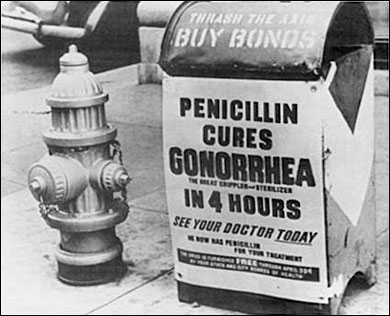
Think if you get the clap, you can just go get a shot or take a pill to be cured?

Not so fast, bucko. There’s now another reason to protect yourself:

Today, the Centers for Disease Control and Prevention (CDC) outlined laboratory trends from 2000-2010 that show growing resistance of gonorrhea to antimicrobials.  Gonorrhea, a sexually transmitted disease (STD), is a major cause of pelvic inflammatory disease, ectopic pregnancy, and infertility and can facilitate HIV transmission. (Press release, National Coalition of STD Directors)

Yep. Gonorrhea. It used to be a serious disease, before antibiotics made it easy to treat. Now that we’ve been taking antibiotics for everything, resistance is setting in and we’re running out of effective drugs to cure it.

…cephalosporin antibiotics are the last line of defense for treating the disease, as the bacteria has developed resistance to all other antibiotics.  The highest level of resistance to cephalosporins, regardless of sexual partner, was found in the Western region of the United States, particularly Hawaii and California, as well as in men who have sex with men in all regions.

“This new data outlines what state and local health departments have been seeing on the ground—that highly untreatable gonorrhea is near,” stated William Smith, Executive Director of the National Coalition of STD Directors. “There are currently no new drugs in development for this infection.  If this last class of drugs fails we will have no definitive treatment options for gonorrhea.  We call on researchers, government, and partners in industry to make the development of new, effective drug treatments for gonorrhea a public health priority,” continued Smith.

This is a big deal.

It’s important for sexually active persons to be screened for all STD/STI’s at least every six months, or more often if you have many sexual partners and/or have had unprotected sex- and that includes oral- gonorrhea can easily infect the throat. And, remember, any STD/STI increases the risk of contracting/spreading HIV. From the CDC:

Untreated gonorrhea can cause serious and permanent health problems in both women and men.

In women, gonorrhea is a common cause of pelvic inflammatory disease (PID). About 750,000 women each year in the United States develop PID. The symptoms may be quite mild or can be very severe and can include abdominal pain and fever. PID can lead to internal abscesses (pus-filled “pockets” that are hard to cure) and long-lasting, chronic pelvic pain. PID can damage the fallopian tubes enough to cause infertility or increase the risk of ectopic pregnancy. Ectopic pregnancy is a life-threatening condition in which a fertilized egg grows outside the uterus, usually in a fallopian tube.

In men, gonorrhea can cause epididymitis, a painful condition of the ducts attached to the testicles that may lead to infertility if left untreated.

Gonorrhea can spread to the blood or joints. This condition can be life threatening. In addition, people with gonorrhea can more easily contract HIV, the virus that causes AIDS. HIV-infected people with gonorrhea can transmit HIV more easily to someone else than if they did not have gonorrhea. (emphasis mine)

We’ve taken the cure for granted for too long. So- be careful out there.

Full article here.

Get Yourself Tested, You’re > AIDS

Two HIV awareness campaigns are teaming up this month to promote HIV testing and treatment. The Get Yourself Tested campaign (GYT) and Greater Than AIDS (>AIDS) have teamed up for National HIV Testing Awareness Month, to promote greater awareness of the importance of HIV testing, treatment and education.

As we mark 30 years of AIDS, it’s worth noting the tremendous progress made in terms of the life-saving treatments now available, but to benefit from these advances one must first know their status,” said Tina Hoff, Senior Vice President & Director, Health Communication & Media Partnerships, Kaiser Family Foundation, a partner on both campaigns.  “Be Greater Than AIDS:  Get Yourself Tested is an empowering, uplifting message that makes getting tested an act of pride, not shame.”

“Our audience has never known a time without HIV, but through efforts like GYT, we’re committed to empowering them to forge a world where HIV doesn’t exist,” said Jason Rzepka, Vice President of Public Affairs, MTV.  “We’re proud to join with this remarkable coalition and reinforce regular testing as one way America’s youth can be greater than AIDS.”

According to the U.S. Centers for Disease Control and Prevention (CDC), of the more than one million Americans living with HIV today, one in five of those infected don’t know their status. The CDC encourages all Americans between the ages of 13-64 to get tested on a routine basis as part of their overall health and well-being similar to cholesterol, blood pressure, and other screens.

More here.

Fear is useless, get the test. The key to a longer, healthier life with HIV is early diagnosis and treatment. So if you’ve been thinking about it, do it. If you need a friend to go with you, call someone. Better yet, grab your best friend and just go together.

Today.

The key to preventing this disease is treating the people who already have it. We know that people who are taking their meds are much less likely to pass on the virus. And if they don’t pass on the virus, it can’t spread. The greatest reason for this epidemic today is this: people who don’t know their status- who are HIV infected and are not treating it, are infecting their partners. Treatment may well be the greatest key to prevention.

Let’s stop the cycle.

Click here to find a testing site near you.

HIV Spike In Montana?

The Billings Gazette is reporting a spike in positive HIV tests done by RiverStone Health clinic:

Six new positive tests were reported between March 24 and April 18, compared to nine new cases in all of 2007 and 2010. The newly diagnosed cases include five men and one woman, ranging in age from 24 to 43. In three of the cases, there was a history of intravenous drug use. The remaining three cases were sexually transmitted, according to RiverStone Health officials.

We know there are Montanans who are HIV-positive and have never been tested, or have been tested and for some reason, have never entered care.

HIV is a manageable disease. The sooner HIV-positive persons enters care and begins treatment, the less likely they are to have more difficult health issues later on in life. And because of lowering the amount of HIV in their bodies with medication, they are much less likely to transmit the virus.

Click here for more info...

Full story here.
Then, think about getting tested- and encouraging those you love to do the same.

Low Vitamin D Levels Associated With Rapid HIV Progression

From AIDSMeds.com:

HIV-positive people with very low vitamin D levels were more likely to develop AIDS and to die than people with higher vitamin D levels, according to a study published online January 25 in the journal AIDS.

Low vitamin D levels have been found in numerous studies in HIV-negative people to be associated with serious illnesses, including cardiovascular disease, cancer, diabetes and kidney failure. What’s more, a number of recent studies have found that the proportion of people with HIV who have low vitamin D levels is quite high, with fewer than a quarter in some studies having ideal levels.

…and so it’s always a good idea to have your Vitamin D level checked regularly with your doctor, whether you’re HIV+ or not. More on Vitamin D can be found here.

And  read the full story from AIDSMeds.com here. 

Another Reason To Start HIV Treatment Sooner?

Science Daily is reporting on a study by UC San Francisco that indicates that the rate of infection among men who have sex with men (MSM) could be significantly reduced by treating HIV immediately upon diagnosis and expanding HIV testing:

If HIV-infected adults in San Francisco began taking antiretroviral treatments as soon as they were diagnosed, the rate of new HIV infections among men who have sex with men would be cut by almost 60 percent over five years….

The finding is published in the April 15, 2011 issue of Clinical Infections Diseases.

The decision of when to begin treatment with antiretroviral drugs is a subject of some debate, with the experts evenly split on whether to begin antiretroviral therapy immediately upon HIV diagnosis or waiting until a patient’s CD4 cell count drops below 500 cells per microliter….”Our clinicians recommended initiating antiretroviral therapy to all of our HIV positive patients based on our assessment that delaying treatment allows the virus to do damage to major organs systems and would lead to poorer outcomes for patients. It is too early to tell if this shift in treatment strategy last year by our clinic and the Department of Public Health has had any impact in preventing HIV infections,” said (study co-author) Havlir.

Starting retroviral treatment early makes sense- it reduces the risk of transmission significantly and probably keeps people healthy and alive longer. And isn’t that the point?

Read the full article here.

University of California – San Francisco (2011, April 13). HIV rate in San Francisco could be cut sharply with expanded treatment, study predicts. ScienceDaily. Retrieved April 15, 2011, from http://www.sciencedaily.com/releases/2011/04/110413093219.htm

End The Ban On HIV+ Organ Donation?

When I was diagnosed with HIV, a friend said “You’re an organ donor aren’t you? You’d better change that.”

I agreed, and changed my driver’s license organ donor status (goodbye, little red heart!). But in the back of my mind I wondered “Why couldn’t I donate to other HIV+ people should they need it? Surely having an infected organ and a few more years of life would be worth it.” Especially now, when HIV (unlike, say Hepatitis C) is a very medically treatable disease. Not a picnic, but neither is renal failure

Is it worse to have HIV than having to undergo weekly dialysis? Or to have a heart that works, or a liver, etc.? And if you already have HIV and need an organ, does it make sense that HIV+ donors be excluded?

Now it seems the feds are starting to think about the same things. According to The New York Times, The Centers For Disease Control And Prevention are about to issue new guidelines that will allow the study of HIV+ organ donation and transplantation.

It’s about time. Literally.

What do you think? If it were about saving your life, would you accept an HIV+ organ?

Squared Away

Friends,
Insurance. Check.
New doctor. Check.
Medications. Check.
Happy. Double check.

It’s all going great, and it looks like things will be done well and (almost) as easily as of old. ADAP came through, and EIP came through which give me insurance and covers my doctor and meds. I had labs drawn today, but unless something changes, I’ll be getting labs drawn once every 6 months and have complete and total access to medical care.
And I’m healthy- all things considered. Thanks for the thoughts, prayers, energy, love, whatever you want to call it. I’m deeply appreciative.

Let me know when I can return the favor.

Mississippi- A Damn Shame


According to Human Rights Watch, the State of Mississippi is the worst when it comes to educating and testing its people, and treating or housing persons with HIV:

Thousands of Mississippians are at risk for HIV, and many who are infected are denied lifesaving measures and treatment because of counterproductive state laws and policies, Human Rights Watch said in a report released today. Mississippi has resisted effective approaches to HIV prevention and treatment and instead supported policies that promote stigma and discrimination, fueling one of the nation’s highest AIDS rates, Human Rights Watch said.

Mississippi also clings to failed approaches to sex and HIV education, Human Rights Watch said. Mississippi has some of the nation’s highest rates of chlamydia, gonorrhea, and syphilis, sexually transmitted diseases that can significantly increase an individual’s risk of becoming infected with HIV. Yet the state legislature has repeatedly refused to approve programs that provide complete, accurate information about HIV and pregnancy prevention, insisting on ineffective abstinence-only curricula in the public schools. The result, Human Rights Watch said, is the denial of potentially life-saving information to adolescents, putting them at unnecessary risk of HIV infection.

This is America, not Rwanda. Full, upsetting story here.

REACH OUT! 2011


Mardi Gras is tomorrow! Come out and support a great cause- Jazz, wine, snacks and the opportunity to snag some sweet swag for cheap- plus excellent company! 7 pm Emerson Cultural Center, Bozeman.