 |
||
|
Category Archives: HIV
Cognitive Training Beneficial For People With HIV
 As more effective antiretroviral therapy has evolved over the past 30 years, HIV/AIDS has shifted from an acute to a chronic condition. But as patients live longer, research indicates that they are experiencing cognitive impairments at a higher rate than people without the disease.
A new study by researchers at the University of Alabama at Birmingham, published online Oct. 15, 2012 in the Journal of the Association of Nurses in AIDS Care, shows that cognitive training exercises can help — improving mental processing speed and the ability to complete daily tasks in middle-age and older adults with HIV.
“Today, more than 25 percent of people living with HIV in the United States are older than 50,” says the study’s lead author, David Vance, Ph.D., associate professor in the UAB School of Nursing, associate director of the UAB Center for Nursing Research and scientist in the UAB Edward R. Roybal Center for Research on Applied Gerontology. “Thirty to 60 percent of adults living with HIV experience cognitive problems at some point in the illness, a condition known as ‘HIV-associated neurocognitive disorders.’ It’s imperative for people with HIV and their treatment teams be proactive in addressing cognitive problems as they emerge, because without treatment these issues — which mimic premature aging — can lead to difficulties in working and living independently.”
Related articles
- Popular HIV drug may cause memory declines (sciencedaily.com)
- Study: Brain exercises work to improve mental function in HIV/AIDS patients (al.com)
- Alarming increase in number of HIV cases (smh.com.au)
- Complacency blamed for HIV increase (bigpondnews.com)
Save The Date: Red Ribbon Ball November 30th

Click for more information
Why HIV Testing and Treatment Are Still Issues
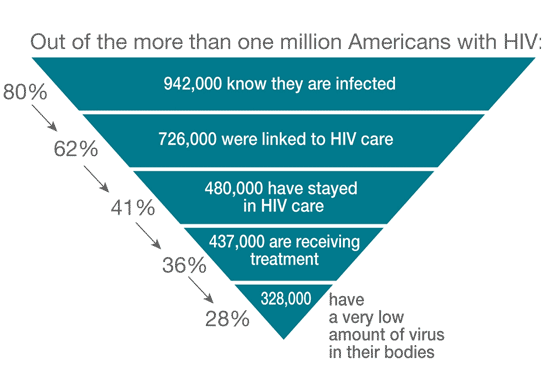
A key concept for anyone considering the success of anti-HIV treatment in improving the health of individuals and in preventing onward transmission in their communities is the ‘treatment cascade’ or ‘care continuum’. This shows how, at every stage, patients are not retained in the healthcare system or are unable to access the medical care they need.
Related articles
- Specifics: Obamacare and HIV (dgsmith.org)
- Oral Health and HIV (topdentists.com)
- San Francisco Thwarts HIV With Wide Testing, Universal Treatment (npr.org)
Specifics: Obamacare and HIV

click for more info
From Think Progress By Tara Culp-Ressler
A new brief from the Kaiser Family Foundation reports that President Obama’s health care reform represents a significant step forward for Americans with HIV, helping to expand health insurance to many HIV-positive individuals who would be “otherwise unable to access affordable and stable health care coverage.” Representing hugely important tactics to continue addressing the HIV/AIDS epidemic, several of Obamacare’s provisions will have a directly positive impact on the estimated 1.1 million Americans who live with the HIV virus:
- Obamacare will prevent insurance companies from denying HIV-positive Americans coverage simply based on their HIV status. The health care reform law prohibits insurance companies from discriminating based on pre-existing conditions, including HIV. Before Obamacare, Americans living with HIV often struggled to find insurance companies willing to take them on — according to the Kaiser Family Foundation, just 13 percent of HIV-positive individuals were covered under private insurance in 2010.
- Obamacare’s expansion of the Medicaid program helps low-income Americans with HIV who otherwise wouldn’t qualify for coverage. Over 40 percent of HIV-positive Americans accessed their health insurance through the Medicaid program in 2010, and expanding Medicaid even further will extend additional coverage to this community. Furthermore, under Obamacare, HIV-positive individuals do not have to have to be diagnosed with AIDS as a precursor to qualifying for Medicaid coverage. Although this was an old eligibility requirement for the program, the health reform law ensures the states that accept Obamacare’s Medicaid expansion will not have to impose this restriction on Americans living with the HIV virus.
- HIV-positive Americans will no longer reach limits on the amount of treatment their insurance companies are willing to cover. Obamacare eliminates lifetime coverage caps and phases out annual limits, which will help all Americans with chronic conditions — including the Americans who rely on treatment for HIV infections — continue to be able to afford the care they need without reaching an arbitrary cut-off set by their insurance companies.
- HIV testing will likely be covered under Obamacare. This year, the U.S. Preventive Services Task Force is expected to recommend routine HIV screenings as a part of regular preventative care, similar to a routine blood pressure test. Since the health reform law requires insurers to cover the preventive services recommended by the Preventative Services Task Force, a new standard for HIV testing could ensure that it becomes a standard part of annual check-ups. The Centers for Disease Control estimates that about 20 percentof the total population of Americans who are infected with HIV don’t know they have the virus, so regular tests that don’t incur an out-of-pocket expense could help encourage more Americans to learn their status.
- Since Obamacare helps close the prescription drug coverage gap for Medicare beneficiaries, HIV-positive individuals will be more likely to afford their drug treatments for the virus. By closing the “donut hole,” or the gap in coverage for expensive prescription drugs under the Medicare program, Obamacare will help ensure that older Americans living with HIV aren’t unable to afford any of the 26 antiretroviral drug treatments that can be used to combat HIV infections. Twelve percent of Americans with HIV relied on Medicare for their health coverage in 2010, and that number may rise significantly as the population of HIV-positive Americans continues to age.
- Obamacare increases resources for HIV research and prevention. The health care reform law allocates $10 billion over ten years for a new fund that focuses on prevention, wellness, and public health activities. In 2010, $30 million from that fund was awarded to the Centers for Disease Control for HIV prevention activities, including new investments in HIV surveillance and testing among high-risk populations.
Related articles
- How Obamacare Helps Americans Living With HIV (thinkprogress.org)
- Most HIV-Positive Americans Lack Regular Medical Care (dgsmith.org)
- By 2015, Half Of HIV-Positive Americans Will Be Over The Age Of 50 (thinkprogress.org)
- Health Department Warns of HIV-Positive Prostitute (stlouis.cbslocal.com)
- A Guide to Oral Care and HIV/AIDS (topdentists.com)
HIV-positive Women Find Support In Dating Again
Being HIV-positive is a challenge. Being HIV-positive and single is often a nightmare. We all want to love and be loved, but the barriers- social and psychological- for HIV-positive persons are high. From The Seattle Times:
Like many women with HIV/AIDS, Nicole Price worried about love and life, post-diagnosis. She now counsels HIV-positive women on forging romantic relationships, knowing each time out that disclosing one’s status can be a deal-breaker.
In 2000, Nicole Price’s ex-boyfriend fell ill. They had recently ended a five-year relationship, so she went to see him in the hospital. He had AIDS.

She got tested. She was 24.
“It was the longest two weeks of my life,” said Price, now 37. “We thought we would get back together because we both had it.”
At the time of her diagnosis, Price was using meth and living in California when her mother, a Bothell resident, learned about a Seattle-based support group for HIV-positive women.
Within two years, she packed her bags for Bothell for a fresh start.
Like many women with HIV/AIDS, Price worried about love and life, post-diagnosis. Once she settled here, she became increasingly involved with the support group, BABES Network-YWCA, eventually rising to program manager. Price now counsels HIV-positive women on forging romantic relationships, knowing each time out that disclosing one’s status can be a deal-breaker.
“They can stop having sex altogether and never do it again,” Price said. “Some of our women have chosen to be in a lesbian relationship. Actually quite a few of our women have. I think they feel that betrayal. They feel like maybe they got betrayed, and now they have issues when it comes to men.”
Trusting a sexual partner and dealing with rejection are regular topics at BABES.
Through peer counseling, support groups, educational lectures and retreats, BABES tackles the challenge of maintaining relationships — especially romantic ones — after testing positive. Women take part in mock disclosures, an exercise meant to ease the stress of telling a partner about being HIV-positive.
“I encourage women to date when they’re ready. I ask them questions to see if they’re ready. When do you want to disclose your status? Are you ready for the response?” said Brenda Higgins, a BABES peer advocate.
“I’m never ready for the response I’m getting,” she added. “There’s really no way of preparing someone with that.”
Related articles
- Can You Keep HIV From Becoming AIDS? (everydayhealth.com)
- Sexual Intimacy With an HIV-Positive Person (everydayhealth.com)
- Fact and Fiction About HIV Transmission (everydayhealth.com)
Vote For This Movie
My friend Greg Louganis is the subject of this new documentary which is up for Project Of The Month from Indiewire:
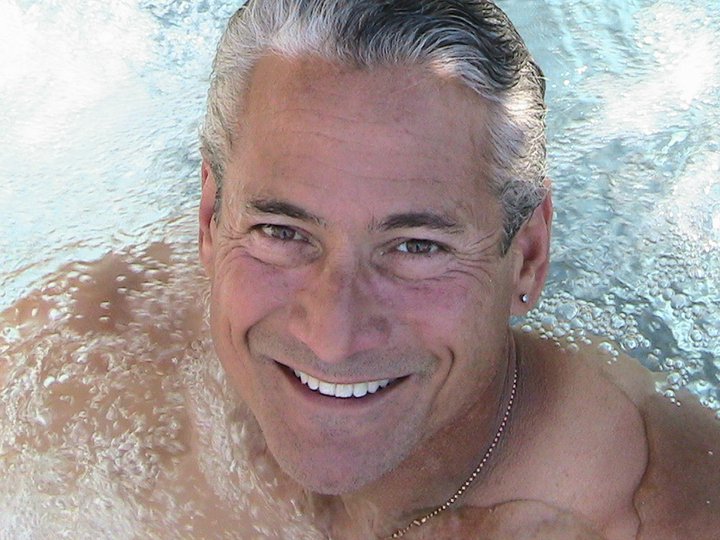 “Greg Louganis Back on Board”
When Greg Louganis hit his head on the diving board at the 1988 Seoul Games, it was an unforgettable moment. But when, despite his injury, he earned the highest single score for his next dive and win the Gold, it was among the most incredible feats in history.
BACK ON BOARD is an engrossing story about an American legend and his comeback. Film reveals Louganis’ evolution from childhood prodigy to Olympic champion, from pioneering openly gay athlete with HIV to an overlooked sports icon. His return to diving as mentor to USA divers at Olympics provides new chapter of life-story.
Greg has been an inspiration for what I do. He has also been personally very supportive of me and HIV prevention and treatment work in Montana- and throughout the world. His story is one of pain and humility, determination, compassion and trust. It deserves to be heard, and this film’s wide distribution will be a beacon for a lot of people- including kids- who could use a dose of inspiration.
You can vote to get this film a consult from the Tribeca Film Institute. It’s the last day to vote, so…
Vote here!
Related articles
- Greg Louganis documentary up for indie project of the month (outsports.com)
- Greg Louganis Subject of New Documentary (advocate.com)
- Greg Louganis documentary needs money push to have film produced (outsports.com)
- Greg Louganis on being diagnosed with HIV: “Honestly, I didn’t think that I’d see 30” (piersmorgan.blogs.cnn.com)
- WATCH: Olympic Diver Greg Louganis Gets “Back On Board” (queerty.com)
Raging Against The Hate Machine
In light of this:
“the Republican platform included language rejecting not just same-sex marriage but also the watered-down alternative that many elected officials find more palatable: civil unions. The GOP platform committee also defeated a proposed amendment that said all Americans should be treated “equally under the law” as long as they’re not hurting anyone else.”
I present this:
Related articles
- GOP Adds 3 More Anti-sexuality Planks To Platform (Bilerico)
- McDonnell Touts Anti-Gay, Anti-Abortion Planks at RNC (Talking Points Memo)
- Paul Ryan blasted by Rage Against the Machine guitarist Tom Morello (ctvnews.ca)
FDA Approves new HIV Treatment

The FDA approved “the Quad”- a four-medication-in-one-pill treatment for controlling HIV. Two of the medications comprising Stribild, tenofovir and emtricitabine, have been previously combined and sold under the brand name Truvada (itself approved a few weeks ago as a preventative or prophylactic for HIV, see related articles below).
Two of the medications are new, and – as a condition of approval- will require greater testing in women and children, as well as studying possibilities and occasions of resistance.
This is good news.
Simplifying regimens is a helpful strategy in helping keep HIV-infected persons faithful to their medication schedules, a key in effectively treating HIV. Cost is yet to be determined- and most HIV regimens cost in excess of $18,000.00 a year (mine cost $24k).
Still no picnic- but good news for those who need a simpler med schedule.
Related articles
- FDA Approves Gilead’s HIV Quad Pill Stribild – Wall Street Journal (drugstoresource.wordpress.com)
- FDA’s Approval of Stribild Will Simplify Treatment for HIV Patients (guardianlv.com)
- Truvada Approved For HIV Prevention (dgsmith.org)
Hard Truths (About Gay Men & HIV)
From NAPWA’s Positive Voice Newsletter:
National Gay Men’s HIV/AIDS Awareness Day – NGMHAAD – is coming September 27, three months to the day after National HIV Testing Day, and hard on the heels of July’s landmark International AIDS Conference (IAC) in Washington, D.C. We have two messages this year: Be aware, know your risk, and, Let’s end this epidemic! Because we matter – and we can.
Speaker after speaker at IAC returned to this year’s good but challenging news: yes, we still need more science to stamp out HIV – more and better antivirals, an effective vaccine, and a functional cure – but we already have all the biomedical tools we need to make new HIV infections a thing of the past. The hard part is reaching “key populations” – groups with high rates of existing infections and new infections because they have been marginalized, stigmatized, denied civil rights, and excluded from health care.
NGMHAAD is for one of those “key populations:” this country’s men who have sex with men (MSM). NAPWA founded NGMHAAD in 2008 because we want them to know the epidemic isn’t over. We want them to know how high their HIV risk really is – because so many are already infected, and too many don’t know it. And we want them to know that we’ve come a long way since AIDS was first reported in 1981, and even further since Stonewall, but stigma is still driving this epidemic and gay men don’t have to take it anymore.

So let’s look at some numbers and see what that the gay men’s HIV epidemic looks like in the U.S.
The July 28 issue of The Lancet opened an admirable series of articles on HIV among gay men worldwide with a look at epidemiology, and reported that HIV prevalence among men who have sex with men in its North American region is a jaw-dropping 15.4% – almost one in six. The real prevalence may be a little lower – The Lancet assumes that only 3.7% of American men are MSM, a number we think is too low, and raising the estimated number of MSM would reduce the calculated prevalence a little – but it’s still clear that prevalence is breathtakingly higher among MSM than in the rest of the population.
Let’s calculate just how much higher.
About 251 million Americans are 15 or older. If 5 percent of the men are MSM, we have 6.3 million MSM and 245 million “others” 15-and-older in this country. We’re all familiar with the CDC’s estimates that 1.2 million Americans are living with HIV, and 60% of them are MSM. That gives us 480,000 infections in 245 million “others,” for a prevalence of 0.2% – one in five hundred. It also gives us 720,000 infections in 6.3 million American MSM, for a prevalence of 11.5% – just shy of one in eight. HIV prevalence among American MSM is almost 60 times what it is in the rest of the population.
That means HIV-negative MSM who are active with partners whose status they don’t know are at much higher risk than many realize. So the first and most important message of National Gay Men’s Awareness Day is – simply – be aware. Know your status. Know your risk. If you aren’t absolutely sure you know your own and your partner’s status, keep your condoms handy.
In September 10’s Positive Voice, we’ll write about how we got to where we are and what’s needed to deal with the MSM epidemic on the ground. Why near-universal testing is so important when prevalence is already so high. The need to confront stigma and talk frankly about sex in communities where this is deeply uncomfortable. The need for pride and love. The need to have culturally competent and welcoming health care for MSM.
And in the September 24 issue, just three days before NGMHAAD, we’ll remember the quarter-million (at least) American MSM who have died of AIDS and examine our responsibility as their survivors to demand action to end this epidemic once and for all. Now that we can, we must.
Related articles
- Gay Men’s Wives, Homophobia and HIV (dgsmith.org)
- The Ongoing HIV/AIDS Epidemic Among Active ‘Gay’ Men (illuminati360.wordpress.com)
- Gay, bisexual black men at high risk for HIV (thechart.blogs.cnn.com)
- Anti-Gay Stigma And Criminalization Help Maintain HIV Epidemic (thinkprogress.org)
 From Eternity To Here