HIV: Treatment is Prevention

Today’s New England Journal of Medicine has an excellent research study on HIV, entitled Preventing HIV-1 Infection with Antiretroviral Therapy.

Scott Hammer,MD, in an editorial for the journal, gives a brief overview of the study:

In this issue of the Journal, Cohen et al. describe the results of the HIV Prevention Trials Network (HPTN) 052 study, which has now provided definitive proof that (as suggested by the findings of previous cohort studies) antiretroviral treatment reduces the rate of sexual transmission of HIV-1.

Did you hear that? Definitive proof.

Early antiretroviral treatment not only significantly lowers the risk of transmitting the virus, it also shows increased health benefits for the HIV infected. The conclusions by the research team in the article:

In conclusion, the biologic plausibility of the use of antiretroviral therapy for the prevention of HIV-1 infection has been carefully examined during the past two decades. The idea of HIV-1 treatment as prevention has garnered tremendous interest and hope and inspired a series of population-level HIV-1 treatment-as-prevention studies that are now in the pilot or planning stages. Such interventions are based on the hypothesis that the use of antiretroviral therapy reliably prevents HIV-1 transmission over an extended period of time. In this trial, we found that early antiretroviral therapy had a clinical benefit for both HIV-1–infected persons and their uninfected sexual partners. These results support the use of antiretroviral treatment as a part of a public health strategy to reduce the spread of HIV-1 infection. (emphasis mine)

This is science at work. Get tested. If you’re HIV-positive, get into care and take your meds. We can slow this thing down.

Money quote from Dr Hammer:

Antiretroviral therapy is by no means perfect and is not the ultimate answer to controlling and ending the HIV epidemic. Adverse events, emergence of drug-resistant viral strains, maintenance of adherence, sustainability, and cost are just some of the concerns. However, this is precisely the wrong time to limit access to antiretroviral therapy in resource-limited settings, since we have the tools in hand to maintain or restore health in infected persons and reduce transmission to their sexual partners.

Yep.
So now that we know, will anything happen?

(PS- the picture above is of my morning pills)

Michele Bachmann, The NYT and Rehberg

Just a little reminder of the truth for ya…

Over the weekend, the New York Times had an interesting article about Republican Presidential candidate Michele Bachmann and the issue that catapulted her into the national spotlight: The gays are coming! They want to get married! Protect your children!

In March 2004, with Massachusetts soon to allow gay couples to wed, Michele Bachmann delivered a dire warning to her fellow Minnesotans: The children of their state were at risk.

“We will have immediate loss of civil liberties for five million Minnesotans,” Mrs. Bachmann, then a state senator, told a Christian television network as thousands gathered on the steps of the Capitol to rally for a same-sex marriage ban she proposed. “In our public schools, whether they want to or not, they’ll be forced to start teaching that same-sex marriage is equal, that it is normal and that children should try it.”

Anti-gay rhetoric. And the willful promulgation of ignorance. Seems like it’s pretty popular right now in some circles. Meanwhile, the American public is (mostly) not buying it. American acceptance of gay marriage is trending steadily upward, and only 32% of the people polled last October said gay marriage is a “very important issue” in their considerations at the ballot box- both for and against- so the number against is even less than that. The Pew Poll:

The economy and jobs overshadow other issues, including social issues such as abortion and gay marriage, in importance for voters. Fully 90% of registered voters say the economy will be very important to their vote while nearly as many (88%) rate jobs as very important.

By contrast, just 43% say abortion will be very important and just 32% say the same about same-sex marriage — the lowest percentage for 13 issues tested. Opponents of same-sex marriage (44% very important) are more likely than supporters (22%) to say that this issue will be very important to their vote.

Americans are increasingly seeing the anti-gay stance as bigoted and wrong- and rightly so. But it’s important to remember that Michele Bachmann- polling well in Montana– has her political roots firmly in this cesspool.

And what’s this got to do with Rehberg? Well, how about this reminder from January:

Billing Bachmann as a “possible presidential contender,” the Montana GOP announced Monday the third-term congresswoman would be one of the speaker’s at the state party’s annual fundraiser in Helena on Feb. 5.

Rep. Denny Rehberg, who is seriously weighing a bid for Senate, is also a listed speaker.

“Congresswoman Bachmann is a leading voice for conservative Republicans.  She is in great demand for speaking engagements throughout the country.  We are very fortunate Michele Bachmann will be our guest in Montana’s capital city and are grateful for Congressman Rehberg’s assistance in making this possible,” said Lewis and Clark County Republican Central Committee chairman Bridget Holland. (emphasis mine)

And well- of course. It makes sense. Rehberg has his own anti-gay history:

When you’re from Montana, it’s hard to find things to do — so practical jokes come in handy.

Rep. Denny Rehberg (R-Mont.) recently played a gag on Rep. Mike Simpson (R-Idaho) on their Middle East congressional delegation trip last month.

Rehberg left an “Idaho Travel Package” on Simpson’s airplane seat.

Contents included a stuffed sheep with gloves attached to it (draw your own conclusions), a Village People CD, books on cross-dressing and sign language and a T-shirt that reads, “My senator may not be gay, but my governor is Butch.”

Rehberg is proud of the gift bag. “I spent a bit of time putting the things together,” he boasted.

(Simpson) was amused but not surprised that Rehberg was the bearer of such presents. “You can always find those materials in Montana,” he said, laughing.

After calls for an apology from a variety of quarters, none was given. An offhand statement was offered-from an office spokesman- saying, “No offense was intended.” Obviously, Rehberg doesn’t take the offense to his constituents seriously. He never has. Nor will he see the ridiculous “star” that he has hitched his wagon to- Michele Bachman- for what it really is: a willful attempt at fear-mongering, scientific ignorance and blatant pandering to an increasingly shrinking part of the American population.

It’s embarrassing. I just hope the people of Montana catch on soon, because I really don’t believe he represents the views of the majority of voting Montanans- Montanans believe in justice for all- not justice for some. and it’s easy to forget some very important things in light of repeated smokescreen rhetoric. But I believe we’re smarter than that.

So let’s vote like it.

Rick Perry + Crazy Christianists = Scary

Since it’s Sunday- and most of us spend some time reflecting spiritually on Sunday- I couldn’t help but share the following article about Rick Perry, the current Governor of Texas. It comes from the Texas Observer:

A little-known movement of radical Christians and self-proclaimed prophets wants to infiltrate government, and Rick Perry might be their man.

Oh, it gets stranger.


The movement is called the New Apostolic Reformation. Believers fashion themselves modern-day prophets and apostles. They have taken Pentecostalism, with its emphasis on ecstatic worship and the supernatural, and given it an adrenaline shot.


The movement’s top prophets and apostles believe they have a direct line to God. Through them, they say, He communicates specific instructions and warnings. When mankind fails to heed the prophecies, the results can be catastrophic: earthquakes in Japan, terrorist attacks in New York, and economic collapse. On the other hand, they believe their God-given decrees have ended mad cow disease in Germany and produced rain in drought-stricken Texas.


Their beliefs can tend toward the bizarre. Some consider Freemasonry a “demonic stronghold” tantamount to witchcraft. The Democratic Party, one prominent member believes, is controlled by Jezebel and three lesser demons. Some prophets even claim to have seen demons at public meetings. They’ve taken biblical literalism to an extreme. In Texas, they engage in elaborate ceremonies involving branding irons, plumb lines and stakes inscribed with biblical passages driven into the earth of every Texas county.


If they simply professed unusual beliefs, movement leaders wouldn’t be remarkable. But what makes the New Apostolic Reformation movement so potent is its growing fascination with infiltrating politics and government. The new prophets and apostles believe Christians—certain Christians—are destined to not just take “dominion” over government, but stealthily climb to the commanding heights of what they term the “Seven Mountains” of society, including the media and the arts and entertainment world. They believe they’re intended to lord over it all. As a first step, they’re leading an “army of God” to commandeer civilian government.

In Rick Perry, they may have found their vessel. And the interest appears to be mutual.

I always thought Perry was a loose, secessionist cannon. But now, I just think he’s a loose, crazy christianist secessionist cannon. And the goofy theology driving some of these fringe groups is becoming more and more pervasive. Like I said: scary.

But really, y’all need to read this for y’selves. Full, fascinating story here.

Mitchell Gold takes on Peter Sprigg

From Faith In America:

… longtime LGBT advocate and Faith in America Founder Mitchell Gold disarms one of the most vitriolic voices within the anti-gay religious industry. This is how we confront religion-based bigotry toward the LGBT community and the hostility the Religious Right and its anti-gay organizations promote toward our community.

Watch as Mitchell takes on the semi-psychotic hysteria of Peter Sprigg. Mitchell’s reasoned, measured and firm responses are just one of the reasons that this guy is one of my heroes.

WE’RE HERE

The Missoulian and other media outlets are reporting that, according to the 2010 Census:

The number of gay and lesbian households in Montana has grown more than 54 percent over the last decade, and more than a quarter of those couples are raising children.

Census data released Thursday show there were 2,295 Montana households with same-sex couples in 2010. That’s compared to 1,482 in 2000.

More than 28 percent, or 655 households, are raising children under 18 years old. The 2010 Census tracked that information for the first time.

My first response to this news was to think, “Twice as many Montana same-sex households haven’t been ‘created’ in the last ten years- they’re just being reported.” But, then again, I just started one myself, so who knows?

Whatever the reason, I just love that the numbers have almost doubled. That particular reality must make some people very nervous….

However, the fact that more than a quarter of those reported are raising children is important, especially in light of the fact that some Montana school districts have been battlegrounds for comprehensive sex education- education which includes discussion of a broad understanding of sexuality. These battles are seemingly fought in ignorance to the rapidly dawning (and expanding!) reality of  family diversity- even here in the wilds of Montana.

655 same-sex households are raising children- that’s at least 655 children who will have acceptance and understanding of diversity from a first person viewpoint. That’s at least 655 children who will know that good parenting doesn’t depend on heterosexual orientation. And their friends and the parents of their friends will know it, too.

Excellent.

Read more: http://missoulian.com/news/state-and-regional/article_03b13acc-ae18-11e0-a84d-001cc4c03286.html#ixzz1S5tyHllQ

Common Lab Tests for HIV+ Persons- And Why You May Need Them

HIV-infected persons have a lot to deal with. There’s a lot to know about this disease- and it can be overwhelming. It can be hard to think about- and even harder to talk about. Because it can be overwhelming, we may often simply let our healthcare providers do what they think is best for us.

But I think and have seen- both as an HIV+ person and as a mental health professional- that a proactive stance by a patient is more likely to decrease feelings of depression, helplessness and fear, and increase feelings of strength, health and well-being.

Knowledge is power- and knowing about your disease only helps your healthcare provider give you more excellent care. Plus, knowledge of the truth can help defeat the head-gremlins that want to prey on our deepest fears…. Your medical provider may be an expert in diagnosis, but you are the expert on your own body. Unless you both work together, diagnosis and treatment can become extremely difficult- and frustrating for you both.

To that end, I’ve scoured the internet, and created a brief HIV lab test information sheet. This is a conversation starter- and perhaps, a self-education starter. There is also a link to the printable document at the end of the piece. Print it out, take it to your doctor (or PA or ARNP) at your next visit and ask them what they think.

Treatment is a team effort. So if you’re on the bench wishing you were anywhere else but here, maybe it’s time to get in the game with the rest of your team. The win may be up to you.

Types of Lab Tests for HIV+ Persons- and Why You May Need Them

Once you have tested positive for HIV, your HIV care provider will probably ask you to take a number of laboratory tests as part of your routine care. This sheet is only the beginning to a conversation with your healthcare provider. Please discuss all of these tests with your provider, and what role they play in your care.  (Feel free to copy and bring it with you to medical appointments) The list may include:

  • CD4/T-cell count*: A count of your CD4 cells gives a general measure of the health of your immune system, and is a good measurement of immunosuppression. A normal CD4 cell count is more than 500 cells per cubic millimeter (mm3) of blood. If you have a CD4 count of fewer than 200/mm3, you will be diagnosed as having AIDS. Why it’s important: This is a good measure of your risk of opportunistic infections and the strength of your immune system. It will give you and your healthcare provider the information you need to decide the best way to treat your HIV disease.
  • CD4 Percentage*: This measures how many of your lymphocytes (types of white blood cells) are actually CD4 cells. This measurement is more stable than CD4 counts over a long period of time, and, for most people, the CD4 percentage remains a more reliable measure of immune function than CD4 count. Why it’s important: This measurement is a more reliable snapshot and is less likely to vary in between blood tests than CD4 counts (which can vary from month to month or day to day).
  • Viral Load (VL)*: This test measures the amount of HIV in your blood.
Why it’s important: The goals of HIV treatment are to keep your viral load at undetectable levels and to keep your CD4 count high. A viral load test offers a good indicator of how well your treatment is working to achieve those goals.
  • Complete Blood Count (CBC)*: This is a measure of the concentration of red blood cells, white blood cells, and platelets in a sample of your blood.
Why it’s important: A CBC is one of the most commonly ordered blood tests. It can reveal infections, anemia (abnormality in your red blood cells), and other medical issues.
  • Serum Chemistry Panel*: This test helps provide information about your body’s metabolism. It gives your doctor information about how your kidneys and liver are working, and can be used to evaluate your blood sugar levels, calcium levels, etc.
Why it’s important: Some HIV medications can have serious side effects, and this test helps your healthcare provider to monitor the impact of your medications on your body’s ability to function normally.
  • Fasting Lipid Panel (Cholesterol and Triglycerides)**: These tests measure your total cholesterol level, as well as give you information about the different types of fat proteins in your body.
Why it’s important: Some HIV medications can affect your cholesterol levels and the way your body processes and stores fat. This can make you prone to other medical problems, including heart problems.
  • Fasting Glucose (blood sugar)**: This test measures your blood sugar levels to check for signs of pre-diabetes or diabetes.
Why it’s important: Some HIV medications can affect blood sugar levels, potentially leading to complications like diabetes.
    (key: *usually every 3 months, **usually every 6 months)

    In addition, there are additional tests that may be done less frequently, but are still important for the maintenance of your health.  These include:

  • Sexually Transmitted Disease (STD) Screening: These screening tests check for syphilis, gonorrhea and chlamydia.
Why it’s important: Having an STD, can make it easier to pass HIV to others. Untreated STDs can also be damaging to your own immune system.
  • PAP Smear (Cervical and Anal): This is a screening test for abnormal cells that could become cancerous. It involves using a swab to take cell samples directly from the cervix and anus.
Why it’s important: For women living with HIV, abnormal cell growth in the cervix is common, and abnormal anal cells are common for both men and women who are HIV-positive. These abnormal cells may become cancerous if they aren’t treated.
  • Hepatitis A, B, and C tests: These blood tests check for current or past infection with Hepatitis A, B, or C…
Why it’s important: Some people who are living with HIV are also co-infected with hepatitis. Checking you for hepatitis A, B, and C can help your provider to determine if you need to be treated, or if you are a candidate for one of the existing hepatitis vaccines.
  • Tuberculosis (TB) Skin Test: This skin test checks for exposure to TB. A positive skin test does not mean you have active TB, but it means you will need further evaluation and possible treatment.
Why it’s important: Untreated TB can be a deadly disease for people living with HIV. Early screening and treatment will help limit your risk of severe illness, as well as lower your chances of transmitting TB to others if you do have it.
  • Toxoplasmosis Screening: This test checks for exposure to a parasite that can cause severe damage to the brain, eyes, and other organs in people with weakened immune systems.
Why it’s important: Toxoplasmosis can be a deadly opportunistic infection for people living with HIV. Your clinician needs to know if you have been exposed to the parasite that causes toxoplasmosis or are at risk for exposure. This will help your healthcare provider to decide if you need preventative treatment. If your CD4 count falls below 100/mm3, you will probably need to do another screening, even if your earlier screens were negative.
  • Vitamin D levels: This test checks for vitamin D levels in the blood. Why it’s important: Vitamin D is vital for bone health, and there is some evidence that people with HIV need more vitamin D. Some patients are at risk for bone loss from medication, lifestyle or both. Vitamin D levels can be checked easily and deficiencies can be simply treated.
  • Testosterone screening: This test checks for levels of testosterone in the blood. Why it’s important: Low testosterone can be an effect of HIV, HIV medications, or both. Some men remain relatively unaffected, but a baseline of testosterone levels at diagnosis can help with diagnosing a decreasing testosterone levels during HIV treatment. Symptoms of low testosterone include fatigue and low libido. Treatment is replacement therapy with patches, injections or gel.

In addition, you and your provider should talk about ANY symptoms you may be noticing or experiencing such as sleeplessness, fatigue, anxiety, loss of appetite. These may be signs of depression or other issues common to people with chronic illness which you can address together- and which can sometimes be easily alleviated. You do not have to suffer- and a good relationship with your medical provider is a great step to living with HIV- not suffering from HIV.

Give your healthcare provider this number for the UCSF WARMLINE for them to discuss HIV treatment issues, concerns or education with healthcare experts:
1-800-933-3413.   -Even doctors need support!

Sources: http://aids.about.com/od/newlydiagnosed/qt/cbc.htm,
http://www.thebody.com/content/art50043.html, http://labtestsonline.org/understanding/conditions/hiv?start=1, http://www.thewellproject.org,
http://aids.gov/hiv-aids-basics/diagnosed-with-hiv-aids/understand-your-test-results/types-of-lab-tests/  

Click for a printable copy of  Types of Lab Tests and Why They Are Important

Kathy Goes To SF Pride

Kathy (and message)

My friend Kathy is on a crusade- to let all LGBT persons know that not all Christians are out to hurt them- and I heartily support her work. This kind and loving woman is a fantastic ally of our community, and I’m very happy to help her in any way I can.

This week she’s posted about her experience in San Francisco at Gay Pride- and it’s a great read.

Excerpt:

For four years, I’ve been going to San Francisco Gay Pride wearing  a printed shirt that says “Hurt by Church? Get a Str8Apology Here.”  Accepting and affirming churches are present. They host booths and walk in the parade, but I walk around with a big target on my front and back inviting conversation. The idea came to me one day on a hike  while I  was  wondering, “How I could make my experience of serving with a church in SF more meaningful?”

Last weekend, I went to SF Pride again. It’s never easy. Even I, who can engage a deaf, mute rock, can still be intimidated. The gay, lesbian, bisexual and transgender community has been told by Christians that it is too far from the reach of God, unless, of course, they get rid of their non-hetero sexual orientation. I go to these events carrying  the message that God is sexual orientation and gender identity neutral God who loves them. Just as He loves straight, go-to-church-every-Sunday, Bible-reading me.

Read about her adventures- and the amazing people she meets- here. It’s inspiring.

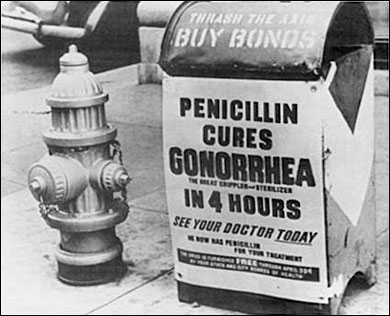
Gonorrhea: Not So Easy To Kill Anymore

Not anymore. . .

Think if you get the clap, you can just go get a shot or take a pill to be cured?

Not so fast, bucko. There’s now another reason to protect yourself:

Today, the Centers for Disease Control and Prevention (CDC) outlined laboratory trends from 2000-2010 that show growing resistance of gonorrhea to antimicrobials.  Gonorrhea, a sexually transmitted disease (STD), is a major cause of pelvic inflammatory disease, ectopic pregnancy, and infertility and can facilitate HIV transmission. (Press release, National Coalition of STD Directors)

Yep. Gonorrhea. It used to be a serious disease, before antibiotics made it easy to treat. Now that we’ve been taking antibiotics for everything, resistance is setting in and we’re running out of effective drugs to cure it.

…cephalosporin antibiotics are the last line of defense for treating the disease, as the bacteria has developed resistance to all other antibiotics.  The highest level of resistance to cephalosporins, regardless of sexual partner, was found in the Western region of the United States, particularly Hawaii and California, as well as in men who have sex with men in all regions.

“This new data outlines what state and local health departments have been seeing on the ground—that highly untreatable gonorrhea is near,” stated William Smith, Executive Director of the National Coalition of STD Directors. “There are currently no new drugs in development for this infection.  If this last class of drugs fails we will have no definitive treatment options for gonorrhea.  We call on researchers, government, and partners in industry to make the development of new, effective drug treatments for gonorrhea a public health priority,” continued Smith.

This is a big deal.

It’s important for sexually active persons to be screened for all STD/STI’s at least every six months, or more often if you have many sexual partners and/or have had unprotected sex- and that includes oral- gonorrhea can easily infect the throat. And, remember, any STD/STI increases the risk of contracting/spreading HIV. From the CDC:

Untreated gonorrhea can cause serious and permanent health problems in both women and men.

In women, gonorrhea is a common cause of pelvic inflammatory disease (PID). About 750,000 women each year in the United States develop PID. The symptoms may be quite mild or can be very severe and can include abdominal pain and fever. PID can lead to internal abscesses (pus-filled “pockets” that are hard to cure) and long-lasting, chronic pelvic pain. PID can damage the fallopian tubes enough to cause infertility or increase the risk of ectopic pregnancy. Ectopic pregnancy is a life-threatening condition in which a fertilized egg grows outside the uterus, usually in a fallopian tube.

In men, gonorrhea can cause epididymitis, a painful condition of the ducts attached to the testicles that may lead to infertility if left untreated.

Gonorrhea can spread to the blood or joints. This condition can be life threatening. In addition, people with gonorrhea can more easily contract HIV, the virus that causes AIDS. HIV-infected people with gonorrhea can transmit HIV more easily to someone else than if they did not have gonorrhea. (emphasis mine)

We’ve taken the cure for granted for too long. So- be careful out there.

Full article here.

Havre Has It!

A kick-ass event, that is.

The Havre Daily News had a great write-up about today’s event with Jamee Greer of the Montana Human Rights Network and the Pride Foundation’s Montana Organizer, Caitlin Copple. The meeting will be held in the Crowley Room, on the second floor of MSU Northern’s Student Union tonight from 6-8pm. It’s purpose is

 “to hear the inside scoop on the 2011 Legislature and its implications” for civil rights of Montana’s gay and lesbian community, according to an email from Pride Foundation Organizer Caitlin Copple.

Copple and MHRN lobbyist Jamee Greer are bringing their organizations together for this meeting, which Greer said made this event unique from others he has already held in Missoula, Bozeman and Whitefish.

Part of the reason that Havre will be receiving special treatment is because it is Hansen’s home district, after she sponsored House Bill 516, a bill that was intended to overturn a Missoula ordinance protecting against discrimination based on sexual orientation.

We all remember Kris Hansen, don’t we? If not, try going here.

Good things being done by good people. Support them if you can.

HDN story here.

“When I was eight years old, I fell in love with Eleanor Roosevelt.”

Bilerico article is here.