Anne Rice Reviews “Marriage, a History: How Love Conquered Marriage”

One of the most contentious issues of our time, marriage has been “claimed” by Christians (and others) as an unchanging “institution”, “sacrament”, “contract”, etc. This is far from historically accurate. Author and- I would argue- theologian Anne Rice weighs in with a recommendation from her Facebook page yesterday:

The nation’s talking about marriage, Same Sex Marriage, definitions of marriage, who owns marriage, etc. Well, here is a link to an excellent History of Marriage written by Stephanie Coontz that I reviewed for Amazon a while back. I recommend this book to all who have strong feelings about the institution of marriage and how it has been viewed over the millennia. Comments welcome. (I’ve linked to my review, but there are a lot of others posted on the site).

From the book description: Marriage has never been more fragile. But the same things that have made it so have also made a good marriage more fulfilling than ever before. In this enlightening and hugely entertaining book, historian and marriage expert Stephanie Coontz takes readers from the marital intrigues of ancient Babylon to the sexual torments of Victorian couples to demonstrate how recent the idea of marrying for love is-and how absurd it would have seemed to most of our ancestors. It was only 200 years ago that marriage began to be about love and emotional commitment, and since then the very things that have strengthened marriage as a personal relationship have steadily weakened it as a social institution. Marriage, A History brings intelligence, wit, and some badly needed perspective to today’s marital debates and dilemmas.

Her Review: This is an extremely well researched investigation of the institution of marriage from earliest times to the present. It may prove shocking to some readers to discover how recent our concept of “traditional marriage” may be. But information such as this book provides is essential for those concerned about marital values. History provides us with immensely important lessons regarding the attitudes and feelings of human beings over the centuries; and we must not shrink from the observations made here as we seek to understand the social and economic and even religious crises of our times. The scope of the book is incredibly ambitious yet it is clearly and at times entertainingly written, and always inviting. It can point the way for further research in many areas. On all counts, a fine and important book.

Agreed. To have this information in one place is important- and the scholarship is undeniable. Click book to see more reviews on Amazon and get a sample of the book.

Who’s Your Daddy?

As if you had to ask.


Steve Bullock Just Lost My Vote

Here’s why. From an article in Montana’s Lee newspapers on gubernatorial candidates and social issues:

The nine candidates were asked whether they favored changing Montana’s constitution to allow gay couples and lesbian couples to marry.

Miller opposed such a change, noting that 67 percent of Montanans voted in 2004 to say that “only a marriage between one man and one woman shall be valid or recognized as a marriage in this state.”

Hill, Livingston and Lynch, all Republicans, said, “I believe marriage is between one man and one woman.”

Bullock said, “I do not favor changing the constitution but would support legislative measures giving committed same-sex couples the opportunity to be together, free from discrimination.” This would include allowing a person to visit his or her partner in the hospital, he said.

Stapleton said he would oppose amending the constitution for that purpose, adding, “I think it’s healthy we support and cherish the traditional family.”

O’Hara said he would not change the constitution, adding: “I think our constitution adequately protects the lives of Montanans.”

Fanning said the ban on gay marriage should stand: “I believe that the sanctity of the family is the core of our society.”

Standing alone among all candidates, Margolis said it makes simple common sense to change the Montana Constitution to allow gay or lesbian couples to marry or form civil unions.

“The Montana Constitution guarantees fair and equal treatment to all people,” she said. “People should not be discriminated against, including gay and lesbian couples.”

I have to say I’m very disappointed in Steve Bullock. Ironically, he apparently is unaware of the pain and suffering of LGBT persons in his state because of legislative discrimination (including a sodomy law still on the books)- or he’s unwilling to acknowledge us in the face of staying safe and winning votes. Barack Obama, on the other hand, has done some amazing things, like already (2 years ago) extending LGBT partner visitation rights in most hospitals. What has Steve Bullock done for us lately ever? Not much. I’m taking the Bullock sticker off of my car.

At this point, my primary vote is going to Margolis.

Yeah, it’s that important.

Update: My Dissent Explained

HT:JG
Read more: http://missoulian.com/news/state-and-regional/most-in-gop-governor-s-race-want-to-restrict-abortion/article_4988a480-9338-11e1-ab41-0019bb2963f4.html#ixzz1tikfD2MI

National Catholic Reporter Supports Bishops Call To Rethink Sexuality

From New Ways Ministry Blog
 

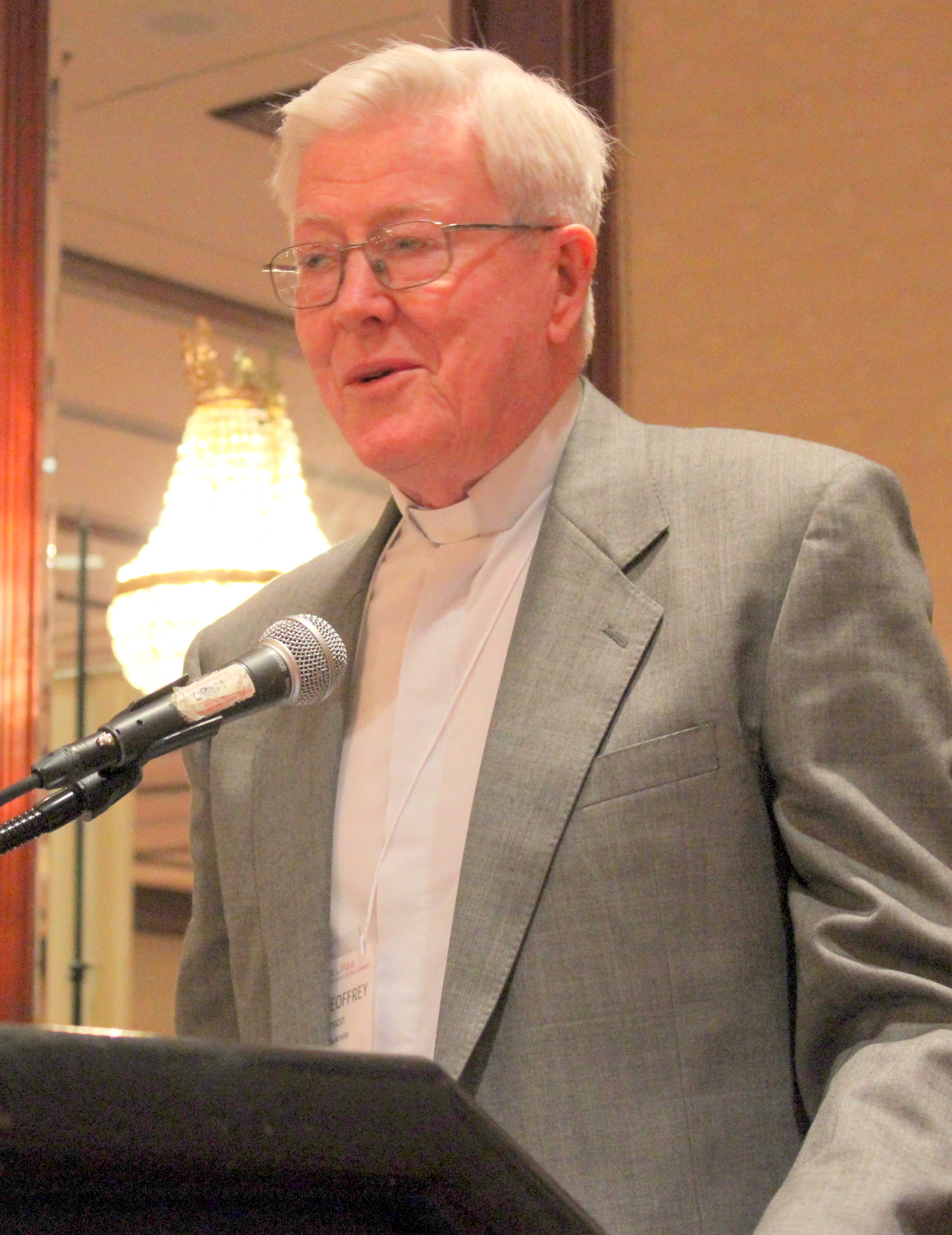
Bishop Robinson

New Ways Ministry’s Seventh National Symposium in Baltimore two weeks ago continues to make headlines.   The National Catholic Reporter (NCR) has editorialized in support of Bishop Geoffrey Robinson’s call to re-think the Catholic Church’s official teaching on sexuality, which he made during a talk at the Symposium.  An NCR columnist, Eugene Kennedy, the renowned psychologist and church observer, has also praised the Australian bishop’s proposal.

After summarizing Bishop Robinson’s main points (which can be read in the same newspaper’s article about the talk), the NCR editorial notes:

“Robinson is not the first to articulate the need for a responsible reexamination of sexual ethics, one that takes seriously the radical call to selfless love, but the addition of a bishop’s voice adds new dimension to the conversation. By rebuilding Christian morality in the area of sexuality in the way Robinson suggests, we will achieve a teaching that can better challenge the message about sexuality trumpeted by the dominant culture in television, music and advertising, a sexuality that idolizes self-gratification and that puts ‘me’ before ‘you.’ By placing the needs of the other first, our sexual ethic would reject sexual violence — physical and psychological, the idolatry of self-gratification, the objectification of people, and the trivializing of sex when it is separated from love.”

The NCR rightly points out that Robinson’s approach is not one of a wild-eyed radical:

“In the end, Robinson is making a profoundly traditional suggestion about sexuality, because what he proposes is rooted in genuine personal responsibility. He writes: ‘Many would object that what I have proposed would not give a clear and simple rule to people. But God never promised us that everything in the moral life would be clear and simple. Morality is not just about doing right things; it is also about struggling to know what is the right thing to do. … It is about taking a genuine personal responsibility for everything I do.’ ”

The tradition that Robinson is following is the tradition of Jesus in the Scriptures:

“Robinson’s take on sexuality — that it deserves deeper consideration than the narrow, rule-bound approach that has evolved in Christian circles — takes us to the heart of the radical approach Jesus took toward human relationships.”

NCR columnist Eugene Kennedy has also praised Bishop Robinson’s proposal.  In an essay entitled “Bishop Robinson and the redemption of eros,” Kennedy writes:

“Bishop Robinson’s purpose is, in fact, that set out by Pope John XXIII as his reason for convening Vatican II, “To make the human sojourn on earth less sad.”

“Indeed, in urging a much needed review of what and how the church teaches about human sexuality, Bishop Robinson draws on themes central to Vatican II. The first of these is found in placing the reality of the human person rather than the abstraction of natural law as the central reference point in church teachings and papal pronouncements about marriage and sexual activity.

“The second is found in the shift from an emphasis on objective acts to subjective intentions and dispositions in making judgments on the badness or goodness of how people behave. This rightfully emphasizes the impact that our actions or omissions have on other persons rather than on the ire that has idled within so many church leaders who have been so preoccupied with sin. . . .

“Robinson’s convictions on the need for a thorough examination of the church’s teaching on sexuality are significant in themselves but also because he has found a way to speak about this essential matter from within the church, even if in the mannered traditional way that dialogue moves, however slowly, toward a wider circle of prelates.”

After Bishop Robinson spoke at the Symposium, many people told me that they felt something new and remarkable had taken place. One person told me that it felt  like a new chapter had been opened in the church’s discussion on sexuality.  His talk offered not only hope, but a way forward that people felt was authentically human and authentically Catholic.His experience as the Australian Bishops’ Conference coordinator of pastoral responses to that nation’s sexual abuse crisis transformed his thinking on how Catholicism approached sexuality and how that approach can be improved.  As was evident from the style and content of his talk, Bishop Robinson had one three things that more bishops should emulate:  he opened his ears, his mind, and his heart.
 
–Francis DeBernardo, New Ways Ministry

Gay Marriage – A Mystery – Church History

Scott Terry’s sculpture about Proposition 8 is now a YouTube video:

From his website:

When the religious right campaigned to repeal the right of California gays and
lesbians to marry, I was silent.  It’s not that I didn’t care or was uninterested…I
just didn’t care enough to get involved.  I don’t ever see myself getting
married, so I did not join the fight.

That was a mistake.

So while I did not voice my opinions or feel alarmed at the potential for
California voters to feel strongly enough about gay marriage to amend the
state constitution, I do have a really short fuse when people take their
religious dogma out of their respective churches and expect everyone else to
adopt it.  I get even more impatient with the “it’s the way it’s always been”
argument.  I mean, get real.  If we lived by the way it’s always been, we’d still
believe in slavery and child labor.

This art piece is my late entry into the argument and an apology for my earlier
silence.
On December 5th, 2008 when I first envisioned the creation of this piece, I
sent an email to the ProtectMarriage group, inquiring where I might obtain
some YesOn8 lawn signs.  Here’s the text of that email:

Me:  “Hi.  I need some YesOn8 lawn signs.  Can you tell me where I could get
them?”

The ProtectMarriage folks reply:  “Your best option would be visiting your
local church.  They might have some leftover from the campaign.”

Powerful message, I think.

Me, too. Thanks Scott!

Sullivan: “The Hierarchy Versus The Future”

In one of the most concise analyses I’ve read on the issues created and faced by the Roman Catholic Church, Andrew Sullivan offers some articulate insight:

Stained glass at St John the Baptist's Anglica...

Image via Wikipedia

Here in America, we see a Catholic hierarchy all but joining forces with the Republican party to insist on their right to control what is offered as healthcare to their employees in religiously-affiliated schools and hospitals and public services. In Britain, we see a furious campaign to prevent gay couples from having civil marriage licenses, a reform backed by the Conservative prime minister, and both opposition parties. And for much of the moment, this will be what the Church presents to the world: an attempt to control the medical care for women in its employ and its determination to keep homosexuals out of the word “marriage” and, thereby, “family.”

There is a spiritual and religious cost to this. And I do not mean that the Church should always “keep up with the times.” There are moments when a Church’s role is precisely to abandon the contemporary world in order to uphold what it takes to be eternal truths. But the narrowness of the current crusades – against a pill used by 98 percent of Catholic women, whose consciences are their own, and against people of a different sexual orientation that the Church acknowledges is unchosen – damages Christianity in the culture, and, in my view, misses the forest for the trees.

Christianity is not about the control of others; it is about the liberation Christ brings to each of us, and how we can learn to trust that incarnated love in escaping our daily failures, sins, weakness, cruelties – in order to bring love into being in the world.

Exactly what I’ve been saying (although not as eloquently). The alignment with a particular party is dangerous precisely because politics and religion are partners of convenience, not of allegiance or ideology. Those shift much more often than does dogma.

Andrew further quotes Fr Ceirion Gilbert, a Welsh priest who sums up the situation in The Tablet thus:

As a priest who deals daily with young people, teachers and catechists, I fear that yet again the Catholic Church is aligning herself with the wrong side, portraying herself as the “defender” of a position and an interpretation of society and humanity at odds with that of younger generations and almost incomprehensible to them in its rigidity and – to use an admittedly “loaded” term, bigotry.

Is it possible, also taking into account Bishop Robinson’s public comments last week, that some people are actually getting it?  When will the bishops get it?

The church is going to have a tough row to hoe if it believes it can play offense on sexuality while simultaneously playing defense on clerical sexual misconduct and abuse. That kind of ridiculousness is what is seriously undermining her credibility today.

Read Fr Gilbert’s full essay here. It’s fantastic. 

The Pope Chooses War, I Choose Self Defense

Yesterday Pope Benedict XVI spoke to a group of bishops on their ad limina visit- and with all the topics available to him (hunger, poverty, abuse of women, social injustice, racial inequalities, nuclear threat, stewardship of resources, etc), he chose to speak to them about the necessity of battling the “powerful political and cultural currents seeking to alter the legal definition of marriage….The church’s conscientious effort to resist this pressure calls for a reasoned defense of marriage as a natural institution,” which is “rooted in the complementarity of the sexes and oriented to procreation,” he said.

“Sexual differences cannot be dismissed as irrelevant to the definition of marriage,” the pope said.

Defending traditional marriage is not simply a matter of church teaching, he said; it is a matter of “justice, since it entails safeguarding the good of the entire human community and the rights of parents and children alike.”

Whenever I hear a leader speak the word “Safeguard”, I pay attention. It is a word used by institutions and governments to promote the protection and defense of something fundamental to it. It is not a passive word. It says to me that the Pope is ready to fight for his narrow theological/historical position on sexuality and marriage. Something he believes is fundamental to Christian faith- even though marriage is curiously absent from the Nicene Creed (325-381 ad)- which most Christian churches profess as containing the essential, fundamental elements of Christian belief today.

He did not choose dialog or express interest in hearing about the experiences of thousands (millions?) of LGBTQ catholics and their families. He did not choose to understand, he chose to condemn.

In other words, he openly advocated war.

It’s a culture war, it’s a war of ideologies. It is, in fact, if you count all the open and affirming Christian churches that  welcome LGBT persons and their partners and children into their congregations, a war of christian theology. But it’s a war nonetheless.

I believe it to be totally unnecessary- and I also believe it conflicts with the very theology the catholic church espouses.

“War” is defined thusly: “a state of armed conflict between different nations or states or different groups within a nation or state”. “Armed conflict” is an important term to notice here. I think it can also mean non-physical weapons- weapons of ideology or theology, for example. But I would be naive not to think that some of the faithful out there may hear in these words a clarion call to harm LGBT persons and their families. I would also submit that the Pope’s words have already harmed them by creating ‘enemies of the church” out of persons and families who have nothing more important in mind than following their hearts and minds- and souls. And, if you recall your history, enemies of the church have not fared so well.

And in that case, the Pope needs to take a closer look at his own catechism.

If someone attacks me and threatens my life or my way of life, according to the Catechism of The Catholic Church, I have the right to defend myself.

 2264 Love toward oneself remains a fundamental principle of morality. Therefore it is legitimate to insist on respect for one’s own right to life. Someone who defends his life is not guilty of murder even if he is forced to deal his aggressor a lethal blow:
If a man in self-defense uses more than necessary violence, it will be unlawful: whereas if he repels force with moderation, his defense will be lawful…. Nor is it necessary for salvation that a man omit the act of moderate self-defense to avoid killing the other man, since one is bound to take more care of one’s own life than of another’s.[65]

2265 Legitimate defense can be not only a right but a grave duty for someone responsible for another’s life. Preserving the common good requires rendering the unjust aggressor unable to inflict harm. To this end, those holding legitimate authority have the right to repel by armed force aggressors against the civil community entrusted to their charge.[66]

And with the rhetoric being used by the Pope to the bishops in his address yesterday, I have every reason to believe that these are not words of someone struggling to understand the reality of LGBT persons, these are the orders of attack given by a supreme commander to his highest officials. And I’m confused because- try as I might- I can’t imagine Jesus saying them.

I also have every reason to fear for my safety and the safety of all LGBTQ persons. And before you accuse me of being overly dramatic, remember that the pro-life message has spurred numerous acts of violence- in the name of life, I might add. People in Uganda, the Middle East and elsewhere are being butchered and abused because they are known or perceived to be gay.

So do you think these words will be like soothing balm on the righteous indignation of the zealot?: …”threats to freedom of conscience, religion and worship which need to be addressed urgently so that all men and women of faith, and the institutions they inspire, can act in accordance with their deepest moral convictions.”

I’m an idiot if I don’t believe that someone out there is going to see this as a reason for violence- physical or psychological. And remember how powerful psychological threats are- those are the very things killing our kids.

I want to be clear- I am not advocating violence in any form. I’m advocating self-defense. And I’m advocating a careful, calculated, firm and reasonable response to this madness. I want the argument to be two-sided. I want the voice of the Pope and the bishops to be countered by the voices of people who see the Christian message in a different way.

If the Pope chooses war, I choose to oppose that war. I challenge it on its very principle.

So, if I may be so brazen, I would like to be one of those counter voices. Feel free to add your own voice in the comments.

To my LGBTIQ family,

Love toward yourself remains a fundamental principle of morality. Therefore it is important and necessary to insist on respect for your own right to life. I believe you have been created to fill a very important place in this world- a place often dramatically misunderstood and opposed by people out of ignorance and fear.

It is crucial that you understand that you are not alone- there are millions of people who want to understand you and accept you and who will love you. You have the right to be understood- and you have the right to love and be loved in the ways you feel are most faithful to your created nature.

You have the right to live free from fear of attack and violence. You have the right to defend yourself against ignorant attacks on your dignity, happiness and self-respect. You have the right to fulfill your potential and to follow your heart and mind and soul and dreams to the best of your ability. Despite ignorance, despite persecution, despite fear and power and hate.

I believe that we are all beloved by the God of our understanding. I believe that we are valuable in being beloved. And that value is not diminished, even in the face of anger, fear and ignorance. Even in the face of religious belief which would deny us that value.

We are a courageous, wonderful people, with visions of love and acceptance and equality and happiness that I believe are deeply important to the future of the world.

I beg you, don’t let go of these visions- no matter how strongly others try to pull them away from you. They are your birthright.

They are the key hope to a world filled with peace.

Amen.

Guest Post: An Authentic, Catholic History Of Marriage

By Terence Weldon

With British bishops on the attack against proposals for gay marriage claiming that they are defending “traditional” marriage, it is important to remember that their representation of marriage history is misleading. When Mexican bishops made similar false claims about the history of marriage, I responded with a post on the history of marriage, as described by a specialist on the subject – a Catholic, Jesuit professor of history at a Catholic university.

Here follows that post, republished:

In Mexico,  Cardinal Norberto Rivera has attacked the Supreme Court ruling that upheld same sex marriage in Mexico City, calling it “evil”. It is not surprising that a Catholic bishop should oppose marriage equality, and while I sharply disagree with him, I must respect his right to express an opinion.  He also says it is wrong to go against Christian doctrine that recognizes only marriages between a man and a woman. Again, barring a quibble or two about the effect of disagreement in conscience, even as we disagree with this, it is clear that this is orthodox Catholic teaching.

However, in invoking Christ himself, he goes way too far.

He called same-sex unions “inherently immoral,” saying they “distort the nature of marriage raised by Christ to the dignity of a sacrament.”

This is sheer garbage.

I am not aware of any Gospel passage that endorses marriage as been between one man and one woman. Can any reader point to me one?  Christ most certainly did not raise marriage to the dignity of a sacrament – not even the institutional church did that, until the twelfth century, after half its history had passed. Exploring this history has proven fascinating.

Compare the first two accounts I found. This is Wikipedia:

…..first-century Christians placed less value on the family but rather saw celibacy and freedom from family ties as a preferable state. Paul had suggested that marriage be used only as a last resort by those Christians that found it too difficult to remain chaste.[2]

Augustine believed that marriage was a sacrament, because it was a symbol used by Paul to express Christ’s love of the Church. Despite this, for the Fathers of the Church with their profound hostility to sex, marriage could not be a true and valuable Christian vocation. Jerome wrote: “It is not disparaging wedlock to prefer virginity. No one can make a comparison between two things if one is good and the other evil” (Letter 22).Tertullian argued that marriage “consists essentially in fornication” (An Exhortation to Chastity“) Cyprian, Bishop of Carthage said that the first commandment given to men was to increase and multiply, but now that the earth was full there was no need to continue this process of multiplication. Augustine was clear that if everybody stopped marrying and having children that would be an admirable thing; it would mean that the Kingdom of God would return all the sooner and the world would come to an end.

This negative view of marriage was reflected in the lack of interest shown by the Church authorities. Although the Church quickly produced liturgies to celebrate Baptismand the Eucharist, no special ceremonial was devised to celebrate Christian marriage, nor was it considered important for couples to have their nuptials blessed by a priest. People could marry by mutual agreement in the presence of witnesses. This system, known as Spousals, persisted after the Reformation. At first the old Roman pagan rite was used by Christians, although modified superficially. The first detailed account of a Christian wedding in the West dates from the 9th century and was identical to the old nuptial service of Ancient Rome.[3]

There are obvious difficulties with relying on Wikipedia as a source – but it does at least provide us with references to substantiate its claims. Now look at the Catholic Encyclopedia:

That Christian marriage (i.e. marriage between baptizedpersons) is really a sacrament of the New Law in the strict sense of the word is for all Catholics an indubitable truth. According to the Council of Trent this dogmahas always been taught by the Church, and is thus defined in canon i, Sess. XXIV: “If any one shall say that matrimony is not truly and properly one of the Seven Sacraments of the Evangelical Law, instituted by Christ our Lord, but was invented in the Church by men, and does not confer grace, let him be anathema.”

This can do no more than quote the council of Trent, which claims that the sacramental view of marriage has “always”  been taught – totally disregarding the verdicts of church fathers such as Tertullian, quoted above. On marriage as on so much else, the Vatican likes to refer to a “constant and unchanging tradition”, or to claim that it has “always taught”. These claims are seldom supported by real evidence, and must be received with scepticism.

Then I found an impressive on-line history of marriage , in a lengthy outline by Stephen Schloesser, a Jesuit priest and professor of history, which he submitted to Massachusetts Senator Marian Walsh in 2004, during the turmoil in that state over gay marriage. Here are some extracts  – the introduction, and (mostly) just a summary of the main paragraph headings:

Maybe the most frustrating thing I have heard in the recent debate is this claim that has become a mantra: that we are in the process of changing some allegedly unchanging 3,000-year-old institution called “marriage.”Of course, the decision to grant marriage licenses would be a “change” in marriage practice – but“marriage,” whatever that is, is always in the process of being changed. To pretend that its alteration is somehow a rupture in what is otherwise a three-thousand year continuity is just silly.

It seems helpful to me to recall what traditional marriage is: it is a community’s legal arrangement in order to pass on property. In it, a male acquires (in the sense of owning and having sovereignty over) a female for the sake of reproducing other males who will then inherit property.

In Roman law, the authority of the paterfamilias over his wife and children was absolute, even to the point of death. (Even during the enlightenment), Catholic reactionaries opposed the idea of women and children having independent rights and insisted that puissance paternelle (the absolute power of the father) was rooted in nature.

In Judaism, polygyny is found throughout the Old Testament until the inter-testamental period.In general, a survey of traditional Old Testament marriage makes the reader very grateful that we are not bound to follow its precedents or precepts.

Early Christianity was really not into marriage. St Paul counseled his followers: “It is better not to marry.”Augustine (following St. Paul) counsel ed marriage as a remedy for concupiscence – i.e., satisfying male sexual desire in a non-sinful way.In general, during the early medieval Church, all sex is a problem, and all sex is equally a problem.

Marriage, both in the Roman and the early medieval periods, was the moment that marked the passing of the rights over a woman from her father to her husband. She wasn’t a person under the law.

Serial polygyny was regularly practiced by early medieval kings famous for their Christian piety. Their marital practices did not trouble the Church. Concubinage was also widely practiced among the European elite, and this practice was unproblematic, even in the eleventh century. Divorce was also completely unproblematic until the twelfth century.

In the twelfth century, the idea of marriage as a “sacrament” – i.e., as something fundamentally regulated by the Church – was established along with priestly celibacy and primogeniture.

The simultaneous appearance of these practices shows the way in which the preservation of property suddenly became an issue of great anxiety: celibacy prevented church property from passing on to priests’ wives and children; primogeniture insured that property remain intact as it passed on to only the eldest son; and Church surveillance of marriages made sure that an authority larger than, say, the most powerful warrior / aristocratic families on the block, was overseeing the passing on of dowries – e.g., Eleanor’s region of the Aquitaine. Women became the means of medieval corporate mergers: families consolidated power and property, both by means of dowries as well as by being the producers of male heirs.

Marriage as an “emotional unit” as opposed to an “economic unit” was largely an invention of the early nineteenth century. Bourgeois marriage was a classbound arrangement.

Conversely, for the males, prostitution is seen as an integral part of the new arrangement of marriage.

Divorce, finally legalized again in France in the 1880s, emancipated men but perhaps not women unless they had reserved some independent means. It too was part of the new emotional understanding of marriage, i.e., as something not arranged by parents but rather entered into partly because of emotional desires.

It is hardly coincidental: this is also the period during which the idea of “homosexuality” – and then, later, “heterosexuality” – was invented.

Catholic ideas about marriage and sexuality are in constant conversation with the wider society/culture’s evolving values and needs.

As late as the Code of Canon Law of 1917, the official position continued to be depressingly materialist: the purpose of marriage was considered to be “procreation,” while a secondary end was a “remedy for concupiscence.”

This genuinely two-millennia-old view changed on New Year’s Eve, 1930.(following the Lambeth Conference decision to approve contraception). The papal encyclical Casti Connubii introduced a fairly shocking innovation: one of marriage’s “second ends” was the “unity” between the spouses.The 19th-c. invention of marriage as an “emotional unit” in which two persons came together not merely to procreate but in order to form a sphere of emotional support – a thoroughly modern meaning of marriage – was accepted by the papacy.

On October 29, 1951 came a second important innovation in Catholic views. In one of the most insignificant settings possible – i.e., not an encyclical or synod but rather an address to Italian midwives –Pius XII suggested that couples, as long as they did not use “artificial” contraception, could arrive at a moral decision to be sexually active in a way that did not lead to procreation.

Between the years of approximately 1948 to 1963, the Catholic bishops of New England lobbied furiously against the legalization of contraception. John Ford, a Jesuit moral theologian who was the most aggressive proponent of the anticontraception stance (and taught in Weston, Mass.) admitted letter that the “natural law” argument had failed; if the point of “natural law” arguments was to convince any “rational person” (unlike, e.g., Scripture, which would convince only a religious believer), and if all these rational persons were rejecting the Catholic position, then what did that say about the law’s “natural” aspect? Eventually, the bishops abandoned this fight and made a distinction between public policy and personal religious practice.

To summarize: when one compares the 1917 Catholic view of marriage – “procreation” as a primary end, “a remedy for concupiscence” as a secondary end – with the 1969 view expressed in both the Vatican Council and encoded in canon law – “the community of the whole life” that includes both the “unbreakable compact between persons” as well as the “welfare of the children,” one can see that the change in Catholic doctrine and law has been nothing short of astonishing.

The full piece is the most useful outline of marriage history and the church I have come across.  I have selected here only the bits that refer specifically to the history of Christian marriage. There is much more on marriage in other cultures, and on the church and homosexuality. I strongly urge that you read it in full – or download or bookmark it for future reference, as I have done.

Follow Terence’s amazingly energetic and theologically responsible blog, Queering The Church. Amazing stuff.

Will Minnesota’s Bishop Follow Maine In Marriage Equality?

From New Ways Ministry Blog:

Catholics in Minnesota are asking the states’ bishops to follow the example of Maine’s Bishop Malone by taking a less activist approach to the state’s upcoming marriage equality referendum.  In the past week, the Maine prelate released a pastoral letter on traditional heterosexual marriage, and announced that the Diocese of Portland would not be funding or staffing the political campaign to make sure that marriage equality for lesbian and gay couples is defeated.

Catholics for Marriage Equality Minnesota has instituted a number of new initiatives to make sure that their state’s proposed constitutional amendment against marriage equality will be defeated, including asking their bishops to take a cue from Bishop Malone.  According to a news report in the Minneapolis Star-Tribune:

“ ‘We are encouraged by Bishop Malone’s decision to place at the center of the Church’s mission in Maine Jesus’ call to care for the poor and marginalized,’ said Michael Bayly, executive director of Catholics for Marriage Equality Minnesota. ‘We pray that the bishops here in Minnesota will not only follow the example of Maine but will also be open to the love and commitment embodied in the relationships of committed gay and lesbian couples.’ ”

According to Catholics for Marriage Equality Minnesota’s blog site, Sensus Fidelium, the group

” . . . has organized a weekly prayer vigil during the season of Lent. Over 100 people attended last Sunday’s vigil, and organizers anticipate the numbers of attendees to continue to increase. Those who gather bear public witness to the fact that they do not see anything of Jesus’ life or message in Archbishop John Nienstedt’s support of the so-called ‘marriage amendment.’

“The group has also started an online petition asking Archbishop Nienstedt to re-focus the energy and resources of the Church away from divisive and unnecessary constitutional amendments back towards the core Catholic teachings of compassion and care for others. The petition can be found at FocusOnSocialJustice.Com

You can learn more about Catholics for Marriage Equality Minnesota at their website,c4me.org.

For more information about the Maine bishop’s action, you can read yesterday’sBondings 2.0 blog post.

–Francis DeBernardo, New Ways Ministry

Good News In Maryland, Bad News In New Jersey

By Francis De Bernardo, New Ways Ministry

Yesterday, the Maryland House of Delegates approved a marriage equality bill, virtually guaranteeing it would become law, since the bill is likely to pass the Senate, and Governor Martin O’Malley, a Catholic, has promised to sign it.

Yesterday in New Jersey, however, Governor Chris Christie, a Catholic, vetoed that state’s marriage equality bill which had passed both Assembly and Senate.  The legislature has until January 2014 to override the veto.

MARYLAND

The Baltimore Sun report rightly noted O’Malley’s role in the bill’s success in Maryland, and quoted him saying:

“We are a good people. We all want the same things for our kids.”

The Washington Blade’s story carried a quote from O’Malley that reflected the Catholic social teaching principle behind the issue of marriage equality:

“Today, the House of Delegates voted for human dignity.”

Earlier this week, The Baltimore Sun carried a news report on a talk O’Malley gave in which he described the evolution of his thinking on marriage equality.  New Ways Ministry’s Sister Jeannine Gramick is quoted in that article about her thoughts to O’Malley’s support of the issue. Sister Gramick said:

“I’m proud of him for being a Catholic and for witnessing real Catholic values. … I’m so glad he’s supporting the marriage equality bill.”

Last night, Bondings 2.0 posted New Ways Ministry’s response to the vote, along with a link to The Washington Post article about the news.

Even after the bill would become a law, the struggle would still not be over, as opponents have promised to mount a referendum campaign

NEW JERSEY

In The New York Times account of Christie’s veto, they explain that

Governor of New Jersey at a town hall in Hills...

Image via Wikipedia

“The governor’s veto was conditional, asking the State Legislature to amend the bill, so that rather than legalizing same-sex marriages, it would establish an overseer to handle complaints that the state’s five-year-old civil union law did not provide gay and lesbian couples the same protections that marriage would.

“Mr. Christie also affirmed his call for the Legislature to put a referendum on same-sex marriage on the ballot in November. . . .

“At the same time, Mr. Christie repeated what the State Supreme Court said in 2006 — that same-sex couples deserve the same benefits enjoyed by married couples. Answering testimony that same-sex couples in civil unions had more trouble than married couples in matters like obtaining mortgages and making health care decisions, the governor said he wanted to set up a new ombudsman to make sure gay and lesbian couples did not suffer discrimination.”

Steven Goldstein, chairman of Garden State Equality, responded in the Timesstory to the ombudsman idea by calling it

““the equivalent of gold-plating a separate water fountain for a specific class of people.”

In a posting two days ago, Bondings 2.0 noted that Washington State’s Catholic governor Christine Gregoire, who this week signed a marriage equality bill into law, sent a letter to fellow Catholic Christie, offering to discuss her evolution on the issue. Christie had not responded.

In their editorial column, the Times opined about “Governor Christie’s Misguided and Intolerant Veto,”

“Sadly, there was no surprise to Gov. Chris Christie’s veto on Friday of the same-sex marriage bill that cleared New Jersey’s Assembly and Senate this week. Mr. Christie had said all along that he would block the measure as soon as it reached his desk. That does not change the message of intolerance or lessen the pain for gay residents and their families. Mr. Christie compounded the insult when he dismissed the Legislature’s support for the rights of gay people as merely ‘an exercise in theater.’ The only one who deserves that accusation is Governor Christie, who is clearly pandering to his own conservative base. . . .

“This isn’t about theater and shouldn’t be about politics. Marriage equality is a basic right.”