Another Congressional Candidate For Marriage Equality

Could you imagine this even two years ago? We have two very public videos about marriage equality by Montana Congressional candidates. You’ve probably seen Dave Strohmaier’s video- but here’s another one from Rob Stutz:

Cool.

MONTANA PRIDE 2012: DETAILS!

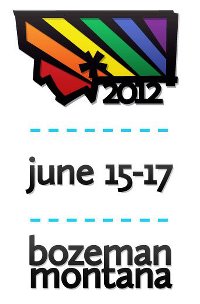
For the second year, Bozeman will be hosting the 2012 Montana Pride Celebration on the weekend of June 15-17. Montana Pride is a statewide celebration of diversity and equality, which attracted thousands to Bozeman in 2011 for a weekend packed-full of community fun, education and celebrating diversity. The Pride Celebration is an annual event implemented and developed by the Montana Pride Network, a 501(c)3 non-profit volunteer organization with board members from across the state.

The Pride Celebration gathers local, state-wide and regional friends of the LGBTQ Community (Lesbian, Gay, Bisexual, Transgendered, Intersex, Queer and Questioning) as well as the Native American Two-Spirit Society.

For 2012 Pride, Bozeman has expanded their venues and weekend activities to accommodate even greater participation and involvement. Venues include the Ballrooms at Montana State University, various business locations in Downtown Bozeman, The Bozeman Public Library and more. Pride Weekend will include a schedule of dynamic entertainment from all around the mountain west including our Friday night concert with Jessie and the Toy Boys, a Saturday morning Pride Parade on Main Street, thoughtful weekend workshops, panel discussions, music by Katie Goodman of Broad Comedy on Saturday Night, with local and regional drag talent both evenings, hosted parties and evening dances. The Bozeman planning committee continues to welcome friends of all ages and backgrounds to celebrate Pride, honesty and equality with us.

Our highly-attended Pride Parade on Main Street, Saturday morning June 16th is open for all ages to attend and/or participate, as it will be a community and family-oriented event with Grand Marshals from Montana’s own Legislature, Diane Sands, Christine Kaufmann, Bryce Bennett and from the Montana Human Rights Network, Jamee Greer. The Pride Parade will begin at West Main Street and South 3rd Ave and will end at the Bozeman Public Library Lawn, with an Equality Rally and Festival following for the whole family. Parade registration forms are available on our website, and must be completed in advance for approval.

We’re excited to have featured members of our community openly participating during Pride, which includes Electra Sexton and various Drag Performers from Montana, Christian evangelist Kathy Baldock will be presenting a vision of LGBTQ-inclusive Christianity, Roberta Zenker will be sharing excerpts and stories from her recently-published memoir, Trans-Montana and a number of talented local DJ’s will be keeping the rhythm primed at our evening dances.

Free HIV Testing will be available throughout the weekend.

Weekend General Admission passes and VIP packages are for sale online at www.montanapride.org, seating at certain weekend events will be limited so early-ticket purchases are greatly encouraged. Youth Activities for ages 15-18 have been scheduled along with our regularly planned 18+ mature audience events Friday& Saturday night, with childcare also being available during our day time activities.

In 2011 regional business and organizational sponsorships were a huge aspect of our success and gave us the ability to grant over $10K back into Montana’s growing momentum for quality and diversity. For 2012, we’d like to welcome back the support not only of our vibrant community, but also the businesses and organizations, big and small, that daily contribute so much to making Montana a beautiful place to live. Please visit our website if you or someone you know is interested in sponsoring this year’s event. The Montana Pride website also has lists of local hotels for weekend-rates, Volunteer Opportunities, and resources for our Saturday Festival.

So please save the date, mark your calendars, and JOIN us for another ground-swelling year of celebrating Pride, honesty and the pursuit of happiness in Montana.

See you there!

ADAP Watch

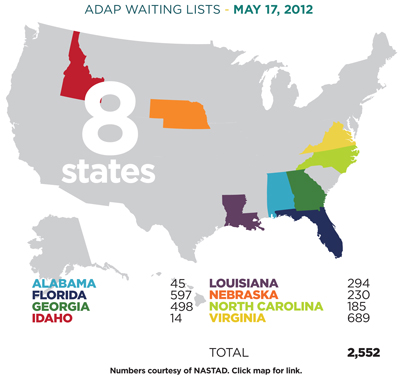
From NAPWA: Recently released supplemental federal funding is slowly bringing state waiting lists down – 2,552 this week. Regional disparities are troubling, though. Ninety percent of Americans on ADAP waiting lists are in the South. The only non-Southern state with comparable numbers is Nebraska. The South is where HIV is spreading fastest, and providing HIV drugs to those who need them would help prevent new infections.

Here are the latest numbers from our friends at NASTAD:

Pride Foundation In Montana: Promoting Equality And Generosity- With A New Website

Pride Foundation launched a new website this week, making it much easier to focus on the great work we are doing throughout the Pacific Northwest. And yes, I say we. And so should you.

Since 1985, Pride Foundation has been promoting a culture of philanthropy and generosity among LGBT people and our allies- most recently supporting Marriage Equality in Washington State. And we’re not stopping there.

Pride Foundation is proud to support LGBTQ equality in Montana. Building on the first Montana grant awarded in the 1990s supporting a LGBTQ youth conference, we have been growing support for Montana organizations and scholars thanks to donors and volunteers with more than $300,000 awarded to date. For every $1.00 given in Montana, $3.80 is returned to Montana by Pride Foundation.  Seriously. That’s a firm and amazing commitment.

As a donor-supported community foundation and a catalyst for change, we support transformative philanthropy, programs, and individuals in the Northwest that help people find joy and strength in who they are and where they are—in urban, rural, and remote communities.

Caitlin Copple is Pride Foundation’s full-time Regional Development Organizer in Montana, based in Missoula. But Caitlin travels throughout the Treasure State meeting donors, volunteers, grantees, and scholars—building a community to move LGBTQ equality forward in Montana. She’s on the road for Pride Foundation every week.

Contact Caitlin to learn more about Pride Foundation’s work in Montana and to find out how you can get involved. Be sure to sign up for Pride Foundation’s monthly eNewsletter to learn more about our supporters, grantees, and scholars. You can also read all of Caitlin’s Montana stories online.

Local Leadership: For Montana, By Montana

Local leadership makes Pride Foundation’s work meaningful and relevant as local Montana volunteers help award our grants and scholarships in Montana. Montana’s Leadership Action Team is one group of volunteers that provides guidance and advice to staff. I am proud to be a part of this group of amazing individuals. With representation from Arlee, Billings, Bozeman, Helena, Kalispell and Missoula, the members of the 2012 Leadership Action Team are:

  • Chris Bedoian
  • Rep. Bryce Bennett (D-Missoula)
  • Aaron Browning
  • Suzie Eades
  • Mel Fisher
  • Ginny Furshong
  • Shelley Hayes
  • David Herrera
  • Pat Kemp
  • Tom Marsh
  • Greg Smith – Chairperson
  • Mary Stranahan
  • Mike Wessler
  • Bobbie Zenker
Look for us this summer at Montana Pride– and remember, groups/events can request sponsorships ($50.00 to $500.00 separate from the larger grant cycle) from Pride Foundation through a quick and easy form. Pride Foundation is committed to LGBT Equality and philanthropy in Montana- we want you with us. Remember, for every dollar given by Montanans to Pride Foundation, $3.80 comes back to Montana. That’s an incredible return on your investment.
And our lives here are more than worth it.

Clergy Can Fight HIV On Faith-friendly Terms

An excellent article from Science Daily:

In the United States, where blacks bear a disproportionate burden of the HIV/AIDS epidemic, black religious institutions could help turn the tide. In a new study in PLoS ONE based on dozens of interviews and focus groups with 38 of Philadelphia’s most influential black clergy, physicians and public health researchers find that traditional barriers to preaching about HIV prevention could give way to faith-friendly messages about getting tested and staying on treatment.

The public health community has long struggled with how best to reduce HIV infection rates among black Americans, which is seven times that of whites. In a new paper in the journal PLoS ONE, a team of physicians and public health researchers report that African-American clergy say they are ready to join the fight against the disease by focusing on HIV testing, treatment, and social justice, a strategy that is compatible with religious teaching.

“We in public health have done a poor job of engaging African-American community leaders and particularly black clergy members in HIV prevention,” said Amy Nunn, lead author of the study and assistant professor of medicine in the Warren Alpert Medical School of Brown University. “There is a common misperception that African American churches are unwilling to address the AIDS epidemic. This paper highlights some of the historical barriers to effectively engaging African American clergy in HIV prevention and provides recommendations from clergy for how to move forward.”

The paper analyzes and distills dozens of interviews and focus group data among 38 African-Amereican pastors and imams in Philadelphia, where racial disparities in HIV infection are especially stark. Seven in 10 new infections in the city are among black residents. With uniquely deep influence in their communities, nearly all of the 27 male and 11 female clergy said they could and would preach and promote HIV testing and treatment.

That message, delivered by clergy or other influential figures, would provide a needed complement to decades of public health efforts that have emphasized risk behaviors, Nunn said. Research published and widely reported last year, for example, suggests that testing and then maintaining people on treatment could dramatically reduce new infections because treatment can give people a 96-percent lower chance of transmitting HIV.

“For decades, we’ve focused many HIV prevention efforts on reducing risky behavior,” said Nunn, who is also based at The Miriam Hospital. “Focusing on HIV testing and treatment should be the backbone of HIV prevention strategies and efforts to reduce racial disparities in HIV infection. Making HIV testing routine is the gateway to getting more individuals on treatment. African American clergy have an important role to play in routinizing HIV testing.”

The barriers clergy members face

Many religious leaders acknowledged that they’ve struggled with how best to combat the epidemic, particularly with challenges related to discussing human sexuality in church or mosque, according to the analysis in the paper.

“One time my pastor spoke to young people about sex, mentioning using protection,” the paper quotes a clergy member as saying in one example. “I was sitting in the clergy row; you could feel the heat! I was surprised he said that. Comments from the clergy highlighted they were opposed to that. It’s a tightrope walk.”

Many clergy members also said they face significant barriers to preaching about risk behaviors without still emphasizing abstinence.

“It’s my duty as a preacher to tell people to abstain,” one pastor told the research team, “but if they’re still having sex and they’re getting HIV, there has to be another way to handle this.”

What clergy can do

Many clergy members suggested couching the HIV/AIDS epidemic in social justice rather than behavioral terms, Nunn said. They also recommended focusing on HIV testing as an important means to help stem the spread of the disease and reduce the stigma.

“We need to standardize testing,” one pastor told the researchers. “One thing that we could do immediately is to encourage our congregations — everybody — to get tested. … We’re not dealing with risk factors. And we’re all going to get tested once a year. That’s the one thing that we could do that doesn’t get into our doctrine about sexuality.”

In general, many of the religious leaders said they could encourage discussion of HIV not only in main worship services, but also in ministries and community outreach activities.

FULL ARTICLE HERE
True Story

From my friends at the True Stories Project:

Last week President Obama “evolved” on marriage equality, coming to the conclusion that, personally, he supported the right to marry for gay and lesbian couples.

We couldn’t be any happier or prouder – after all, we’re in the evolution business, nudging along hearts and minds one audience at a time.

500 Screenings!

In fact, last month, we reached our 500th community screening of Inlaws & Outlaws with a very special screening to raise money for our new partners, Washington United for Marriage.

As wonderful as that evening was, we are no less proud of our 499th screening, put together by two churches and a PFLAG chapter in a small town in southwestern Washington. They got over a hundred folks to turn out on a Tuesday night and got a wonderful article in the local paper. The 501st was presented by students at Centenary College in Shreveport, Louisiana as part of Diversity Week. A Virginia chapter of Integrity,the LGBT Episcopal organization put on the 502nd.  And Number 503 kicked off the first Pride Week at Salish-Kootenai College, a small tribal school in rural Montana – the first of three screenings this month in that state.  

We could go on — and we’d love to!  But we can’t do it without you.

With marriage equality finally center stage on the national agenda, we wanted to make it even easier for schools, congregations, and non-profits to host our next 500 screenings.

Introducing our Equality Deal, an easy way to host a screening of Inlaws & Outlaws for free, raise money for your local organization and help more folks evolve in your community.

Here’s how it works:

Equality Deal!

  • First, you pick an Equality Deal package that’s the right size for you.   The screening license is free when you purchase a package of DVDs with the Equality Deal.
  • Next, register your event with us, and we’ll make you a nice event page and give you access to lots of free tools to help promote it.
  • Then, at your film showing, you sell the DVDs at full price, making back your money and, keeping the extra for you or your cause.

We designed it to be win-win, and a great way for us to helping folks in our community evolve. Check out the Equality Deal.  We are so ready to welcome you to our Outlaws Posse.

We all know that the fight for equality is truly about love, family, belonging, the pursuit of happiness – something all Americans can relate to.   That’s been the idea behind Inlaws & Outlawsfrom the start. All we have to do is share our stories, and that truth becomes eviden to our friends and neighbors. And that’s how you build support for equality.
With gratitude and pride,
Drew Emery

PS  If you’re not up for hosting a screening, consider making a donation to our Hearts + Minds Campaign. Every $100 of support helps us offer a free screening to a community organization to help create change.

Anne Rice Reviews “Marriage, a History: How Love Conquered Marriage”

One of the most contentious issues of our time, marriage has been “claimed” by Christians (and others) as an unchanging “institution”, “sacrament”, “contract”, etc. This is far from historically accurate. Author and- I would argue- theologian Anne Rice weighs in with a recommendation from her Facebook page yesterday:

The nation’s talking about marriage, Same Sex Marriage, definitions of marriage, who owns marriage, etc. Well, here is a link to an excellent History of Marriage written by Stephanie Coontz that I reviewed for Amazon a while back. I recommend this book to all who have strong feelings about the institution of marriage and how it has been viewed over the millennia. Comments welcome. (I’ve linked to my review, but there are a lot of others posted on the site).

From the book description: Marriage has never been more fragile. But the same things that have made it so have also made a good marriage more fulfilling than ever before. In this enlightening and hugely entertaining book, historian and marriage expert Stephanie Coontz takes readers from the marital intrigues of ancient Babylon to the sexual torments of Victorian couples to demonstrate how recent the idea of marrying for love is-and how absurd it would have seemed to most of our ancestors. It was only 200 years ago that marriage began to be about love and emotional commitment, and since then the very things that have strengthened marriage as a personal relationship have steadily weakened it as a social institution. Marriage, A History brings intelligence, wit, and some badly needed perspective to today’s marital debates and dilemmas.

Her Review: This is an extremely well researched investigation of the institution of marriage from earliest times to the present. It may prove shocking to some readers to discover how recent our concept of “traditional marriage” may be. But information such as this book provides is essential for those concerned about marital values. History provides us with immensely important lessons regarding the attitudes and feelings of human beings over the centuries; and we must not shrink from the observations made here as we seek to understand the social and economic and even religious crises of our times. The scope of the book is incredibly ambitious yet it is clearly and at times entertainingly written, and always inviting. It can point the way for further research in many areas. On all counts, a fine and important book.

Agreed. To have this information in one place is important- and the scholarship is undeniable. Click book to see more reviews on Amazon and get a sample of the book.

Dave Strohmaier’s Ad- Equality At The Forefront

If you haven’t seen the ad yet, you’ll see what I mean:

Send this to everyone you know.

Montana ADAP Waiting List: Tuesday: 0, Wednesday: 1

That’s right. From a memo by Judy Nielsen, State HIV Programs Coordinator at Montana Department of Public Health & Human Services:

All persons waiting to be enrolled into Montana ADAP have been authorized for enrollment. As of Tuesday morning, May 15, 2012, the Montana ADAP waiting list is zero.

As of Wednesday morning, however, that wait list again had 1 person- a sign that people are still being infected and still in need of drug assistance. Montana, and 8 other states, have struggled to enroll low-income persons ( 200% of the US Poverty level, currently $22340.00 adjusted gross income) and non-insured HIV-infected persons into the AIDS Drug Assistance Program.

“Wait lists aren’t a bad thing as long as you can assure that everyone is getting medicine- it draws attention to the need”, Nielsen said.  “Some states have lowered  income eligibility for ADAP, but that just hides the need.”

From NASTAD: Six ADAPs have previously lowered their financial eligibility thresholds as part of their cost-containment plans since September 2009, (disqualifying hundreds of lower income persons). Illinois, North Dakota, Ohio and South Carolina lowered their eligibility level to 300 % FPL. Utah lowered their eligibility level to 250% FPL, and Arkansas lowered their eligibility level to 200% FPL. Previously, all states had FPLs of 400% and above. As a result of these measures, a total of 445 individuals in three states, Arkansas (99), Ohio (257), and Utah (89), were disenrolled. Illinois, North Dakota, and South Carolina grandfathered their clients that fell within the income levels into their programs. No other ADAPs,(including Montana) currently anticipate further changes to their financial eligibility. (Italics and emphasis mine)

“Montana has a high average among all ADAPS in the nation for eligibility”, Nielsen said. “It’s in the lower third of cost-per-client, mostly in our low administration cost and low markup for our drugs- all the antiretrovirals are offered- all. And we have a complete formulary for HIV-related medications. Through compassionate use programs from pharmaceutical companies and other programs, everyone in HIV care in Montana has access to medications. And with the federal dollars released by the Obama administration, I expect to continue to keep the wait list low through the end of the year.”

Montana has had a wait list off and on since 2002, the high mark was 35 persons in 2010. The ADAP program in Montana currently serves 130 persons- not much in the grand scheme of things- but for a low population state, we’re doing a pretty good job of taking care of our people.

We could do even better if all at-risk persons were tested regularly, and if all HIV-infected persons were linked to care. Remember, Treatment is prevention.

But I’m still very proud of the work we’re doing in Montana.

Tester’s Working. Rehberg’s On “Vacation”.

Where is Dennis Rehberg? Jon Tester’s been seen all over Montana- and heard all over tv and radio. Dennis Rehberg has yet- to my limited knowledge- to even appear off the cuff in an ad for himself. I find that suspicious. Where is he?

From The Montana Democrats:

Two maps* of the same state represented by two members of Congress tell a very different tale about their respective commitments to Montana:

Jon Tester’s 94 Events in 2012

Congressman Dennis Rehberg’s 14 Public Meetings in 2012

Montana Democratic Party Executive Director Ted Dick says Congressman Rehberg simply can’t live up to the standard of transparency and accountability Jon Tester has set in the U.S. Senate.

“The longer Congressman Rehberg stays in Washington, the more he forgets about his responsibility to Montana,” said Dick. “Congressman Rehberg won’t meet with Montanans in public because, after decades in politics, he is incabable of holding himself accountable to the people he’s supposed to serve.”

Tester’s meetings with Montanans focused on making college more affordable, creating small business jobs, and protecting clean air and water — all issues Tester has championed in the U.S. Senate.

Meanwhile, Congressman Rehberg has been at the center of a number of controversies in Congress — his Homeland Security land grab, a vote to raise middle class taxes, and attempts to end funding for Planned Parenthood.  He has held public listening sessions on NONE of these issues.

These maps indicate Tester’s busy 2012 schedule in Montana, not including press interviews or political events, contrasted with Congressman Dennis Rehberg’s not-so-busy schedule.