A Thirst For Justice

This was my reflection at the Bozeman Unitarian Universalist Fellowship this morning for their “LGBT Voices” service.

U.S Postage Stamp, 1957

U.S Postage Stamp, 1957 (Photo credit: Wikipedia)

I grew up in the 70’s. A Roman Catholic. Back then, the emphasis was less on “Roman” and more on “Catholic”. Catholic as you might know means “Universal”.

My religious training as a kid was very ecumenical, non-dogmatic, fresh on the heels of Pope John’s Vatican Council- designed to open the windows and doors of the church for some fresh air- and as such, there was a heavy emphasis on social justice and the dignity of the human person. I had wonderful teachers, nuns, priests, parents, and peers- and we all believed steadfastly in this principle probably first espoused by Confucius:

“Do not impose on others what you do not wish for yourself.”

This, it seems, is one of the crowning principles of justice.

“Do not impose on others what you do not wish for yourself”

And I loved it- I still do. It guides my life even today.

But what I wished for myself was peace- and it was jeopardized, in some part, by the dogmatic underpinnings of shame in the faith that taught me those strong tenets of social justice. Something wasn’t quite right- and it took me decades to reconcile it. I was born, some have said, “disordered”. Simply because of something that flowed from the depths of my being, from my heart: I wanted to fall in love with another man.

Words like “disordered” or “unnatural” get thrown around a lot by people who really aren’t willing to try and understand. They may find it more comfortable to sit in judgment, without trying to sit in empathy or compassion. Possibly because they lack the imagination to believe that God could truly surprise the world.

But seriously, if that’s not something God would do, there’s not much point in being God, is there?

But there it is. This is who I am.

And I’m not alone. There are millions of people, like myself who are born out of the course of “normal”. For some it’s sexuality, for some it’s different senses of beauty or reason or silence or vision. It’s all the same.

I realized that sense of justice that I was born with, that sense of “Do not impose on others what you do not wish for yourself” must be followed by that which is like it “Do not take away from others what you do not wish to take away from yourself.”

LGBT persons must not be oppressed- we must be included, we must be loved- not only in spirit, but in person. For me, this is peace. This is justice.

And keeping me and my sisters and brothers and friends from achieving the same level of happiness as they enjoy is unjust. It’s unfair, and it’s spiteful.

This is the civil rights issue of our day. This is the moral rights issue of our day. And I’m not just talking about churches and theology here. As one nun I know and love reminded me recently “freedom of religion also means freedom from religion.” I don’t have the right to force my religious beliefs on anyone, but conversely, no one has the right to force theirs on me. Which seems to happen a lot sometimes- the forcing of belief on others. I have freedom of religion, so I’m going to use it, not abuse it.

My religion is based on love.

And justice.

Right now, in Montana, there is a campaign to have fairness for all couples- regardless of sexuality. It represents everything I believe: that I deserve the same protections as my parents had. It’s called the Fair is Fair Campaign– and I have enough bumper stickers for every car in the parking lot….

I left Montana for 10 years, but I promised myself when I moved back, that I would not hide who I am, that I would “suffer the slings and arrows” if it meant that a kid who grew up here would have a better life than I did. Because there’s nothing shameful about being who you were created to be.

Nothing.

And, because love is always optimistic, I hope and I trust that just maybe, someday, sooner than later, we’ll all believe that.

Matthew Shepard’s Legacy Of Passion For Human Rights

From Jason Marsden, Executive Director of the Matthew Shepard Foundation- republished from their website

(Today) will mark 14 years since the day we lost Matt Shepard. I know from the conversations I’ve had with many of you that those terrible days in October 1998 echo in your memories: where you were, how it felt, the fears, the outrage and the questions you were left with.

Why does hatred still stalk our community, you have asked. Why can’t we be left in peace to be who we are? Is it ever going to change?

We have wrestled with those questions for all these years, too. Matt’s mother and father continue to try to answer them as best they can as they travel the country, and now more of the world to speak to LGBT community members and even more importantly, their allies.

Hatred is powerful, and learned. Hatred is not reasonable, and people can seldom be reasoned out of beliefs they weren’t reasoned into in the first place. But social forces can work against hatred just as they have worked in its favor for centuries. And so that’s where we at the Foundation have felt our shoulder fits best to the wheel: creating social momentum that pushes hatred aside in favor of understanding, compassion and acceptance.

Matt means a great deal as a memory, a lesson and a tragedy to millions of people. To a relative handful of us, he means those things too, but also a person missing from our daily lives as a son, or a friend, or a classmate, or a fellow activist.

Some of you have heard my story of how I met Matt at a little birthday party in Casper, Wyoming, a long time ago now all of a sudden. He recognized me as a reporter for the local paper and gave me an earful (I have since learned he enjoyed that) about how we weren’t covering the human rights crisis unfolding in Afghanistan.

Sure, it was a small paper, but surely, Matt argued, we had a responsibility to inform people what the wire services were reporting on the Taliban and its cruel rollbacks of freedom and dignity for women in that largely ignored country.

It was around 1997 or 1998 and Americans weren’t thinking about Afghanistan or the Taliban much then. But in a country where girls could once attend school and women had at least a sliver of individual autonomy, a severe religious law backed by deadly force was eroding that progress on human rights. And Matt was outraged by it.

Our friendship was short because of his senseless murder. But I came to know that concern about human rights, and especially those of women in the developing world, was something that really disturbed Matt and made him itch to do something about it. And we all now know he was wise to worry about the danger the world could face from the zeal and hatred at the heart of these abuses.

When this week rolls around every year, people all over the world remember Matt and the wrong that was done to him out of anti-gay hatred. We look hopefully at improvements in gay rights and the culture of our country and sense at least a grim appreciation for the power this movement has gained to improve our lot.

A few of us also think about Matt the person and what the world lost with the removal from our midst of someone so passionate about human rights and social change and wonder what he might have been able to contribute.

This week I have watched the tragedy and outrage about a senseless crime of hate swell and boil over in Pakistan and cannot help but think of Matt.

Fourteen-year-old Malala Yousafzai is someone that I just know Matt would have thought was boundlessly promising and wonderful. She has been famously outspoken against militants’ attacks on the right of girls to go to school.  She blogged about her classmates’ anxieties, and talked about setting up her own school. She won a national peace prize from the prime minister. This is the change Matt wanted for women in her part of the world.

She was cruelly targeted with death on a school bus in Mingora, where the Taliban has stubbornly struggled to project its power at all costs. A gunman asked for her by name and shot her. She’d already been named on a hit list.

At this writing Malala still clings to life, and disgust at this violent effort to snuff out a powerful voice is spreading across the country and the world. We are praying for her and for her country. I hope you will too.

This is what Matt was worried about. This is what happened when Matt was killed. We are the ones left to do the hard work that makes this world a place where this doesn’t have to keep happening. We have to be up to the challenge every day because the hatred clocks in every day as well.

We at the Foundation have a role to play because of all of you who have supported our work with your encouragement, your individual voices, and yes, your donations. We thank you for all you have done to Erase Hate. And if you are in a position to provide additional support for our work, please do so today as we begin another year of remembering Matt and safeguarding his legacy.

Yours truly,

Jason Marsden
Executive Director

Why HIV Testing and Treatment Are Still Issues

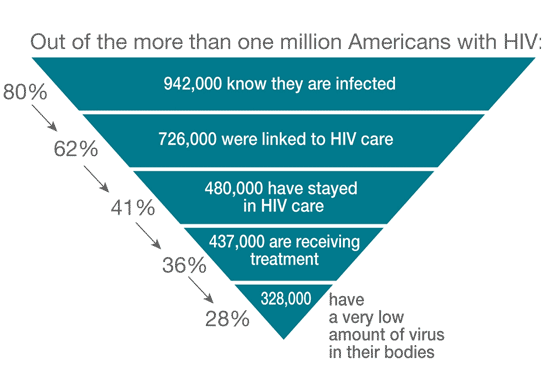
A key concept for anyone considering the success of anti-HIV treatment in improving the health of individuals and in preventing onward transmission in their communities is the ‘treatment cascade’ or ‘care continuum’. This shows how, at every stage, patients are not retained in the healthcare system or are unable to access the medical care they need.

(Source)

Specifics: Obamacare and HIV

click for more info

From Think Progress By Tara Culp-Ressler

new brief from the Kaiser Family Foundation reports that President Obama’s health care reform represents a significant step forward for Americans with HIV, helping to expand health insurance to many HIV-positive individuals who would be “otherwise unable to access affordable and stable health care coverage.” Representing hugely important tactics to continue addressing the HIV/AIDS epidemic, several of Obamacare’s provisions will have a directly positive impact on the estimated 1.1 million Americans who live with the HIV virus:

  • Obamacare will prevent insurance companies from denying HIV-positive Americans coverage simply based on their HIV status. The health care reform law prohibits insurance companies from discriminating based on pre-existing conditions, including HIV. Before Obamacare, Americans living with HIV often struggled to find insurance companies willing to take them on — according to the Kaiser Family Foundation, just 13 percent of HIV-positive individuals were covered under private insurance in 2010.
  • Obamacare’s expansion of the Medicaid program helps low-income Americans with HIV who otherwise wouldn’t qualify for coverage. Over 40 percent of HIV-positive Americans accessed their health insurance through the Medicaid program in 2010, and expanding Medicaid even further will extend additional coverage to this community. Furthermore, under Obamacare, HIV-positive individuals do not have to have to be diagnosed with AIDS as a precursor to qualifying for Medicaid coverage. Although this was an old eligibility requirement for the program, the health reform law ensures the states that accept Obamacare’s Medicaid expansion will not have to impose this restriction on Americans living with the HIV virus.
  • HIV-positive Americans will no longer reach limits on the amount of treatment their insurance companies are willing to cover. Obamacare eliminates lifetime coverage caps and phases out annual limits, which will help all Americans with chronic conditions — including the Americans who rely on treatment for HIV infections — continue to be able to afford the care they need without reaching an arbitrary cut-off set by their insurance companies.
  • HIV testing will likely be covered under Obamacare. This year, the U.S. Preventive Services Task Force is expected to recommend routine HIV screenings as a part of regular preventative care, similar to a routine blood pressure test. Since the health reform law requires insurers to cover the preventive services recommended by the Preventative Services Task Force, a new standard for HIV testing could ensure that it becomes a standard part of annual check-ups. The Centers for Disease Control estimates that about 20 percentof the total population of Americans who are infected with HIV don’t know they have the virus, so regular tests that don’t incur an out-of-pocket expense could help encourage more Americans to learn their status.
  • Since Obamacare helps close the prescription drug coverage gap for Medicare beneficiaries, HIV-positive individuals will be more likely to afford their drug treatments for the virus. By closing the “donut hole,” or the gap in coverage for expensive prescription drugs under the Medicare program, Obamacare will help ensure that older Americans living with HIV aren’t unable to afford any of the 26 antiretroviral drug treatments that can be used to combat HIV infections. Twelve percent of Americans with HIV relied on Medicare for their health coverage in 2010, and that number may rise significantly as the population of HIV-positive Americans continues to age.
  • Obamacare increases resources for HIV research and prevention. The health care reform law allocates $10 billion over ten years for a new fund that focuses on prevention, wellness, and public health activities. In 2010, $30 million from that fund was awarded to the Centers for Disease Control for HIV prevention activities, including new investments in HIV surveillance and testing among high-risk populations.

Do Tell

It’s the first anniversary of official integration of openly gay, lesbian and bisexual people in the military. I can think of no better way to observe it than by the words of Joint Chiefs Chairman Mike Mullen as he testified before Congress last year:

“No matter how I look at the issue, I cannot escape being troubled by the fact that we have in place a policy which forces young men and women to lie about who they are in order to defend their fellow citizens. For me, it comes down to integrity – theirs as individuals and ours as an institution.”

What many don’t understand is that lies create shame- and shame creates pain. For many LGBT people, lying on a daily basis is dehumanizing and debilitating over the long term, destroying integrity, creating depression, increasing anxiety and lowering significantly a person’s quality of life.

On the other hand, telling the truth and being accepted can greatly minimize depression, anxiety and shame, increasing quality of life significantly.

I think the military’s embracing of honesty sends an important message to Americans- one that should have been sent from the beginning:  lying is bad. In fact, it’s bad policy.

Obvious, isn’t it?

And here’s to the many members of the military who survived- who “served in silence” before truth was finally policy (including my husband). Thank you for your service.

In fact, maybe today should be Gay Veteran’s Day….


Rehberg’s Anti-LGBT Record

…is spelled out by ThinkProgress:

Rep. Denny Rehberg (R-MT)

In June, Montana Republicans nominated Rep. Denny Rehberg (R-MT) to challenge incumbent Sen. Jon Tester (D). Unlike Tester, a fairly reliable supporter of LGBT equality, Rehberg has opposed the LGBT community at every opportunity.

Over his time as Lt. Governor of Montana, his unsuccessful 1996 Senate campaign, his 12 years in the House of Representatives, and this Senate campaign:

1. Rehberg proudly pranked a fellow Congressman with a gay-mocking “Idaho Travel Package.” In 2008, after Idaho’s Sen. Larry Craig (R) plead guilty to lewd conduct involving a male police officer in a Minneapolis-St. Paul International Airport restroom, Rehberg decided to leave a care-package for Rep. Mike Simpson (R-ID). On a congressional trip to the Middle East, Rehberg reportedlyleft “a stuffed sheep with gloves attached to it, a Village People CD, books on cross-dressing and sign language and a T-shirt that reads, ‘My senator may not be gay, but my governor is Butch.’” The governor of Idaho’s name is C.L. “Butch” Otter. A spokesman claimed “no offense was intended,” Rehberg boasted that he was proud of the travel package and “spent a bit of time putting the things together.”

2. Rehberg has consistently fought against marriage equality and even domestic partnership benefits for same-sex couples. In his Senate campaign kickoff, he told supporters: “I will never, ever, ever be ashamed to stand for the life of the unborn child and the sanctity of traditional marriage.” He has indeed shown no shame, votingtwice for a federal constitutional amendment requiring “marriage in the United States shall consist only of the union of a man and a woman.” He also voted for a 2011 amendment reaffirming the unconstitutionalDefense of Marriage Act (DOMA), a 2007 amendment restricting the District of Columbia government from using any federal funding to provide domestic partnership benefits, and a 2004 bill of questionable constitutionality to strip federal courts of the right to review whether DOMA is unconstitutional. In May, he reiterated his support also for his state’s same-sex marriage ban, saying “Montana’s state constitution says ‘Only a marriage between one man and one woman shall be valid or recognized as a marriage in this state,’ and I agree.”

3. Rehberg railed against hate crimes protections for LGBT Americans, calling them “extremist.”….

There’s much more. AND a video.

If you’ve needed some clearly spelled out reasons to deny this man the Senate seat the Tea Party is so desperately seeking to claim, click the link below.

Rehberg’s anti-LGBT Record.


Help Inlaws & Outlaws Make It To Public TV!

One of the best (and most elegant) pieces of human understanding and compassion is Drew Emery’s film Inlaws & Outlaws. I’ve written about the Montana screenings we had this past spring and the fantastic impact it had on the audiences that gathered in Helena and Bozeman. It’s an amazing piece of work.

Now, this little gem has a chance for public distribution- and a better tool for compassion and understanding of gay relationships (and all relationships in my opinion) would be hard to find.

If everybody in America saw this film, opposition to marriage equality would melt away like a bad mood in a room full of puppies.

From the True Stories Project:

We’ve got terrific news! The National Education Telecommunications Association (NETA) has offered to distribute a full presentation of Inlaws & Outlaws on public television! That means that, if we act quickly, the film will be made available to virtually all public television stations in the US this Fall – including over 350+ PBS affiliates!

This is huge!

Public TV reaches over 117 million viewers a week. If we slice off even a modest amount of that, we’ll bring Inlaws & Outlaws to a much, much larger audience than it’s ever had. Just as same-sex marriage has finally arrived centerstage with President Obama’s support, we have the opportunity to reach millions of households with true stories we know change hearts & minds.

But to meet our deadline, we need your help — and we need it now.

We need our first $50,000 in underwriting by the end of September. Your support will pay for vital post-production for broadcast, closed captioning, station relations and more. Can you help?

You betcha. I’m in. Anybody else?

Donate here.

Change 2.0

Official photographic portrait of US President...

Official photographic portrait of US President Barack Obama (born 4 August 1961; assumed office 20 January 2009) (Photo credit: Wikipedia)

I watched the President’s speech last night- and tweeted, along with thousands of others. Mostly about my philosophical agreement- and about the facts that seem so distorted by the other side.

I’m buying in to the man and his vision. Because it most agrees with my vision of social justice, economic fairness and the need to lay a firm foundation for continued growth in education, science and technology. Yeah, I’m still buying in to the hope, but I think that’s what the American Dream, the American Vision calls for. Plus, it goes along with every bit of my Christian faith perspective.

From today’s NYT:

Mr. Obama explicitly shifted from his 2008 appeal of hope and change to talk of tough choices and tough paths. “You didn’t elect me to tell you what you wanted to hear,” he said. “You elected me to tell you the truth. And the truth is, it will take more than a few years for us to solve challenges that have built up over decades.”

Mr. Obama went into this convention with an actual record at governing — not just the Republican posture of saying “No” to everything. He has far better ideas about how to create jobs, make Americans’ tax burdens more equitable and improve ordinary Americans’ economic prospects than the tired, failed trickle-down fantasies served up by Mitt Romney and the Republican Party.

He ended the war in Iraq, tried to rescue the Afghan war that Mr. Bush bungled, stepped up the offensive on terrorists far beyond Mr. Bush’s vision and rallied the world to ratchet up pressure on Iran.

He blunted the extreme message of the Tea Party by offering an alternative vision of government’s obligation to help the neediest, provide everyone with the basic structures of society and the economy and end unconscionable discrimination against gay and lesbian Americans. He has protected women’s constitutional rights and liberties, despite his own misgivings about abortion. He ordered the killing of Osama bin Laden — an act that was mentioned repeatedly on the last night of the convention.

Not that the killing of bin Laden would have been sanctioned by Jesus, but the protection of the people by the elected government is nothing to pooh-pooh.

Share Your Story- Montana LGBT Couples Needed

SHARE YOUR STORY 

The ACLU of MT needs your help to
make domestic partnerships a reality in Montana!

Real families with real stories

will help us convince the public that same-sex couples need

equal protection to safeguard our families in times of crisis. 

For more information

read the ACLU memo below

or write to

ACLU of Montana LGBT Advocacy Coordinator Ninia Baehr at niniab@aclumontana.org.

English: No Homophobia logo

English: No Homophobia logo (Photo credit: Wikipedia)

In Montana, the state government offers legal protections to couples and families that help them care for one another. Right now, these protections are only available to couples who get married. This means that opposite-sex couples are eligible for the safeguards offered by the state, because they are able to marry. But loving, committed couples of the same sex are left without the protections they need to care for one another in times of crisis, and that’s not fair.

The Montana Constitution guarantees fair and equal treatment to all people. That’s why the ACLU of Montana is suing on behalf of same-sex couples who have been denied the ability to take care of each other and their families. In the lawsuit Donaldson and Guggenheim v. Montana, the plaintiffs are asking the state to create a domestic partnership registry that would grant them access to the safeguards that are currently only available through marriage. Here are a few of the ways the plaintiffs have been discriminated against:

  • Mary Leslie of Bozeman lost her home because she was ineligible for worker’s compensation death benefits when her partner was killed in an accident.
  • Denise Boettcher of Laurel was denied bereavement leave when her partner Kellie Gibson’s father died.
  • When Mary Anne Guggenheim of Helena had a hip replacement, a health care provider would not speak to her long-time partner Jan Donaldson without a release.

Lawsuits like Donaldson and Guggenheim are important, but to win lasting fairness for gay and lesbian couples we need to convince not only the courts but also the general public that Montanans need domestic partnerships. Our public education campaign, Fair is Fair, highlights the real stories of real people who have been denied equal protection. We are looking for same-sex couples who are willing to share their stories about how they have been denied basic protections afforded to other families. We are especially interested in hearing from couples who have been denied one of the following rights:

 The right to make medical decisions for their partner if s/he is incapable of doing so

 Inheritance rights or the right to determine burial arrangements

 The right to family medical or bereavement leave

 Priority to become the court-appointed guardian for an incapacitated partner

Have you had experiences like these?

If so, please e-mail me at niniab@aclumontana.org or call (406) 579- 8884. ACLU staff will listen and talk with you to explore whether your story might be a good fit with the Fair is Fair campaign. We will keep your information confidential unless and until you feel comfortable telling your story publicly. For more information about the Fair is Fair campaign go to www.fairisfairmontana.org. And please do pass this on if you know a couple who might be interested. Don’t miss this opportunity to make your voice heard!

Vote For This Movie

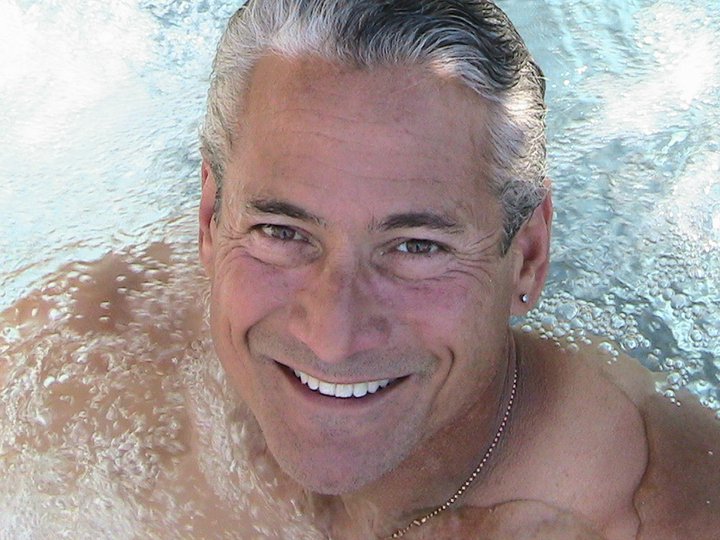
My friend Greg Louganis is the subject of this new documentary which is up for Project Of The Month from Indiewire:

“Greg Louganis Back on Board”

When Greg Louganis hit his head on the diving board at the 1988 Seoul Games, it was an unforgettable moment. But when, despite his injury, he earned the highest single score for his next dive and win the Gold, it was among the most incredible feats in history.

BACK ON BOARD is an engrossing story about an American legend and his comeback. Film reveals Louganis’ evolution from childhood prodigy to Olympic champion, from pioneering openly gay athlete with HIV to an overlooked sports icon. His return to diving as mentor to USA divers at Olympics provides new chapter of life-story.

Greg has been an inspiration for what I do. He has also been personally very supportive of me and  HIV prevention and treatment work in Montana- and throughout the world. His story is one of pain and humility, determination, compassion and trust. It deserves to be heard, and this film’s wide distribution will be a beacon for a lot of people- including kids- who could use a dose of inspiration.

You can vote to get this film a consult from the Tribeca Film Institute. It’s the last day to vote, so…

Vote here!